Iceland's Sommelier of the Year took her place among 66 of the world's best wine professionals in Lisbon this month.
The ASI Best Sommelier of the World 2026 was held in Lisbon, Portugal, from 11 to 17 October, organised by the Association de la Sommellerie Internationale. Sixty-six competitors took part, each representing a different country, and Iceland's place went to Oddný Ingólfsdóttir.
Oddný earned her ticket the hard way. In June she won Vínþjónn ársins 2026 – the Icelandic sommelier championship at the Hilton in Reykjavík – where competitors faced a written exam, blind tastings, spirit identification, decanting, champagne service, food pairing and a wine-list correction, all of it in English.
The final was held on 16 October at the Coliseu dos Recreios in Lisbon. The title went to Nikolai Haram Svorte of Norway, ahead of Pascaline Lepeltier of France and Wataru Iwata of Japan – a fine result for the Nordic region in a year when Reykjavík also hosted the Best Sommelier of the Nordic Countries.
The Icelandic Sommelier Association has congratulated Oddný on representing the country on the sport's biggest stage. Next time you order a bottle in Reykjavík, remember that the person recommending it may have trained for years to get it just right.
Two young cooks from Hótel Geysir and two waiters from Kol and Grand Hótel Reykjavík will represent Iceland when the Nordic Apprentice Competition comes to Akureyri next spring.
The Icelandic qualifier for the Nordic Apprentice Competition was held on Saturday 17 October at the Hotel and Culinary School in Kópavogur, announced by the Club of Icelandic Master Chefs. It was an individual contest that opened with written exams in both cooking and table service before moving on to practical tasks.
The cooks prepared a main course and a dessert. The main course was built around a mystery basket with monkfish as its star, and the dessert called for 64% Valrhona chocolate, pear and mascarpone. The service apprentices were tested on mixing drinks, flambé, setting a table for four, wine pairing, decanting and creative napkin folding.
Cooking apprentices Alexander Brynjarsson and Aron Elvar Bjarkason, both of Hótel Geysir, took the two kitchen places. In service, the places went to Dagný Mist Teitsdóttir Holdø of Kol and Agla Árnadóttir of Grand Hótel Reykjavík. Master chef Úlfar Finnbjörnsson – who himself competed when Iceland first entered the Nordic contest in 1987 – was among the judges.
The final will be held on 15–16 April 2027 at Verkmenntaskólinn á Akureyri, where the two cooks will compete as one team and the two waiters as another against teams from the other Nordic countries. Kol on Skólavörðustígur is on our Eat & Drink map.
Pétur Kolka with his winner's prize in front of the Icelandic flag in Macau. · 📷 Barþjónaklúbbur Íslands
The Bartenders' Club of Iceland sent nine people to Macau for the IBA World Cocktail Championships this week – and the first Icelandic win came on day one.
This year's World Cocktail Championships and the annual conference of the International Bartenders Association are being held in Macau from 19 to 24 October, in the association's 75th anniversary year. Iceland is represented by two competitors, backed by a group from the Bartenders' Club of Iceland.
On 20 October Pétur Hafsteinn Kolka Úlfsson, who tends bar at OTO on Hverfisgata, won his group in the classic category of the Lotus Prestige Cup – an international competition built around baijiu, the Chinese grain spirit, under the theme "Oriental Fusion". He earned near-perfect marks for technique and professionalism, even after cutting himself while preparing his garnish. Pétur took second place at the Icelandic Bartending Championship in April with his drink Atomic Joe.
Reigning Icelandic champion Leó Snæfeld Pálsson of Jungle competed on 21 October in the coffee-cocktail category of the World Cocktail Championships with his drink Button-Down. The finals and awards are held on 23 October – we will add the results here when they are published.
Want to taste what these bartenders do at home? OTO and Jungle are both on our Eat & Drink map.
Chef Sigurður Laufdal's Lóla on the corner of Tryggvagata has had quite a first year: Iceland's only new entry in the Michelin Guide Nordic Countries 2026, and the best new bar at the Bartenders' Choice Awards in Stockholm.
Sigurður has cooked at the very top – including at Geranium in Copenhagen, a three-star restaurant often ranked among the world's best. With Lóla he deliberately went the other way: a casual, accessible restaurant with real ambition, which he has said is exactly why the Michelin recognition fits it so well.
The menu leans Italian with global detours – crudo with Sicilian lemon and capers, house-made pastas like agnolotti with blue cheese and pear or lobster tortellini with lemongrass and Thai basil, and a pistachio tiramisu to finish. There is also a set menu, and the room hides a small private cinema that can be booked for events.
In March the bar was named best new bar at the Nordic Bartenders' Choice Awards, where Icelandic bartenders took home several prizes. Come for dinner, or just for a cocktail at the bar.
Laugarás Lagoon opened its doors on 15 October 2025 – and with it Ylja, a restaurant led by chef Gísli Matt. A year on, it has become one of the reasons to slow down between Geysir and Reykjavík.
The lagoon sits by the Hvítá bridge in Laugarás, about an hour and twenty minutes' drive from Reykjavík. It was built by Icelandic investors and created around fifty new jobs in the area.
Ylja takes its name from an old Norse word for warmth. The kitchen focuses on fresh seafood and produce from South Iceland – vegetables above all – bought from small producers nearby. Drinks are run by Martin Cabejšek, and the bread comes from baker Lucas Keller.
For Gísli Matt it is a new chapter: his celebrated restaurant Slippurinn in the Westman Islands served its last dinner in September 2025 after thirteen seasons. The Reykjavík Grapevine singled Ylja out early in 2026 for honouring local ingredients and traditions.
When the Michelin Guide Nordic Countries 2026 was revealed in Copenhagen on 1 June, Iceland kept its three starred restaurants: Dill and ÓX in Reykjavík and Moss at the Blue Lagoon.
No new Icelandic stars were added this year, but the guide recommends a growing list of places, including Sümac, TIDES and Matur og Drykkur. ÓX also received a Michelin Green Star for its sustainable approach in 2025.
In September the chefs behind all three starred kitchens – Gunnar Karl Gíslason of Dill, Þráinn Freyr Vigfússon of ÓX and Agnar Sverrisson of Moss – joined Gísli Matt in signing “Off the Table”, an international pledge by more than 120 chefs from 26 countries to stop serving salmon farmed in open-net sea cages.
Dill, which opened in 2009, was also named Best Place for a Fancy Meal in the Reykjavík Grapevine's Best of Reykjavík 2026, with ÓX – a few doors up Laugavegur – as runner-up. Book well ahead for all three.
The old Tónabíó cinema at Skipholt 33 first opened in April 1962. In March 2026 it reopened as a music venue, with RVK Brewing's taproom pouring twenty-two taps under the same roof.
RVK Bruggfélag – RVK Brewing – was founded in 2017 on Iceland's Beer Day and has brewed more than 200 different beers. Its main taproom moved into Tónabíó in June 2024, and the reopening weekend on 19 March 2026 came with a small festival of Icelandic bands.
The brewers have even gone looking for a lost Tónabíó mural that was covered up during earlier repairs – the plan is to bring it back.
The brewery's cans, designed by Karlsson Wilker, won a gold award from the Icelandic design association FÍT, and the taproom was runner-up for Best Craft Bar in the Grapevine's Best of Reykjavík 2026. Next up is downtown: RVK Brewing has taken over the corner premises on Pósthússtræti – once home to Kaffibrennslan, where owner Sigurður Snorrason says he tasted his first real beer – and plans 20 taps plus the only beer hand pump in Iceland once permits are in place. Tónabíó stays open too.
Every year the Reykjavík Grapevine picks the city's best places to eat and drink. Here is where this year's winners and runners-up sit on the Eat & Drink Iceland map.
Best Pizza went jointly to Flatey, which you'll find out at Grandi. Le Kock on Tryggvagata won Best Vegan Burger and was runner-up for Best Burger. Dill was named Best Place for a Fancy Meal, with ÓX as runner-up, and Skál! was runner-up for Best Restaurant.
On the drinks side, Gilligogg – a cocktail bar in a former law office on Austurstræti – was runner-up for Best Place for Cocktails, RVK Brewing at Tónabíó was runner-up for Best Craft Bar, and 75-year-old Prikið was runner-up for Best Bar.
Outside the capital, North in Akureyri was runner-up for Best Out of Town. Tap any of them on the map for the address, website and what to order.
On 23 July 1979 Jakob H. Magnússon unlocked the door at Hafnarstræti 15 – and Reykjavík got what is generally credited as Iceland's first proper made-to-order pizza. Forty-seven years later, the same family is still behind the counter.
Jakob, a trained master chef, opened Hornið together with his relative Guðni, and the restaurant has been in the family ever since. In the early years nothing came easy: the kitchen made its own pepperoni from scratch, and even getting hold of decent coffee beans was a struggle in an Iceland that had never seen an Italian-style pizzeria.
Today Jakob still works in the kitchen, now alongside his children – and the grandchildren have joined the staff too. His son Hlynur has described it simply as a family business from start to finish, and the family's own motto for the place is that it is “always the same” at Hafnarstræti.
There is more under the floor than pizza ovens. The basement bar, Djúpið, hosted the very first concert by a young band then called Victory Rose – better known today as Sigur Rós. It was reopened for the restaurant's 40th birthday in 2019.
This autumn the walls double as a gallery: the photo exhibition “Layers” by filmmaker Jakob Halldórsson hangs in The Gallerý at Hornið until 4 December 2026. The big one, the 50th, comes in 2029.
When Jómfrúin opened at Lækjargata 4 in 1996 it was Iceland's first restaurant devoted to Danish open sandwiches. In 2026 it turns thirty – run by the founder's son, who grew up between its tables.
The founder, Jakob Jakobsson, had trained in Copenhagen under the famous smørrebrød queen Ida Davidsen and became the first man ever to graduate as a “smørrebrødsjomfru” – the title the restaurant is named after. He started the business with Guðmundur Guðjónsson on little more than a bank overdraft.
Word spread fast: Iceland's president at the time, Vigdís Finnbogadóttir, was among the guests in the very first year. On summer Saturdays the courtyard has hosted a jazz series for more than a quarter of a century.
In 2015 the founder's son, Jakob Jakobsson Jr., bought the restaurant – he was twelve when it opened and had worked there as a boy – and since 2020 he has been its sole owner. The recipe hasn't needed changing: rye bread, generous toppings and a cold glass of akvavit or beer on the side.
Prikið has been pouring coffee – and later a lot more – at Bankastræti 12 since 1951, making it one of the oldest cafés in Reykjavík. In 2026 it celebrates 75 years.
The place once went by the name Adlon, and apart from closing off the upstairs, the interior has barely changed in decades – a rare thing on a street that reinvents itself every few years.
By night it became something else entirely: Prikið is where much of Reykjavík's hip hop scene grew up, and it still has some of the most loyal regulars in town. In 2026 it was named runner-up for Best Bar in the Reykjavík Grapevine's Best of Reykjavík.
Come in the morning for a classic breakfast, come back late for the music – the crowd changes, the room doesn't.
Grillmarkaðurinn opened in June 2011 on a plot that had stood empty since a fire – and built its whole kitchen around flames. This summer it turned fifteen.
The building at Lækjargata 2A stands where a cinema and assembly hall from 1920 was lost to fire in 1998. When the restaurant opened, the mayor at the time, Jón Gnarr, marked the occasion on the rebuilt “fire plot”.
Inside, the room borrows from Icelandic nature: basalt columns, a wall of moss, fish skin and old fish-drying racks, with seats for around 130 guests. The kitchen buys directly from farmers, hunters and fishermen and cooks over fire, smoke, wood and charcoal.
The restaurant was founded by three partners, among them chef Hrefna Sætran, who in 2025 sold her share to focus on her other restaurants, including Fiskmarkaðurinn.
Nobody knows the exact day Bæjarins Beztu opened – the oldest record is a letter from the autumn of 1937. Nearly ninety years on, the same family still runs Iceland's most famous hot dog stand.
Founder Jón Sveinsson started with a cart on Austurstræti. Thanks to a Danish butcher in the family, the sausages were made with Icelandic lamb – which is still the secret today. At first they were served wrapped in paper; buns only arrived in 1948, when flour rationing ended. Nobody ever officially chose the name “the town's best” – it simply stuck.
Jón's son Kristmundur started working there at fourteen and took over in 1952. The stand moved to Tryggvagata in the 1960s, where it still stands. His daughter Guðrún Björk grew the business to twelve locations, and today her son, Baldur Ingi, leads it as the fourth generation.
Famous guests come and go – Bill Clinton stopped by in 2004 and ordered his with mustard only – but for most people the order is “ein með öllu”: one with everything.
When Knútur Rafn Ármann and Helena Hermundardóttir bought Friðheimar in 1995 it had two greenhouses and one employee – Helena. Today around 250,000 guests a year eat lunch among the tomato plants.
Year-round growing came first, in the early 2000s, and from 2007 the family began inviting guests to eat right there in the greenhouse. The tomato soup became famous, and the farm kept growing: a 5,600 m² greenhouse in 2020, a wine bar in 2023 and, in 2025, the strawberry farm Jarðarberjaland – by then with more than a hundred staff in a village of about a hundred people.
All five of the couple's children are involved, and the next generation now works in the daily running of the farm. In 2024 Knútur received the Icelandic Order of the Falcon.
It is one of the best lunch stops on a Golden Circle day – just remember to book ahead.
The old merchant's house by the harbour in Hafnarfjörður was built in 1841 and was nearly demolished in 1985. Instead it became Fjörukráin – and in May 2026 its Viking feasts turned 35.
In 1985 the town voted to tear the house down, but heritage authorities objected and it was sold and rebuilt as a restaurant. Jóhannes Viðar Bjarnason bought it in 1990, renamed it Fjörukráin and opened on 10 May. Exactly a year later, on 10 May 1991, the first Viking feast was served.
From 60 seats it has grown to around 350, with Hotel Viking next door, and Jóhannes – known locally as the “fjörugoði” – has organised Hafnarfjörður's Viking festival every summer.
This has been a big year for the Viking village. In April Fjörukráin was named Hafnarfjörður's Company of the Year, and this autumn Hotel Viking next door celebrates doubling in size to 108 rooms, with a new banquet hall for 200 guests in the cellar. Hafnarfjörður is also home to our own distillery – make a day of it.
Kjartan Halldórsson spent his life at sea before opening a small fish shop by Reykjavík's old harbour in 2002. Tourists kept asking to taste the catch – so he started cooking.
The lobster soup and grilled fish skewers were an instant hit. In the early days guests sat on barrels in the old fishing hut on Geirsgata, and Kjartan never hesitated to call his soup the best in the world.
Elísabet Jean Skúladóttir started working there part-time and bought the business in 2011. She has kept its spirit intact – right down to a life-size wax figure of the late Kjartan, who still keeps an eye on the room.
Next year Sægreifinn turns 25. The soup recipe, as far as anyone knows, hasn't changed.
The dance halls, nightclubs and cafés Iceland has lost – to fire, to the wrecking ball or simply to time. Where they were, when they opened and closed, and what stands there now.
Thank you for the good old days – the laughter, the friends, the dancing and the memories. Thank you for being there for us. Glasses up – skál! 🥂
📷 Got photos or memories from these places? We would love to see them. Tap Send photos or memories under any place below – with your permission we will share them, credited to the photographer, and build a small gallery to remember these rooms by.
Ask anyone who went out in Reykjavík in the nineties and they will remember the stretch of Tryggvagata where Glaumbar and Gaukur á Stöng stood side by side.
Glaumbar opened in 1990 – not to be confused with Glaumbær, the sixties club by the pond – right next door to Gaukur á Stöng, the country's first pub. It was the work of restaurateur Tómas Tómasson, who had opened the Hard Rock Café three years earlier, and it arrived a year after beer was legalised. These were the golden years of the bar scene and the dance-band circuit, and Glaumbar was a loud, packed room where live bands were a regular part of the night.
In the summer of 2010, after twenty years, the old Glaumbar closed its chapter: saxophonist Steinar Sigurðarson, who has played with everyone from Sigur Rós to Stuðmenn, rebuilt the room with a new stage as Risið – a place made for musicians. The Glaumbar name soon came back, though. In 2012 it was one of the venues of the Reykjavík Live festival, alongside the old Gaukurinn and Prikið, and in 2016 it was one of four bars allowed to stay open through the night to show the Super Bowl.
The business changed hands more than once. In the autumn of 2016 the building went up for sale and Glaumbar quietly disappeared from the city's bar listings; the last operating company was declared bankrupt in January 2020. Another club uses the rooms today – but for a generation of Reykjavík night owls, that corner of Tryggvagata will always be Glaumbar.
The house dates from 1878 and started life as a girls' school. From 1946, as Sjálfstæðishúsið, it held dances every night, and Aage Lorange's band played packed cabarets and revues.
In 1963 it became Sigtún, with bands like Brimkló and Lónlí Blú Bojs – until Sigtún moved to Suðurlandsbraut in 1973. After years as a staff canteen, the room came back to life in 2001 as NASA, a fixture of the Iceland Airwaves festival.
In 2012 NASA closed to make way for a hotel, to loud protests. The ballroom was taken down and rebuilt as a near-identical copy, and since 2023 it has hosted concerts again as Sjálfstæðissalurinn. Same corner, same dance floor – fourth life.
From 1920 to 1987 the corner was home to Nýja bíó, one of the city's first cinemas. In 1987 it became Tunglið – “the Moon” – and in the early nineties it was the club in town. In 1994 the band Ham played its farewell gig there beneath a mural of President Vigdís Finnbogadóttir.
Down in the basement, the tiny Rósenberg cellar hosted everything from biker rock to the first rave nights.
On 30 July 1998 the building burned. A new house went up on the plot, and since 2011 it has been home to Grillmarkaðurinn – a restaurant, fittingly, built around fire.
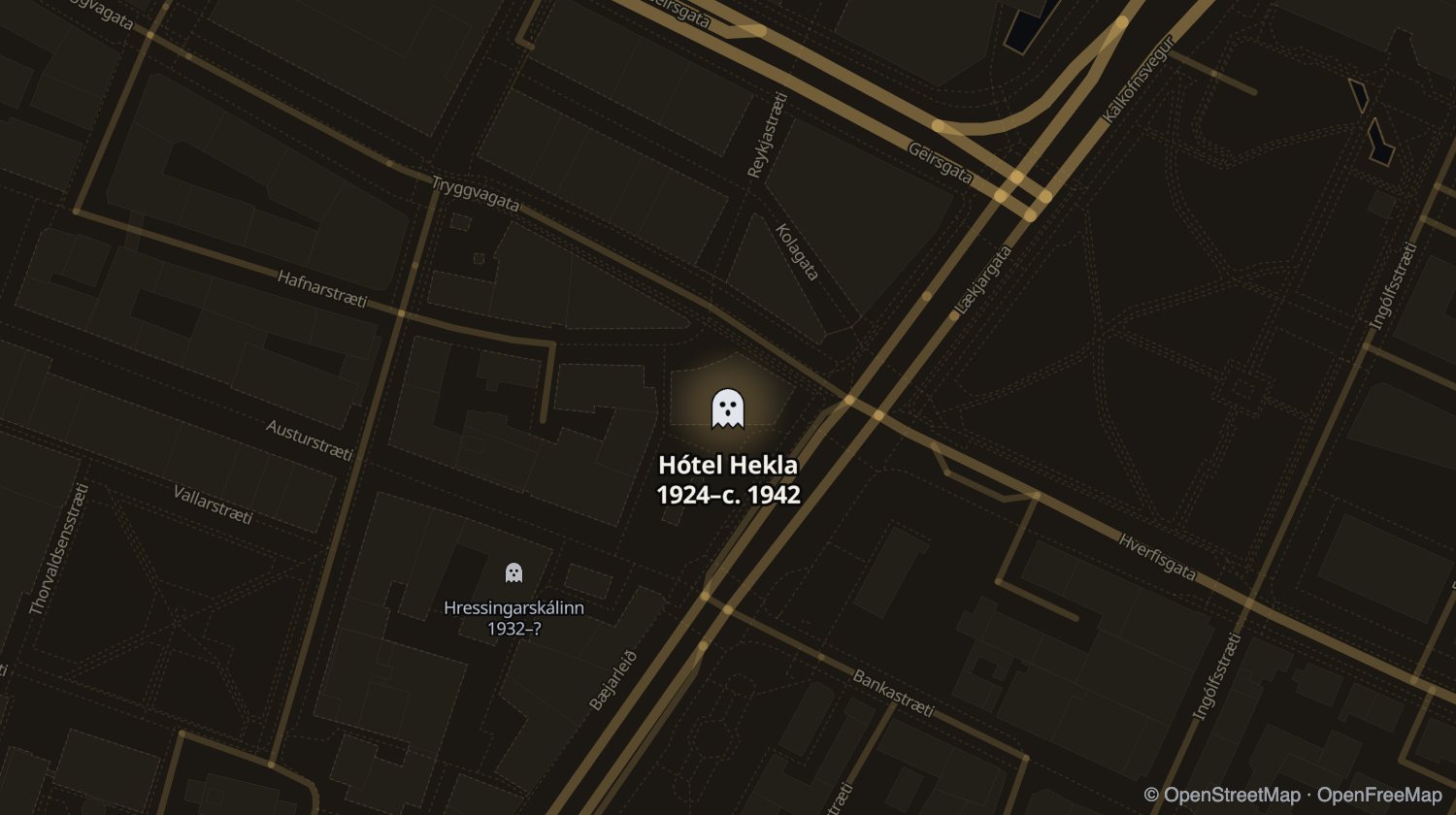
The house itself is one of the oldest in the city: a timber house from 1805, extended in 1862 and protected since 1990. Through the 20th century it became Hressingarskálinn – “Hressó” – often called the oldest restaurant in Reykjavík and for decades a favourite meeting place of artists, writers and ordinary townsfolk alike.
Late in the century the cafés multiplied and Hressó lost its shine. It turned into a nightclub, and later into Bjarni Fel, a sports bar named after the much-loved Icelandic sports commentator Bjarni Felixson.
Then, in June 2021, Hressingarskálinn reopened in its old form: home cooking, coffee, freshly baked kleinur and pancakes – and the famous Hressó cake. On the first days, guests sat telling the staff how their grandmothers used to bring them there as children. Some tables, it seems, are never really lost.
It was built in the early 1900s by the merchant Thor Jensen as an ice house beside Tjörnin. In 1960 it became the Stork Club, where Lúdó sextettinn played to nearly 300 guests downstairs and the Miss Iceland pageant was staged – but the club went bankrupt within about a year.
In its place came Glaumbær, and through the sixties it was the headquarters of Reykjavík's beat and hippie scene: two floors, narrow corridors, two stages and the bands everyone wanted to hear.
In the early hours of a December night in 1971, just after closing, fire gutted the timber-lined interior – the band Náttúra lost all its instruments. Musicians campaigned for a rebuild for about two years, but the shell went to the National Gallery instead, which opened there in 1987. Next time you walk past, listen carefully.
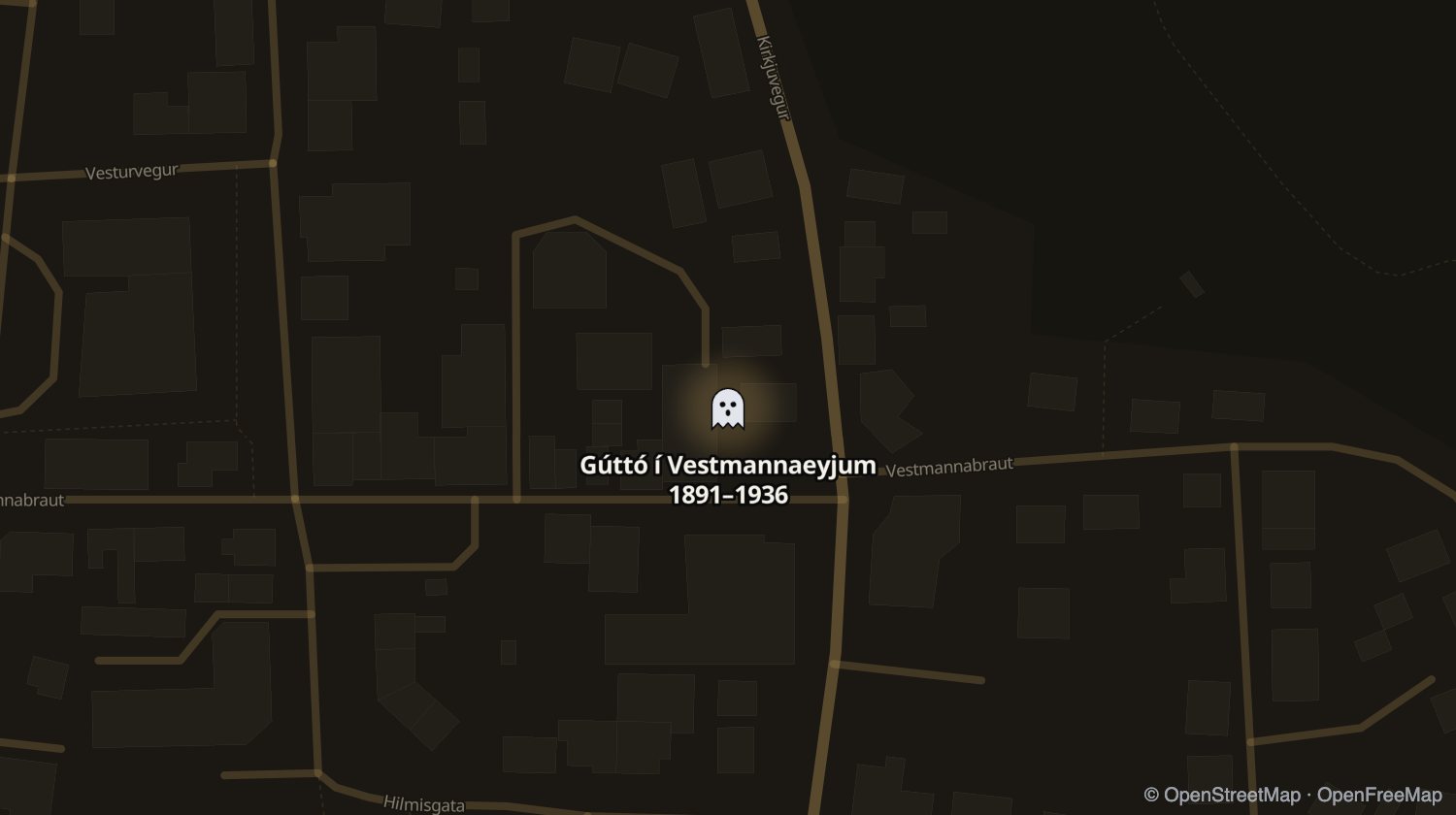
For decades many of the big dance halls served no alcohol at all. At the Good Templars' hall by the pond – Gúttó – the dances were strictly dry, and stewards are said to have searched guests for smuggled bottles. On the top floor of the dairy building on Laugavegur, Mjólkurstöðin, guests simply brought their own. Even Þórscafé, the hottest hall of its day, only got a liquor licence around 1976.
Then, in November 1983, Gaukur á Stöng opened on Tryggvagata – by many accounts Iceland's first pub. It served “bjórlíki”: pilsner mixed with vodka and other spirits to about 5% strength. Bjórlíki was banned in the autumn of 1985.
On 1 March 1989 real beer finally became legal, and Icelanders still celebrate Beer Day every year. Gaukurinn, as it's now called, is still going – which makes this one lost era, not a lost table.
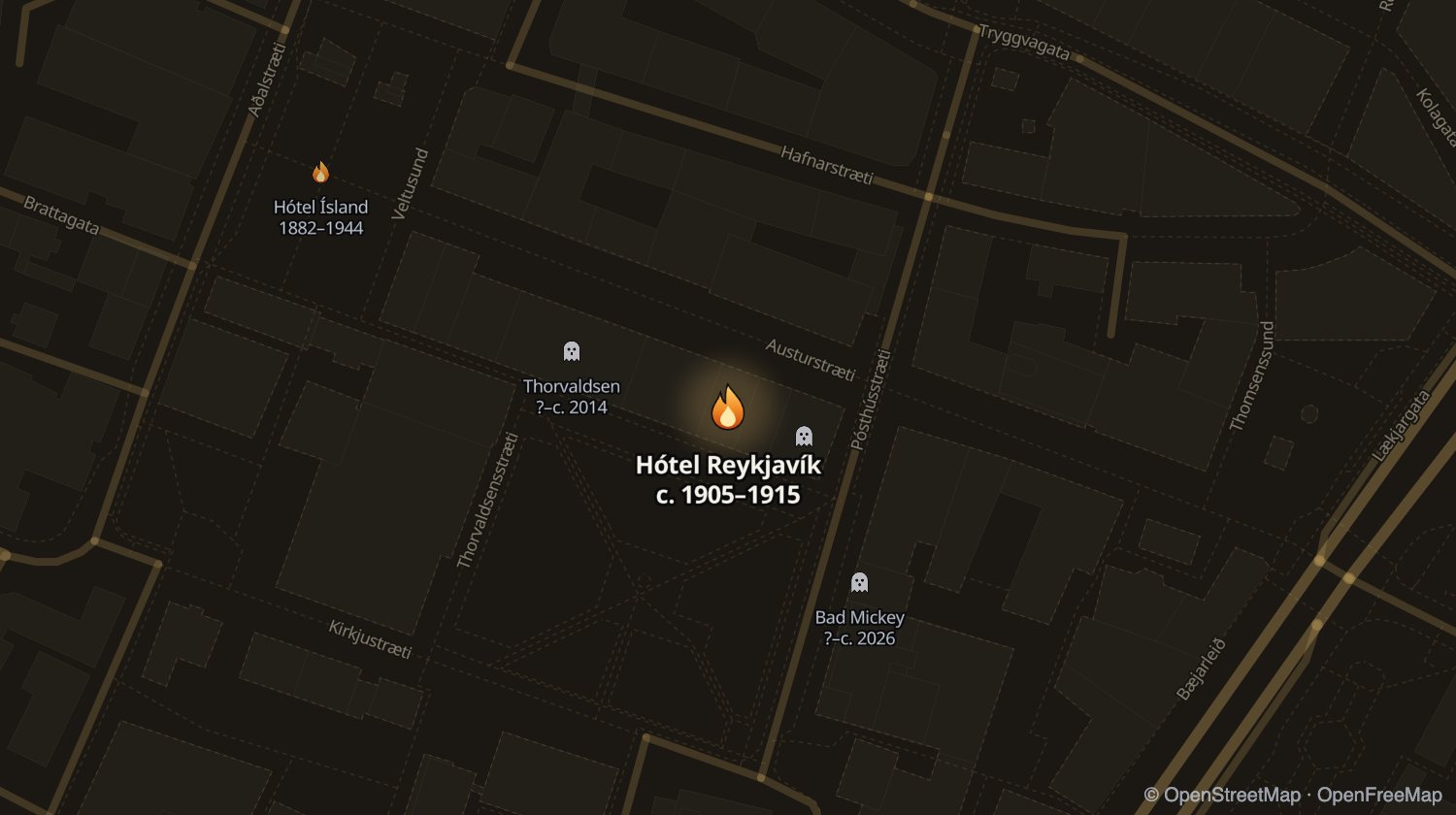
Pósthússtræti 9, Reykjavík · sports bar · Today: RVK Brewing's new downtown taproom (2026)
Bad Mickey was a downtown sports bar at Pósthússtræti 9, just off Austurvöllur, with games on the screens, cold beer, pub food and live music late in the week. In February 2026 it was one of the Reykjavík bars showing the Super Bowl through the night, and on St. Patrick's Day that March Irish musicians played there both afternoon and evening. Its life turned out to be short: by the end of summer 2026 RVK Brewing had taken over the premises for its new downtown taproom. The rooms carry a long nightlife history – around the turn of the century they were Kaffibrennslan, famous for its wide range of bottled beers, then for many years Íslenski barinn, and later the jazz bar Skuggabaldur.
Bankastræti 8, Reykjavík · Café chain · Today: Kaffitár still roasts coffee in Reykjanesbær, but its cafés are gone. The Bankastræti café closed in 2021.
Kaffitár was founded in 1990 by Aðalheiður Héðinsdóttir and her husband Eiríkur Hilmarsson, with its roastery in Reykjanesbær. The name plays on the Icelandic habit of asking for just "a tear" of coffee. The company imported beans directly from farmers and opened its first café in Kringlan. In December 1997 it opened on Bankastræti, its first café in central Reykjavík, which drew regulars who came to read, write and meet. At one point there were seven Kaffitár cafés in the capital area, including one in the National Museum and one in Perlan. The last two, in Kringlan and at Reykjavík University, closed on 31 May 2026, ending 31 years of café service.
Bergstaðastræti 10a, Reykjavík · Cat café · Today: Closed for good on 23 August 2026.
Iceland's first and only cat café opened on Bergstaðastræti in March 2018. Its founders, Ragnheiður Birgisdóttir and Gígja Sara Björnsson, had seen cat cafés abroad. Homeless cats from the animal welfare group Villikettir lived on the premises, and guests could get to know a cat over a cup of coffee and take it home. Over eight years about 170 cats found new homes this way. The café closed its doors for good on 23 August 2026, with the remaining cats still waiting for adoption.
Austurstræti 14, Reykjavík · Restaurant & cocktail bar · Today: Gamla Reykjavík, a cosy Icelandic bistro and bar run by the same company, opened on 27 February 2026.
Duck & Rose took over the old Café Paris corner on Austurstræti, facing Austurvöllur, in the summer of 2020. With roses on the walls, French and Italian influences on the menu and duck leg as its signature dish, it became one of the city centre's talked-about restaurants, with champagne and cocktails late into the night at weekends. In February 2026 the owners decided the formula no longer worked and closed Duck & Rose on Sunday 22 February. Five days later the same company reopened the space as Gamla Reykjavík, a warm, classic room with jazz, board games and Icelandic dishes, styled after old downtown Reykjavík.
Hverfisgata 26, Reykjavík · Restaurant & bar · Today: The cocktail bar Resident Room opened in the space in July 2026.
Mat Bar opened on Hverfisgata in January 2017, during the years the street became one of Reykjavík's liveliest dining strips. The kitchen paired Italian simplicity with Scandinavian technique, serving deli fare by day and tapas-style plates with aperitifs in the evening, in an interior designed by HAF Studio. It closed in 2026.
La Barceloneta brought paella and tapas to Templarasund from summer 2023, named after Barcelona's old fishermen's quarter by the beach. In 2024 it became the first restaurant in Iceland recognised by Spanish authorities (ICEX) for authentic Spanish cooking with traceable Spanish ingredients. It served its last paella on 16 August 2026, giving it away free to everyone who came by, and the owners said they hoped to find a new home.
Sæmundargata 11, Reykjavík · Vegan bistro · Today: The Nordic House café has been taken over by a new restaurant, Laut, built around Icelandic ingredients and Nordic cooking.
Plantan, a fully vegan café and bistro known for its soups and dishes of the day with fresh focaccia and hummus, ran the restaurant in Alvar Aalto's Nordic House by the Vatnsmýri wetlands. Its last day of service there was 31 July 2026. Plantan carries on at its location on Njálsgata.
Suðurlandsvegur (Route 1) at Svínahraun, below Hellisheiði (64.0578 N, 21.5016 W), Near Reykjavík · roadside café · Today: Bought by the tour company Icelandia in 2025 as a base for northern-lights tours
The 'Little Coffee House' opened on 4 June 1960 beside Suðurlandsvegur, the main road east over Hellisheiði, and for 65 years it was the place to stop for coffee and a bite on the way to or from the south – a warm refuge on a stretch of road known for sudden weather. Stefán Þormar Guðmundsson and his family ran it for 24 years until he retired in 2016. After a brief closure in summer 2021, the family of Hlöðver Sigurðsson, founder of Hlöllabátar, took over, but times were hard, especially after Olís moved its petrol station from the site to Norðlingaholt, ending 63 years of fuel sales there. The café closed on 28 June 2025, and that August the tour company Icelandia bought the building to use as a base for northern-lights tours.
Bankastræti 7a, Reykjavík · Café-bar & restaurant · Today: Empty after the closure; the property owners were weighing the future of the space in 2025.
From 1992 the house at Bankastræti 7a was home to Sólon, which over three decades served by turns as a café, bar, nightspot and restaurant at the top of the downtown strip. The business changed hands several times, most recently in 2021, and was given a costly renovation around 2023.
Hafnarstræti 5, Reykjavík · Pub & music bar · Today: Closed since November 2025.
The corner of Hafnarstræti and Naustin was long home to Amsterdam, a rough-edged rock dive with a secret basement smoking room and a dependable stage for young bands. In 2014 it was renovated into Frederiksen Ale House, a Danish-flavoured gastropub with a large tap list, brunch by day and live music at weekends. Frederiksen ran for about ten years before roadworks and the pandemic took their toll, and it closed in June 2024. A group of chefs reopened it as Bird, a music bar serving grilled cheese named after death-metal bands, with concerts, DJs and a karaoke room. Bird served as an official Iceland Airwaves venue in November 2025, played an eight-band farewell show, and then closed.
Strandvegur 76, Vestmannaeyjar · restaurant · Today: Closed after its final service; chef Gísli Matthías Auðunsson moved on to new projects, including YLJA at Laugarás Lagoon
Slippurinn opened in 2012 in a converted shipyard building on the harbour in Heimaey, a family business that was the idea of Katrín Gísladóttir and run by her son, chef Gísli Matthías Auðunsson. His sister Indiana built much of the furniture, and his father still sometimes brought in the fish. Open only in summer, the restaurant became one of the leading voices of the new Icelandic cooking, built on island produce, foraged herbs and seaweed, with dishes such as cod's head and birch-speared scallops. After 13 seasons the family announced that 2025 would be the last, and the final dinner was served on 13 September 2025.
Strandgata 9, Hafnarfjörður · Café · Today: Barbara, a new coffee bar, opened in the building in summer 2025.
Súfistinn opened in 1994 in one of Hafnarfjörður's oldest stone houses, on Strandgata in the middle of town. It was run for its entire life by the founders, Birgir Finnbogason and Hrafnhildur Blomsterberg, and their family, and their grandchildren grew up working behind the counter. The journalist Egill Helgason called it "really the heart of the town". The house had earlier been home to Mánabar, one of the Strandgata bars of older days. After celebrating 30 years in summer 2024, the family closed Súfistinn on 17 January 2025 and held an open house the next day so customers could say goodbye.
Reykjavíkurvegur 60, Hafnarfjörður · pub · Today: Ölhúsið lives on at Flatahraun 5a; Reykjavíkurvegur 60–62 was torn down from May 2025 to make way for a 106-apartment block
In April 2015 the couple Aðalheiður Runólfsdóttir and Ólafur Guðlaugsson took over the Irish Pub on Reykjavíkurvegur and reopened it as Ölhúsið – Ölstofa Hafnarfjarðar. It became the town's neighbourhood local: nine beers on tap, football on twelve screens, competition pool tables, darts upstairs and down, live music every weekend, pub quizzes and bingo – open 363 days a year. The pub later moved to Flatahraun 5a, and in May 2025 demolition began on the old buildings at Reykjavíkurvegur 60–62, the start of the new Hraun vestur district.
Grandagarður 8, Reykjavík · brewpub & restaurant · Today: The premises have stood empty since and were still for sale in October 2026
Bryggjan Brugghús opened on 5 November 2015 on the ground floor of the CCP building at Grandagarður 8, out on Grandi – a brewpub with its own brewery on site, a big bar seating around 120 and a fish-themed bistro seating about 150 on the other side of the house. It brewed its own lager, IPAs and seasonal beers, offered tastings and brewery tours, and for a decade was a favourite for office parties and big groups by the old harbour. The first operating company went bankrupt in April 2020 and the place carried on under new owners, but in January 2025 the doors were suddenly locked and the equipment removed; the second company was declared bankrupt that March.
Hafnarstræti 5 (entrance on Tryggvagata), Reykjavík · Bar & music venue
Bird landed on the corner of Tryggvagata and Naustin in summer 2024 as an unpretentious bar with about a dozen beers on tap, sandwiches named after metal legends, a kitchen open until closing and a karaoke room in the basement. It quickly became a live-music room and was one of the official venues of Iceland Airwaves 2025. On 10 November 2025 it announced it was closing, after a final night with eight acts on stage.
Héðinn Kitchen & Bar opened in the summer of 2021 at Seljavegur 2 in Vesturbær, run by the experienced restaurateurs Elías Guðmundsson and Viggó Vigfússon. It got off to a strong start but was born in the middle of the pandemic, and rising prices and wage costs weighed on it from the beginning. In February 2022 the owners opened Hygge, a micro-bakery and café in the same space with a door between the two. The first operating company was declared bankrupt in January 2023 and the restaurant carried on under a new one with 55 staff; when the second company was declared bankrupt in January 2024, talks began about someone else taking over, and the restaurant has since closed.
Allinn (Alþýðuhúsið á Akureyri)1952–2024 · Demolished
Gránufélagsgata, Akureyri · dance hall · Today: Demolished in February 2024; the town of Akureyri owns the plot
When fixed seats were installed in Akureyri's Samkomuhús in 1950 and dancing there became impossible, seven local trade unions bought a former laundry building on Gránufélagsgata and opened it as Alþýðuhúsið in March 1952. Universally called Allinn, it was for a decade the main place of entertainment for ordinary townspeople, hosting couples' evenings and formal annual dinners, while the 'better citizens' went to Hótel KEA. It later became a magnet for the young, and in June 1958 the Atlantic quartet of the brothers Ingimar and Finnur Eydal brought rock music to its floor. Allinn and Sjallinn were long the two best-known nightspots in town. The town bought the building in 2023, and it was torn down in February 2024.
Bankastræti 5, Reykjavík · Nightclub · Today: Kabarett, a bar and multi-arts venue with Icelandic craft beer, mead and stage nights, opened in the space in 2025.
B5 opened in spring 2006 as a bistro-lounge with a big leather sofa, a wall of books and a long bar, and grew into one of downtown Reykjavík's best-known nightclubs. It ran for well over a decade until the pandemic. In summer 2021 the space reopened as Bankastræti Club, which ran until 2023, and a short-lived revival under the B5 name followed before the doors closed for good in May 2024.
Ránargrund 4, 210 Garðabær, Garðabær · restaurant / event hall
Sjáland opened in May 2020, in the middle of the pandemic, in a new building by Zeppelin Architects on the Arnarnesvogur bay where Garðabær's old docks once stood. Restaurateur Stefán Magnússon, also behind Reykjavík Meat and Mathús Garðabæjar, ran it with executive chef Ólafur Ágústsson, serving relaxed, generous 'elevated comfort food' and wood-fired pizzas to 90 diners, with a 180-seat banquet hall next door. With its bay views it quickly became a favourite for weddings, concerts and parties. But the operator and the building's owners had been in a long dispute over the lease, partly because of the pandemic, and in early October 2023 the operating company was declared bankrupt over a tax debt and the venue closed overnight – leaving several couples unsure whether their booked wedding receptions could go ahead.
Tryggvagata 22 (Naustin), Reykjavík · Bar & concert venue · Today: Closed since 2023; the building's owner had earlier floated plans to turn the block towards tourist-focused businesses.
Húrra grew out of the rooms below Gaukurinn that had housed Bakkus and then Harlem, a dance club that opened in early 2013. As Húrra it became one of the city's most important small stages, with concerts, DJ nights, Airwaves shows and afterparties that spilled into Naustin at sunrise, and Grapevine named it the best new bar of 2014. In 2015 the property owners' plans to convert the block for tourism raised fears for its future. Húrra closed in autumn 2019, spent a spell as a sports bar, and was restored and reopened in 2021. In June 2023 it shut again because of rising rent and costs, prompting warnings that Reykjavík was becoming a dreadfully boring city; a last farewell night followed that November.
Laugavegur 2, Reykjavík · Basement café-bar · Today: Ægir 101, the taproom of Ægir brewery, opened in the building in October 2022.
Kofi Tómasar frænda, or "Uncle Tom's Cabin", was a small bar and café in the basement of an old house at the very start of Laugavegur. In 2005 the Grapevine called it a mainstay of Icelandic bar culture and said it was usually packed at weekends. Later known simply as Kofinn, it was remembered for pounding music and for staying open long into the night. The bar closed in 2022, and in mid-October that year Ægir brewery opened a much calmer taproom in the same building. Its new owner summed up the change as more relaxing and less partying.
Austurstræti 3 (upper floor), Reykjavík · hip-hop club · Today: The club Exit opened in the same space in 2022
The rapper Herra Hnetusmjör announced his own club in the middle of a song in the summer of 2019, and named it after his beloved postcode: 203, Kópavogur – a Kópavogur outpost in the heart of 101. 203 Club opened on the upper floor of Austurstræti 3, above the kebab shop by Ingólfstorg, as a modern hip-hop bar with Versace wallpaper and a proper stage for anyone who heard their own track and felt the urge to jump up. Herra Hnetusmjör stepped away from the business in June 2022, and the club closed on 7 October that year; the club Exit opened in the same space soon after.
Grandagarður 23, Reykjavík · restaurant & brunch spot · Today: Hraðlestin opened its Grandi branch in the space in 2023
Coocoo's Nest was a small family-run restaurant at Grandagarður 23, opened in 2013 by chefs Íris Ann Sigurðardóttir and Lucas Keller in one of the first new places to open on Grandi. It was known for sourdough bread, pizzas and a brunch that the Reykjavík Grapevine named the city's best more than once. The couple put the business up for sale in autumn 2022 and served their last brunch on 30 December 2022; in 2023 Hraðlestin opened in the space.
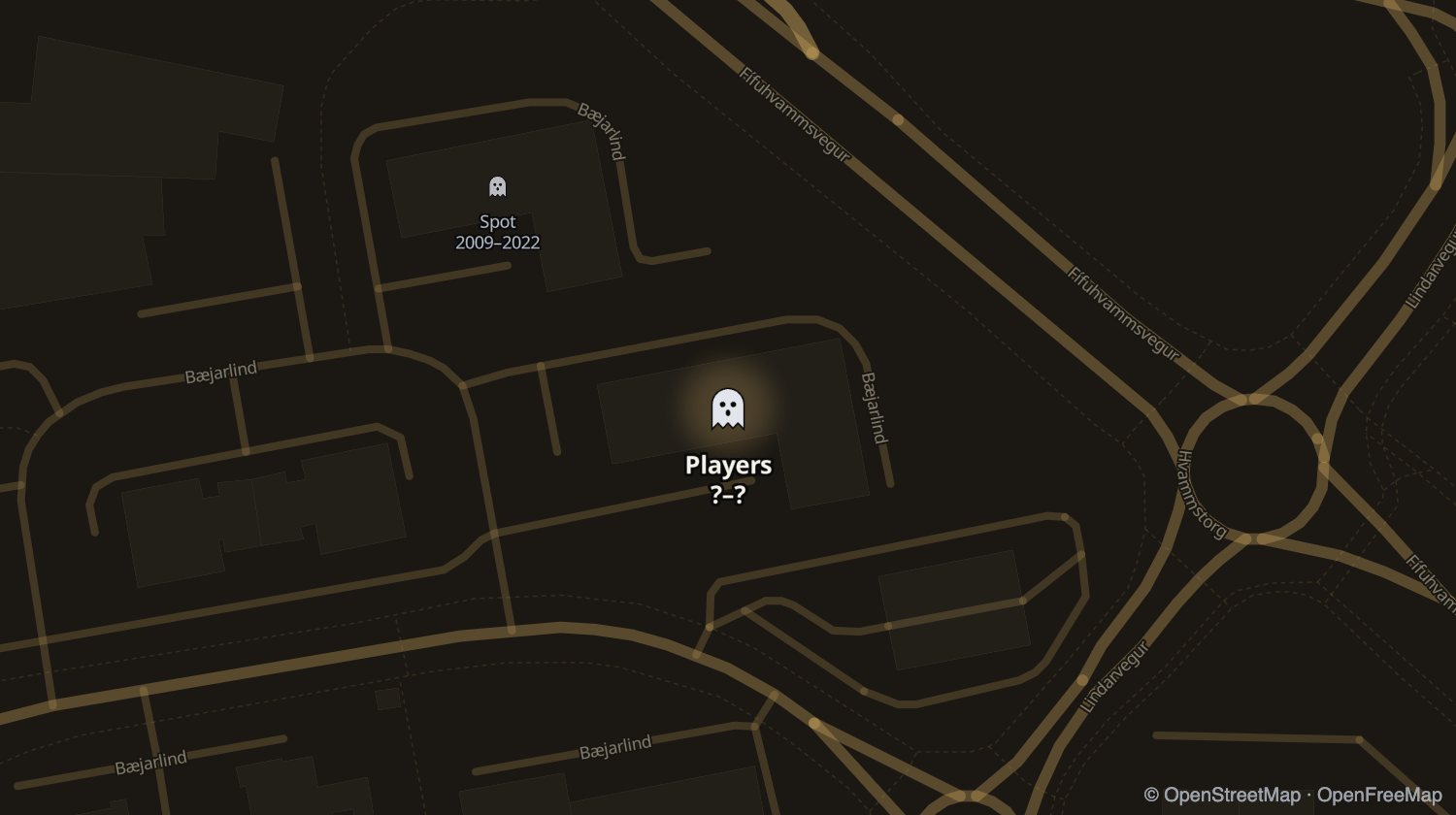
Bæjarlind 6, Kópavogur · Dance hall & sports bar · Today: The building was sold and a children's clothing shop took over the space.
Spot opened on 19 June 2009 in Bæjarlind 6, across from Smáralind, with the band Sálin hans Jóns míns behind the launch. It grew into one of the capital area's best-known dance halls outside the city centre, with a hall seating about 300 for dinner or holding up to 900 on their feet. Between dances it was a sports bar with screens, pool, darts and foosball, hosting bingo nights, big matches and, in 2019, Páll Óskar's New Year's Eve dance. In 2022 the building was sold; the last dance was held on 17 September and Spot closed for good the next day.
Amtmannsstígur 1, Reykjavík · Restaurant · Today: Gunnlaugsenshús, built in 1836, has housed restaurants since 1981.
Humarhúsið, "the Lobster House", served langoustine and seafood for almost thirty years in Gunnlaugsenshús. The towered timber house on Amtmannsstígur was built in 1836 for a town magistrate and later belonged to Iceland's medical officer, and restaurants had been run there since 1981. Humarhúsið became one of the city's established seafood restaurants. The pandemic hit it hard: in late May 2021, after a long rent dispute, the operators were given four days to leave. Staff finished clearing the premises on 2 June 2021, after almost three decades.
Hraunbær 102, Reykjavík · restaurant & sports bar · Today: Unknown – current use of the premises not verified
Blásteinn was the neighbourhood restaurant and sports bar of Hraunbær in Árbær, and by 2012 it had been running for about twenty years. That year it grew by more than 400 m², adding a café, a dining room and a family-friendly room for watching sport. A new operator relaunched it as a sports bar in 2018, next door to the Thai restaurant Rakang Thai in the same building, but both closed in October 2021 – the pandemic, a large space and rising costs were given as the reasons.
Hagatorg 1, 107 Reykjavík, Reykjavík · hotel / ballroom · Today: University of Iceland premises and student apartments
Hótel Saga was built by the Icelandic Farmers' Association in its headquarters, Bændahöllin, at Hagatorg: ground was broken in July 1956, the hotel opened in 1962, and a seven-storey north wing was added in 1982–85. For half a century it was where Reykjavík dressed up – its Súlnasalur ballroom hosted dinners, balls and dances, and singer Ragnar Bjarnason's band played at the hotel for nineteen years in a row. World leaders, politicians and artists stayed there, as did Apollo astronauts Neil Armstrong and Buzz Aldrin during their training in Iceland. Costly renovations, years of operating losses and then the pandemic proved too much, and the hotel closed indefinitely on 1 November 2020. In December 2021 the state and the student services body Félagsstofnun stúdenta bought the building, which reopened in December 2025 as University of Iceland premises with student apartments.
Bankastræti 2, Reykjavík · restaurant · Today: Kornhlaðan, an event venue in the same historic house
Lækjarbrekka opened in 1981 in the rebuilt merchant's house and bakery at Bankastræti 2, part of the Bernhöftstorfa row that had been saved from demolition by a decade-long preservation campaign and protected in 1979. The house was built in 1834 as a dwelling and bakery; the baker Tönnies Daniel Bernhöft arrived the following year, and Bernhöftsbakarí ran there until 1931. For almost forty years the restaurant served Icelandic food – lamb, fish, game and other local specialities – with home-baked bread, becoming a fixture for visitors and celebrations alike. It closed on 13 April 2020; the owners cited the collapse of WOW air the year before and the pandemic, and said the closure was most likely permanent.
Austurstræti 14, Reykjavík · Café & restaurant · Today: Duck & Rose opened in the space in 2020; since February 2026 the corner has been Gamla Reykjavík.
Café Paris sat on what its later buyers called one of the most stylish corners in Reykjavík, where Pósthússtræti meets Austurstræti beside Austurvöllur square. For many years it was one of the city centre's best-loved cafés, serving crêpes, brunch, soups and late-night food, with an outdoor terrace that filled up on every sunny day. In spring 2020, in the middle of the pandemic, a group of restaurateurs bought the business. They decided to change both the concept and the name, and Café Paris closed at the end of May 2020. The corner reopened as Duck & Rose, a restaurant with French and Italian influences and champagne and cocktails late at weekends.
Bragagata 38a, Reykjavík · Pizzeria · Today: The house was put up for sale with its oven and fittings in late 2020; the last Eldsmiðjan branch on Suðurlandsbraut closed in 2022.
Eldsmiðjan opened on quiet Bragagata in 1986 and was one of Iceland's first pizzerias. Its pizzas were baked over an open fire of aromatic birch, which gave them a distinctive smoky flavour. The walls were covered in kitschy art, a kindergarten sat outside the window, and the place grew to two floors. Eldsmiðjan later became a chain with four branches, but the original on Bragagata depended heavily on tourists, and the pandemic ended it after 34 years. In 2021 Vísir reported "Eldsmiðjan kveður eftir 35 ár" as the last branch made way for a new pizzeria.
Hafnarstræti 4, Reykjavík · queer bar / club · Today: The Mexican restaurant Tres Locos opened in the space in 2022
Curious opened in July 2019 at Hafnarstræti 4, the old home of the Dubliner, as a bar, club and café aimed at the queer and vegan crowd. It never quite found its rhythm – opening hours were patchy – and the pandemic ended any hope of a recovery with the return of summer and tourists. The operating company was declared bankrupt in the summer of 2020, and two years later the space became the Mexican restaurant Tres Locos.
Klapparstígur 28–30, Reykjavík · restaurant · Today: Closed; the owners concentrated on Grillmarkaðurinn and Fiskmarkaðurinn
Skelfiskmarkaðurinn (the Shellfish Market) opened in late August 2018 from the team behind Grillmarkaðurinn and Fiskmarkaðurinn, with chef Hrefna Rósa Sætran among the owners. It was billed as the first Reykjavík restaurant to put fresh shellfish at the centre of the menu, serving French-style fruits de mer platters and the first Icelandic oysters, grown in Húsavík. Three dining rooms seating 150 were done out in marble, marine blue and gold, and the Reykjavík Grapevine named it best newcomer of 2019. A norovirus outbreak in November 2018 hit bookings hard, sales fell quickly, and in March 2019 the owners announced the restaurant would close after only about seven months.
Hverfisgata 18, Reykjavík · Rock bar & concert venue · Today: The owners said they hoped to reopen elsewhere; some of the staff moved to sister bar Bar 7 on Frakkastígur.
Bar 11, known to everyone as Ellefan, was Reykjavík's dedicated rock bar for some fourteen years. It started out on Bergstaðastræti and moved to Hverfisgata 18 in 2010, where it became a busy little concert venue for loud guitar bands. Its owners, among them Össur Hafþórsson, also ran other downtown venues such as Sódóma and Bar 7. The bar was so much part of people's lives that several couples who met there later held their weddings there. When no agreement could be reached on a new lease, Ellefan threw an open farewell party on 21 April 2018 with the promise: 'We're switching off the party now, but we'll be back.'
Vegamótastígur 4, Reykjavík · Bistro & nightclub · Today: Bastard Brew & Food, a brewpub, opened in the building in 2018.
Vegamót, 'the crossroads', on a small side street off Laugavegur, was for about fifteen years one of the biggest and busiest nightclubs downtown. It doubled as a chic and cosy bistro by day and a packed club by night. Óli Már Ólason and Andri Björnsson ran it together for more than a decade. In 2013 they 'rested' the nightclub and ran it as a restaurant only, before reopening as a club in December 2015. Later in the decade Vegamót closed for good, and in 2018 a brewery-restaurant opened 'where Vegamót used to be'.
Barónsstígur 11a, Reykjavík · restaurant · Today: In 2020 an application was filed to convert the building into apartments
Argentína steikhús was founded in 1988 by restaurateur Anton Narváez – the man behind El Sombrero on Laugavegur – who built the restaurant on Barónsstígur himself, from the ground up. In 1989 Ingþór Björnsson, Tryggvi Agnarsson and Jörundur Guðmundsson took over, and the steakhouse opened its doors on 27 October 1989. A chef was brought over from Argentina to keep the cooking true to Argentine tradition, with nearly everything grilled in front of the guests, and within a few years it was counted among the city's best restaurants. From 1990 it was run by chefs Kristján Þór Sigfússon and Óskar Finnsson, and for nearly three decades it was one of Reykjavík's best-known steakhouses. Guests entered through a wood-panelled tunnel into a dim, brick-walled dining room where steaks, Icelandic lamb and fish were cooked over a charcoal grill in full view. While other restaurants chased trends, Argentína kept its classic menu and became a standard choice for family celebrations. In April 2018 a burst hot-water pipe forced it to close for repairs, and it never reopened; the company went bankrupt in 2020.
Grandagarður 20 (Marshallhúsið), Reykjavík · restaurant & bar · Today: La Primavera has run the restaurant since November 2018
Marshall Restaurant + Bar opened in March 2017 on the ground floor of the newly renovated Marshall House at the end of Grandagarður, which had become home to galleries and artists' studios. It was run by chef Leifur Kolbeinsson of La Primavera fame, with a Mediterranean-leaning menu of fresh fish, vegetarian dishes and pasta in a bright room overlooking the harbour. In November 2018 La Primavera, closed since 2011, reopened in the room – at first announced as temporary – and it has been La Primavera Marshallhúsið ever since.
Klapparstígur 27, 101 Reykjavík (originally Lækjargata 2), Reykjavík · bar / music venue · Today: A revived Café Rosenberg was reported in 2026 to be returning at Naustin / Tryggvagata
Café Rosenberg was opened in 2004 by Þórður 'Doddi' Pálmason and Auður Kristmannsdóttir at Lækjargata 2, reviving the name of the old Rósenberg cellar that had burned with Tunglið in 1998; the name was suggested by their friend, set designer Jón Þórisson. After the 2007 fire in the Austurstræti–Lækjargata block damaged the café, it moved to Klapparstígur 27, where it ran for about ten years as one of Reykjavík's best-loved listening rooms. Live music came first – in one year they put on more than 300 concerts – and audiences came to really listen, to the likes of Megas, Jonathan Richman, Sigríður Thorlacius and Svavar Knútur. The couple sold up in early 2017; the new owners kept it going for about five months before it closed that November, and the premises were turned into an Irish pub. Doddi and Auður later ran a small Rosenberg café on Vesturgata, and in 2026 they announced a full revival at the corner of Naustin and Tryggvagata.
Lækjargata, Reykjavík · Bar & small venue · Today: Closed after bankruptcy in 2017.
Græna herbergið, 'the Green Room', was a small bar and stage on Lækjargata that briefly gave Reykjavík's alternative performers a home in the city centre. It became the first base of Reykjavík Kabarett, Margrét Erla Maack's burlesque-style mix of comedy, music and circus acts, whose shows there were so popular that the room was soon too small. The venue was only a year or two old when it went bankrupt in November 2017. Its closure came alongside that of the long-running Rosenberg on Klapparstígur, just as the city launched its Reykjavík Music City project to map and protect live venues.
Bergstaðastræti 37, Reykjavík · hotel / restaurant · Today: The KEX group opened a new restaurant, Holt, in the space in 2018, keeping the retro interior
Hótel Holt was built in 1965, and its dining room became one of Reykjavík's classic addresses for formal French cooking, served under gilt-framed paintings. The hotel bar, lined with quick sketches that Jóhannes Kjarval had drawn on packing paper and given to the original owner, was described as a time capsule of polished wood, burgundy carpet and leather chairs. In the 2000s the long-running restaurant, known as Gallery Holt, was famous for its good-value French lunch alongside dishes such as reindeer with blueberry sauce. It closed around 2017, and early in 2018 the KEX group took over the room with a new menu, preserving the old-fashioned interior.
Varmahlíð 1 (Perlan, Öskjuhlíð), Reykjavík · Restaurant · Today: Perlan became a natural history museum and exhibition; Kaffitár and Rammagerðin took over the food and retail.
Perlan, the glass-domed landmark on Öskjuhlíð, opened in 1991 with a restaurant on a revolving floor, so the view of the city slowly turned during a meal. It stayed a popular restaurant for a quarter of a century. In 2016 it was announced that a natural history exhibition would move into the building and that Kaffitár and Rammagerðin would take over the food service and retail. The restaurant had to be vacated by 10 January 2017. Its longtime operator, Bjarni Ingvar Árnason, called the change "very sad". The floor was kept, but the new operators said it would rarely revolve.
Laugavegur 27 (basement), 101 Reykjavík, Reykjavík · café · Today: The wine bar Tíu sopar opened in the space in 2019
'Ten Drops' was a cosy basement café at Laugavegur 27, a downtown fixture for some three decades (one report even says forty years). It was loved for its brunches, waffles and jazz, and after six in the evening it turned into a little brasserie with wine and cheese platters; its bar counter dated from the 1980s. In 2016 the building's new owner, a Vietnamese restaurant company, gave the café notice, and after failed talks it closed in July 2016, to the dismay of its regulars. A Vietnamese restaurant moved in, and in 2019 the basement became the natural-wine bar Tíu sopar ('Ten Sips'), whose name tips its hat to the old café.
Tryggvagata 20, Reykjavík · bar / live music venue · Today: Another nightclub
Not to be confused with the sixties' Glaumbær: Glaumbar was opened on Tryggvagata in 1990 by restaurateur Tómas Tómasson, fresh from the success of the Hard Rock Café, right next door to the old Gaukur á Stöng and just a year after beer was legalised – a lively room with frequent live music. In June 2010, after twenty years, it was relaunched as the live-music venue Risið by saxophonist Steinar Sigurðarson, but the Glaumbar name soon returned. It was one of the venues of the Reykjavík Live festival in 2012, and as late as February 2016 it was among the four bars allowed to screen the Super Bowl through the night. That autumn the building went up for sale and Glaumbar disappeared from the city's bar listings; the last operating company was declared bankrupt in January 2020.
Laugavegur 10, Reykjavík · Asian restaurant · Today: The space was leased to a new tenant from February 2016, and Joe & the Juice was in talks to open there.
Asía was one of the oldest oriental restaurants in Reykjavík, serving Chinese-style fish, prawn, beef and chicken dishes on Laugavegur for 27 years. It was run by the owners' family for its entire life. In 2005 the Grapevine listed it among the established landmarks of the shopping street. At the end of 2015 the family announced on Facebook that the restaurant would close in the new year, to the disappointment of its regulars. The owners leased the space to a new tenant from 1 February 2016, and the Danish juice chain Joe & the Juice entered talks to take it over.
Nethylur (first restaurant), Reykjavík · pizza restaurant chain · Today: No Pizza 67 in Reykjavík today; the brand lives on in the Faroe Islands
The first Pizza 67 opened in Nethylur in Reykjavík in 1992, and the chain became a hit in Iceland before the turn of the millennium – at its peak it ran 26 outlets in six countries. Its Reykjavík restaurants later disappeared, but the brand came back with a branch in Grafarvogur in December 2014 and another on Grensásvegur in the summer of 2015. The comeback was short-lived: Grensásvegur closed at the end of 2015 and the operating company was declared bankrupt in June 2016. Pizza 67 still bakes on in the Faroe Islands.
Flatahraun 5a, Hafnarfjörður · pub / sports bar · Today: The pub became Ölstofa Hafnarfjarðar in May 2015, and Ölhúsið operates there today
The English Pub on Flatahraun – Enski barinn to the locals – was Hafnarfjörður's English-style pub in the Hraun business district. It changed hands in the spring of 2015 and said goodbye to its old name with a two-for-one night on the last day of winter, 22 April; on 7 May 2015 it reopened as Ölstofa Hafnarfjarðar – just as Ölhúsið on Reykjavíkurvegur took the very same name. Ölhúsið later moved into the premises, where it still pours today.
Flugvallarvegur 3 (Öskjuhlíð), Reykjavík · bowling alley & bar · Today: The Mjölnir martial arts club moved into the building in 2016
Keiluhöllin was built down in one of the old quarries on the north slope of Öskjuhlíð – the quarries that once supplied stone for Reykjavík harbour – and Iceland's first bowling club was founded in 1984 in connection with the hall. For three decades it was where Reykjavík went bowling, for birthdays, office nights and league play; around 2011 some 240,000 people bowled there a year. The owners announced in January 2015 that it would close on 1 March, leaving Egilshöll as the capital area's only bowling alley, and in 2016 the Mjölnir martial arts club took over the 3,000 m² building.
Álfabakki 6 (Mjódd), 1981–late 1980s; then Ármúli 9 (Hótel Ísland), Reykjavík · nightclub / show venue · Today: The Ármúli 9 building is Hótel Ísland, a spa hotel
Ólafur Laufdal, who had already built up Hollywood, opened Broadway at Álfabakki 6 in Mjódd on 6 November 1981, with dinner, a big stage show and dancing for up to 1,500 guests, and it quickly became the country's most popular restaurant. In 1986 he opened Hótel Ísland in Ármúli, licensed for 2,200, and Broadway later moved into that building. Over the years the venues hosted Tom Jones, Jerry Lee Lewis, Fats Domino, The Shadows, Rod Stewart, Nick Cave and The Strokes; Björgvin Halldórsson was entertainment manager for many years and staged shows such as Allt vitlaust and Þó líði ár og öld, and Stjórnin was the Hótel Ísland house band for about three years. Ólafur stepped back around 2004 and his son Arnar Laufdal ran the business, with Sigríður Beinteinsdóttir's Tina Turner tribute among the later shows. Broadway's last night was 11 April 2014, and the building is now Hótel Ísland, a spa hotel.
Jamie Kennedy on stage at Broadway, 30 December 2004. Photo: Hákon Freyr Hovdenak · Magni and Dilana at Broadway, 1 October 2006. Photo: Hákon Freyr Hovdenak
Austurstræti 8–10, Reykjavík · Bistro-bar · Today: American Bar opened in the space in early 2015.
Thorvaldsen was one of the stylish bistro-bars on Austurstræti in the 2000s. By day it was a restaurant with a Japanese-inspired, seafood-heavy menu and outdoor seating facing the street, with sushi Sundays and fusion evenings with music. Its minimalist interior had deep sofas and ambient music, and some regulars felt that by night it was more nightclub than bistro. The Grapevine described it in 2005 as a typical, high-quality Reykjavík bistro-bar. By late 2014 Thorvaldsen was gone and American Bar was being fitted out in its place.
Ingólfsstræti 1a, Reykjavík · Bar · Today: Its owner opened a successor, Kaffi List, at Klapparstígur 38 in May 2014.
Næsti bar was opened in 2008 by Augustin Navarro Cortés, the Spaniard who had already run the original Kaffi List from 1992 to 1999. Tucked into Ingólfsstræti, it became one of the city's best-loved bars: calm music, a relaxed crowd and regular drinks deals. Navarro closed it in March 2014. Within weeks he had renovated a new space on Klapparstígur and reopened under the old name Kaffi List, promising an improved Næsti bar with tapas on the side.
Hafnarstræti 5, Reykjavík · pub / rock bar · Today: Gone – the space became Frederiksen Ale House in 2014, then Bird (closed 2025)
Café Amsterdam opened in the spring of 1991 on the corner of Hafnarstræti and Tryggvagata, two years after beer was legalised, and the weekly Pressan welcomed it as the newest addition to the city's bar culture – adding, helpfully, that it had nothing to do with Amsterdam despite the name. The start was bumpy: by the end of May the pub had already changed hands for the third time. It found its feet with troubadours at the weekends and, over the years, turned into one of downtown's best-loved dives – slot machines at the back, a basement backstage and a stage that gave young rock bands a chance. During Iceland Airwaves it came alive, packed with off-venue and festival shows. In 2014 the old dive was renovated into Frederiksen Ale House.
Hringbraut 119, Reykjavík · pizza restaurant chain · Today: The space later housed the restaurant XO and is now Pizzan
Hrói Höttur – Robin Hood in Icelandic – was a pizza chain famous in the 1990s for its huge 30-inch party pizzas. In 2005 its restaurant at Hringbraut 119 put on a lunch buffet of soup, pizza, pasta and steak, and in 2007 the brand and three of its restaurants were sold to new owners, who also bought the Mosfellsbær pizzeria Pizzabær. The following years brought a string of bankruptcies among the companies running its branches, and the last Hringbraut operator was declared bankrupt on 26 November 2014. The space later housed the restaurant XO and is now Pizzan.
Smiðjustígur 6, Reykjavík · bar / music venue · Today: Hotel buildings
Faktorý was the new name, from 2010, of the venue at Smiðjustígur 6 that had long been known as Grand Rokk, a low-ceilinged upstairs room that had hosted thousands of concerts over more than a decade – Hjálmar and Retro Stefson took some of their first steps towards fame there. Under the Faktorý name it added a small, dingy downstairs room that suited electronic music, set on a graffiti-covered square in the heart of town. The block was earmarked for hotel development, and on 11 August 2013 GusGus played the last night to a packed house, with Biggi Veira criticising the city council for not protecting cultural venues like Faktorý and NASA. The buildings on Smiðjustígur were then redeveloped into a hotel.
Laugavegur 21, Reykjavík · Café-bar · Today: MacLand later took over the space.
Nýlenduvöruverzlun Hemma & Valda, 'Hemmi and Valdi's Colonial Store', was opened by two young fathers in the old corner house at Laugavegur 21, the building that had earlier been home to the co-operative café Kaffi Hljómalind. By day it was a family café that even sold baby clothes, and by night a relaxed bar with grandmother-style furniture, cheap beer, jazz nights and troubadours. Upstairs there was a foosball table, and up-and-coming bands played impromptu shows. Grapevine readers voted it the best place to start the night in 2009, 2010 and 2011. It eventually had to move out to make way for a property development that was never built.
The Dubliner (Hafnarstræti 4)1995–c. 2013 · Moved on
Hafnarstræti 4, Reykjavík · Irish pub · Today: The Dubliner still pours at Naustin 1–3; Hafnarstræti 4 later housed the bars Dolly and Curious and, since 2022, the Mexican restaurant Tres Locos
Iceland's first Irish-style pub opened on Friday 1 December 1995 at Hafnarstræti 4, where the antiquarian bookshop Bókavarðan used to be. Its three owners – an Icelander, an Irishman and a Norwegian, all members of the Round Table – shipped in fittings from Ireland, among them church doors said to be up to 400 years old, and Irish carpenters to install them. There was no dance floor and no slot machines; instead there was a house beer brewed by Ölgerðin and, for the first time in Iceland, Guinness on tap, with an Irish band flown in for the opening. For years the Dubliner was a fixture for troubadours and live music most nights of the week, until the pub moved round the corner to Naustin, where it still operates.
Thorvaldsensstræti 2, by Austurvöllur, Reykjavík · music venue / nightclub · Today: Ballroom rebuilt as a near-identical copy within a hotel project; concerts again since 2023 as Sjálfstæðissalurinn
After the Independence Party moved out, its old ballroom by Austurvöllur served for decades as a staff canteen for the phone company Póstur og sími, until it reopened as the live venue NASA in 2001. For the next decade it was one of Reykjavík's main stages during the boom in Icelandic music and a fixture of Iceland Airwaves every year, with foreign acts such as Television, The Rapture, Tindersticks and Cut Copy, alongside club nights and school dances. In January 2012 the festival's director Grímur Atlason warned that losing NASA would cost Airwaves about a fifth of its capacity, as the owner planned a hotel on the site and the venue was due to close on 1 June 2012. The closure drew protests from musicians; the exterior was protected in 2011 and the ballroom interior in December 2014. The hall was finally taken down in 2018 and rebuilt as a near-identical copy within the hotel project, reopening for concerts in 2023 as Sjálfstæðissalurinn.
Tryggvagata 22, Reykjavík · Rock club & concert venue · Today: The rooms are Gaukurinn again.
When the legendary Gaukur á Stöng closed in spring 2008, its big room on Tryggvagata reopened as Sódóma Reykjavík, sharing its name with the cult film Sódóma Reykjavík. Reached up a dark stairwell, it had a large floor, a covered balcony for smokers and a men's room famously decorated with portraits of bankers. Össur Hafþórsson took over early in 2009, at the height of the crisis, because the city lacked a mid-sized venue after Gaukurinn and Organ closed. Rock and metal bands played there constantly, and Grapevine named it the best new bar of 2010. The business was put up for sale in 2011, and the space returned to life under the old Gaukurinn name.
Tryggvagata 22 (Naustin entrance), Reykjavík · Bar & club · Today: The Tryggvagata rooms later housed Harlem, Húrra and a German-themed bar.
Bakkus opened in mid-July 2009 in the Naustin side of the old Gaukur building and immediately inherited the arty crowd left homeless when Sirkus closed. It was known for cheap beer, a large selection of international vodkas, movie nights, regular gigs, dancing on the tables and fierce foosball. In 2012 Grapevine named it the best bar in town for dancing, thanks to its adventurous DJ bookings. Bakkus also ran its own off-venue 'B-Waves' festival alongside Iceland Airwaves from 2009. In 2012 it moved to a much smaller space at Laugavegur 22, and it closed for good after the last B-Waves shows on 5 November 2012.
Laugavegur 20a, Reykjavík · café / club · Today: Replaced in 2012 by the Big Lebowski-themed Lebowski Bar
Oliver was a café by day and a club by night on Laugavegur, and for about seven years one of the busier spots on the downtown weekend circuit of the boom years. It closed for good in January 2012. Its owner, together with partners from the nearby Vegamót, turned the space into a bar themed on the film The Big Lebowski, with a diner look, burgers and shakes. The result, Lebowski Bar, opened at the same address in 2012, so Oliver's crowd simply found a new costume.
Hafnarstræti 1–3 (courtyard off Naustin, between Hafnarstræti and Tryggvagata), Reykjavík · nightclub
Batteríið opened in spring 2009 in the premises that had been the music venue Organ, in a courtyard off Naustin between Hafnarstræti and Tryggvagata. It was run as a nightclub under managing director Eyjólfur Kristjánsson and carried on the address's reputation as a late-night spot downtown. Early on the morning of 23 March 2010 fire broke out in the club, and it never reopened after about a year in business. With it went the last trace of Organ, one of the best-loved small stages of the 2000s.
Óðal stood at Austurstræti 12a, right by Austurvöllur, and newspaper advertisements for 'ÓÐAL v/Austurvöll' appear from 1976, including one announcing 'Óðal númer eitt' that April, suggesting it opened around then. For a time it was a respected restaurant as well as a nightclub, one of the established names on the square in front of Parliament. In its later years the club turned to striptease, until Iceland's outright ban on strip shows took effect on 1 July 2010. The owner then relaunched it as a sports-themed bar, but the operating company went into bankruptcy the following winter. Today the address is home to Gilligogg, one of the city's best cocktail bars.
Hverfisgata 20, Reykjavík · Nightclub · Today: Became Bankinn in December 2010, followed by Buddhabar, Mánabar and Park; in 2017 the owners of B5 revived the Hverfisbarinn name as a beer-and-gin bar.
Hverfisbarinn opened in June 2001 on the corner of Hverfisgata and Smiðjustígur, and within two weeks DV's Fókus noted that it had made a good entrance into the city's nightlife. For years it was one of the most popular nightclubs in the capital area. Its pull faded over time, and by 2010 the new operator said it had come to draw mostly very young guests, pushing older regulars away. In December 2010 it was fully renovated in black and white and reopened as Bankinn. Several short-lived clubs followed in the same rooms, and fans of the old bar held a reunion night in 2015. In 2017 the owners of B5 brought back the old name, but as a quieter beer bar and small concert room rather than the nightclub of old.
Smiðjustígur 6, Reykjavík · Bar & live venue · Today: The upstairs venue became Faktorý, which closed in 2013 to make way for hotel development.
Grand Rokk began as a pub in the building on Klapparstígur that later housed Sirkus, known mostly for cover bands. After moving to Smiðjustígur it became, from around 2002, the heart of Reykjavík's live rock scene: promoter Freyr Eyjólfsson booked up to three gigs a week and bands never had to pay to play. Hjálmar played their very first show there, and Singapore Sling, Mínus, Brain Police, The Fall, Stereolab and Bob Log III all took the low upstairs stage. In 2006 new owners scaled the concerts down and fitted the upstairs with sports screens, and the pub downstairs carried on for its regulars. The upstairs floor was later reborn as Faktorý, and in 2023 musicians still listed Grandrokk among the venues the city had lost.
Laugavegur 22, Reykjavík · Bar · Today: The street-level space later became the bar Bravó.
Karamba opened in spring 2009 on the ground floor of the old wooden house at Laugavegur 22, a building with a long nightlife history. For a single wild year it was the home of Reykjavík's young indie crowd, with frequent shows by Retro Stefson and FM Belfast. Afternoons meant Bloody Marys and board games, and nights ended in dance parties and the occasional impromptu concert. The walls were painted by cartoonists Hugleikur Dagsson and Lóa Hjálmtýsdóttir. Grapevine named it the best all-round bar of 2009, but by summer 2010 it had faded away, remembered as the link between Sirkus and Bakkus.
Austurstræti 9, Reykjavík · Restaurant & nightclub · Today: The Laundromat Café opened in the building in 2010; the 1907 house itself has been protected since 1991.
Austurstræti 9 was built in 1907 and for most of the century housed Egill Jacobsen's well-known shop. When the shop closed in 1998, the restaurant and nightclub Rex moved into the protected building and became part of the Austurstræti nightlife strip. Toward the end of the decade Rex gave way to the club Jacobsen, named after the old merchant, which Fréttablaðið in 2009 compared in atmosphere to the legendary Kaffi Thomsen. The club era ended when The Laundromat Café opened in the house in 2010. The name lived on, though: a cocktail bar on Austurstræti later called itself Jacobsen Loftið.
Café in Oddrúnarbær (Græna kaffihúsið)1998–c. 2010 · Closed
Oddrúnarbær, Hellisgerði park, Hafnarfjörður · summer café · Today: The cottage still stands and has been the hub of Álfagarðurinn (the Elf Garden) since 2010
Oddrúnarbær is a small cottage in Hellisgerði park, built in 1924 and probably the last house built in the old traditional style in Hafnarfjörður; it is named after Oddrún Oddsdóttir, who lived there from 1950 to 1980. After standing empty, it opened as a café in the summer of 1998, and for some years a café ran there every summer. In December 2009 the elf-themed Græna kaffihúsið opened in the cottage, serving Belgian waffles, mulled wine and hot chocolate, with sheepskins on the benches and Icelandic handicrafts for sale. Since 2010 the cottage has been the heart of the Elf Garden.
Hafnarstræti 1–3 (courtyard off Naustin, between Hafnarstræti and Tryggvagata), Reykjavík · music venue · Today: The premises became the club Batteríið in 2009, which burned in March 2010
Organ opened formally on 3 August 2007 at Hafnarstræti 1–3, in a courtyard off Naustin, organised by Gylfi Blöndal and Inga Sólveig; its first concert featured Pornopop and The Way Down. Within a month former Iceland Airwaves manager Eldar Ástþórsson had brought Franz Ferdinand to play the little room. Shabby and much loved, it became a key stage for the Icelandic rock and indie scene, and its first-birthday festival in August 2008 brought together Mínus, Dikta, Jeff Who?, Jan Mayen, Bjartmar Guðlaugsson, Elín Ey and many more. In 2009 the premises were relaunched as the nightclub Batteríið, and when that club burned on 23 March 2010, the old Organ room went with it – which is why it is often remembered as the venue that burned.
Suðurlandsbraut, Reykjavík · restaurant · Today: The restaurants were taken over by the Icelandic chain Metro; the last burger is on display at Snotra House in Þykkvibær
McDonald's arrived in Iceland in 1993, and the then prime minister Davíð Oddsson was the first to eat there. Over the years its outlets included one on Suðurlandsbraut and, for a time, one downtown in the Hressingarskálinn building, and by 2009 there were three. After the 2008 banking collapse the króna fell so far that imported meat, cheese and vegetables roughly doubled in cost, and in October 2009 McDonald's announced with less than a week's notice that it was leaving the country; the last meals were sold on 30 October 2009. The operating company, Lyst ehf., reopened the restaurants as Metro, using Icelandic ingredients. The very last burger and fries, bought to test whether they would ever decay, became a curiosity in their own right and are now displayed and live-streamed from a guesthouse in South Iceland.
Þingvellir, below Almannagjá, Þingvellir · hotel / restaurant · Today: The hotel was not rebuilt; the site lies within Þingvellir National Park
Valhöll opened on 20 August 1898 as a timber guesthouse and meeting hall at Þingvellir, the realisation of an idea Benedikt Sveinsson had promoted since the 1860s. It hosted the royal visits of 1907 and 1921, and in 1929 the whole building was moved across the ice to a new site below Almannagjá and redesigned by Guðjón Samúelsson ahead of the 1930 Alþingi millennium festival, when a large dining hall and kitchen were added. By 1940 it was a popular weekend destination with dances on Saturday nights, and it later grew with new wings in 1963 and 1974–76. The state bought it in 2002, and on 10 July 2009 the hotel was destroyed by fire.
Klapparstígur 30, Reykjavík · bar · Today: Site later part of a hotel complex
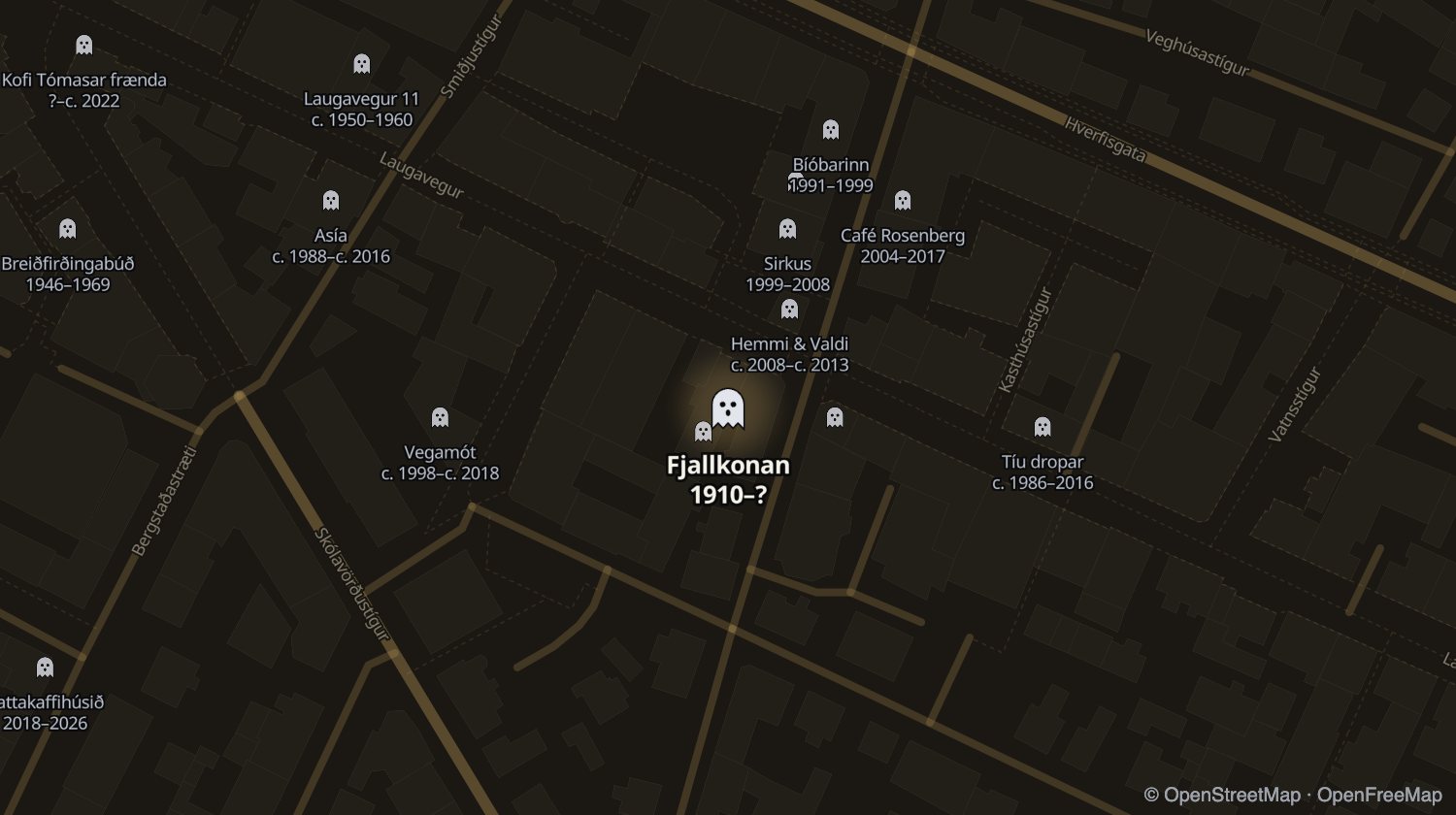
Sirkus at Klapparstígur 30, an old timber house painted turquoise and green with palm trees by the door, was run by Sigríður Guðlaugsdóttir, 'Sigga Boston', who took over the premises around 2000. The ground floor was a tiny room of steel tables and mismatched chairs, yet it became the daily meeting place of Reykjavík's musicians, writers and artists – Björk played there regularly, and múm, Sigur Rós and Seabear were familiar faces; there was even a moustache competition. It peaked in 2003–2005, and when it closed in early 2008 to make way for redevelopment, more than 200 musicians, Sigur Rós and Páll Óskar among them, played a weekend-long marathon in protest. The demolition never happened, largely because of the financial crash; the house later became a computer shop and is now part of a hotel complex. Sirkus lived on as an installation at the Frieze Art Fair in London, as a bar in Tórshavn in the Faroe Islands from 2009, and from 2018 in Seyðisfjörður, where Sigga moved it with the original wall art.
Austurstræti 22 (corner of Lækjargata), Reykjavík · bar / nightclub · Today: The house was rebuilt as a replica of the 1801 original; the restaurant Caruso operates there
Pravda occupied Austurstræti 22, built in 1801 as the first house on the street, which over two centuries had housed Iceland's high court, the governor Count Trampe and, briefly in 1809, Jørgen Jørgensen during his eight-week rule. After a long run as shops – Haraldarbúð, Herrabúðin and later the fashion store Karnabær – the house became the nightclub Astró from 1994 to 2003, and Pravda opened there in 2003.
In spring 2006 Pravda became home to Pravda-prinsessan, a contest dreamed up and run by Myndver.is – from the photo shoots to the whole production – together with Pravda, the magazine Sirkus RVK, Iceland Express, the Smart tanning salon and Smirnoff. On Saturday nights four women were picked from the crowd and photographed on the spot, then competed in the next issue of Sirkus, with readers voting by text message. In all, 32 took part across eight heats, and the final was held at Pravda in June: a packed house, champagne and a contest that contestants and audience alike took just seriously enough. The grand prize was a trip for two to Europe.
Austurstræti 22 today, rebuilt as a replica of the original after the 2007 fire. Photo: ArniGael / Wikimedia Commons, CC BY-SA 4.0 · Pravda-prinsessan 2006 in Sirkus RVK – the final night and the heats. Photos: Myndver.is (Hákon Freyr Hovdenak) · pages from Sirkus RVK 2006
Lækjargata 2, Reykjavík · Restaurant · Today: The 1852 corner house at Lækjargata 2 was badly damaged in the April 2007 fire, and Café Ópera did not reopen.
For two decades Café Ópera was a fixture of the downtown dining circuit, tucked into the old 1852 corner house at Lækjargata 2. The interior had a bohemian, early-20th-century feel, with kitsch posters, paintings and a piano hung on the wall. Its signature was the hot-rock steak: raw meat served on a scorching stone so guests could cook it at the table, often after a creamy lobster soup laced with cognac. In early 2007 the restaurant closed for a complete makeover. Only weeks later, on 18 April 2007, the great fire at the corner of Austurstræti and Lækjargata badly damaged the house, which also held Café Rósenberg and a kebab shop, and Café Ópera never returned.
Vesturgata 6–8, Reykjavík · restaurant · Today: Later Chinese restaurants (Great Wall, DaChin)
Naustið opened on 6 November 1954 in Geir Zoëga's 1882 fish warehouse at Vesturgata 6–8, founded by seven men including the trained hotelier Halldór S. Gröndal and Geir Zoëga jr., who persuaded his father to lend them the old building. Dressed with ship masts, bells and name boards, it promised to be open all day with some fifty dishes, and it was for decades one of the most glamorous restaurants in the country – the President hosted banquets there for the kings of Denmark and Sweden, President Kekkonen of Finland and Crown Prince Harald of Norway. In 1958 Naustið began advertising 'þorramatur', the first known use of the word, and its midwinter buffet of traditional food was soon copied across Iceland. Guests loved its booths and the legendary upstairs Símonarbar, but by the mid-2000s the restaurant had closed; when the interior was stripped in 2006, its fittings were photographed for the city museum and the booths were given to Hótel Látrabjarg and a pizzeria in Sandgerði. A Chinese restaurant, the Great Wall, opened in 2007, followed later by DaChin.
Hafnarstræti 12, Ísafjörður · dance hall · Today: Youth centre, later shops
The house at Hafnarstræti 12 was built around 1930 and in the 1920s and 30s was known as Uppsalir, first a café and then Hótel Uppsalir. In 1937 the Independence Party associations of the Westfjords bought it, added a large hall and opened it in spring 1939 as Sjálfstæðishúsið – a restaurant, dance hall and meeting place that later took the nickname Sjallinn, after the famous Akureyri venue. In 1979 members of the BG flokkurinn band leased it and revived the name Uppsalir, booking acts such as Utangarðsmenn, Grafík, HLH-flokkurinn and Friðryk, and in 1985 a licensed restaurant opened. In the 1990s the biggest dance bands in the country – Sálin hans Jóns míns, Skítamórall, Írafár and Á móti sól – kept the floor full, while Pizza 67 downstairs was a local favourite. The last dances were held in autumn 2005; the building then served as a youth centre and later as shops.
Kringlan shopping centre, Reykjavík · restaurant · Today: The brand returned to Iceland with a new downtown Hard Rock Café in October 2016
Hard Rock Café opened at Kringlan on 25 July 1987, bringing the American chain's formula of burgers, milkshakes and rock memorabilia on the walls to Reykjavík. It quickly became hugely popular and stayed a familiar stop for families and visitors for almost two decades. The early rush of popularity faded over the years, and Vísir reported that in the end the restaurant could no longer cover its running costs. It closed on 29 May 2005 after almost 18 years, and Iceland was without a Hard Rock until a new one opened in the city centre in 2016.
Austurstræti 22, Reykjavík · Nightclub · Today: The building became Pravda (2003), which burned in 2007; the rebuilt house now holds the Caruso restaurant.
Astró opened on Austurstræti in 1995 and quickly became the club of the mid-nineties, the place where Reykjavík's VIP culture was born. Its best-known feature was the pillar: buy a big bottle of champagne and your name was written up on it for everyone to see. Getting onto the pillar was a real mark of status – friends clubbed together for a bottle just to be up there, and visiting stars such as Jerry Seinfeld and Mel B ended up on it alongside Icelandic pop names like Skítamórall. House DJs such as Áki Pain, Svali, Margeir and Kiddi Bigfoot shaped the sound, and regulars remember 1996–1998 and the Kiddi Bigfoot years of 2000–2002 as its golden eras. Together with Tunglið and the Rósenberg cellar just across the corner of Lækjargata, Astró made the western end of the downtown strip the heart of Reykjavík nightlife in the nineties. The club ran under its own name until summer 2003, when Pravda took over the same building. Nostalgia ran deep enough that an 'Astró night' was staged at NASA in 2009.
Sólgarður, former Saurbæjarhreppur, Eyjafjarðarsveit, Eyjafjarðarsveit · Community hall (félagsheimili) · Today: Smámunasafnið (Sverrir Hermannsson's Small Objects Museum) since 2003
The oldest part of Sólgarður was built in the mid-1930s by the parish council and the local youth association as a meeting house for the inner Eyjafjörður valley. After a new south wing was added, it was formally opened as a community hall on 30 October 1954, the first in Eyjafjörður under the new community-hall law. For decades it hosted dances, plays, þorrablót midwinter feasts and Christmas parties, and it also served as the parish school. A north wing around 1979–80 gave it its symmetrical gables. Since July 2003 the building has housed Smámunasafnið, Sverrir Hermannsson's quirky museum of small everyday objects.
Kaffi Thomsen at Hafnarstræti 17 began in 1996 as a small café on an upper floor and, riding the dance-music boom of the late nineties, grew into a two-floor club. It had a big sound system and the country's best-known DJs, who filled the weekends with techno, drum 'n' bass and deep house. Its finest hour came in summer 2000, when Reykjavík's city council trialled unrestricted bar opening hours: Thomsen became the place everyone went once the other bars had shut, and one regular later recalled stepping out into the morning sun at nine o'clock. The club closed in 2002, at the end of the era it had come to define.
Hótel Búðir (the old hotel)1947–2001 · Lost to fire
Búðir, Snæfellsnes, Búðir · hotel / restaurant · Today: A new Hótel Búðir opened on the same site on 14 June 2003
The old Hótel Búðir opened in 1947 as a guesthouse with a fish restaurant at the lonely trading post of Búðir on the south coast of Snæfellsnes, below the glacier. It became a cherished retreat for artists, and the Nobel laureate Halldór Laxness often stayed and wrote there, as did the painter Jóhannes Kjarval. The business became a limited company in 1956, and the hotel remained a quiet, much-loved stop on the peninsula for over half a century. On 21 February 2001 a fire destroyed the hotel completely, and a new building opened on the same spot in 2003.
Strandgata 30, Hafnarfjörður · bar & dance venue · Today: The lot stood empty for two decades; the Fjörður town-centre extension has been under construction there since 2022
When the sons of cinema founder Árni Þorsteinsson sold Hafnarfjarðarbíó to the town in September 1988, the films stopped and the building was soon turned into a dance venue and retail space. The top floor became a bar called Nillabar. The old cinema and the neighbouring co-op building at Strandgata 28 were torn down in 2001, and the lot stood empty for about two decades before work on the Fjörður extension began in 2022.
Víkurbraut 58, 240 Grindavík, Grindavík · community / dance hall · Today: Guesthouse since 2014, now Geo Hotel Grindavík
Festi was built by a partnership of Grindavík residents to a design by architect Ragnar Emilsson; construction began in 1968, the hall was first used on Sailors' Day in 1972 and formally opened that autumn. Besides a 350-seat hall the 1,700 m² building housed the library, a cinema, meeting rooms and the municipal offices, and among its managers was Tómas Tómasson, later of Tommahamborgarar fame, who even released a single by Pjetur og Úlfarnir on a Festi label. Nearly every popular dance band of the day played there – Trúbrot, Hljómar, Ingimar Eydal's band, and later SSSól, Sálin hans Jóns míns, Todmobile, Skítamórall and Írafár – and Stuðmenn played their very first public dance at Festi in 1975. It was one of the few community halls in Iceland that actually made money in its heyday, but dances thinned out as more venues opened in the 1980s and had all but ended by 2000. After standing empty for years and failing to sell, the building was turned into a guesthouse in 2014 and now operates as Geo Hotel Grindavík.
Corner of Klapparstígur and Hverfisgata, Reykjavík · bar
Bíóbarinn sat on the corner of Klapparstígur and Hverfisgata from 1991 to 1999 and, true to its name, was a bar for film lovers: the upper floor screened movies and was decorated with posters and cinema memorabilia. The basement was another world – a hot, cramped dance floor where DJs KGB and Kári ran club nights. Quarashi, Stjörnukisi and Botnleðja all played there, and the bar drew a mix of movie buffs, bohemians and music fans. At its peak in the mid-nineties it was the indie kids' living room, a forerunner of Sirkus just up Klapparstígur.
Lækjargata 2 (2a), corner of Austurstræti – the old Nýja bíó building, Reykjavík · nightclub · Today: A new building on the corner, home to restaurants such as Hard Rock Café and Grillmarkaðurinn
The old Nýja bíó cinema, which had shown films on the corner of Lækjargata and Austurstræti from 1920 to 1987, reopened in 1987 as Lækjartunglið, soon shortened to Tunglið ('The Moon'). It became one of the city's hottest clubs and a mid-sized concert hall for every kind of music, at its peak in the early-to-mid nineties – the years when Tunglið, the Rósenberg cellar beneath it and, from 1995, Astró across the street made the corner of Lækjargata and Austurstræti the centre of the city's nightlife. Ham played its farewell concert there in 1994, and The Prodigy played the club on 24 September 1994, the same night they also played Kaplakriki in Hafnarfjörður. A security guard spotted fire in the building on the morning of 30 July 1998; it was one of the largest fires in the history of downtown Reykjavík, and the building was destroyed and pulled down. A new building now stands on the corner, home to restaurants such as Hard Rock Café and Grillmarkaðurinn.
Rósenbergkjallarinn (Bíókjallarinn)1991–1998 · Lost to fire
Lækjargata 2a (basement of Tunglið), Reykjavík · bar / club · Today: Gone with the Tunglið building
Rósenbergkjallarinn opened in 1991 in the basement under Tunglið, at first a cross between a rock bar and a dance club. Around 1994 it became the headquarters of Iceland's young rave scene, packed with rave kids and rockers alike. DJ Kári, one of the scene's DJs, remembered it as a down-and-dirty party basement where sweat dripped from the ceiling. With Tunglið upstairs and Astró across the street, the cellar was part of the golden age of nightlife at the western end of downtown. The club was later sold and drifted back towards being a rock hangout. It burned together with Tunglið on 30 July 1998 and was never reopened.
Tveir vinir og annar í fríic. 1990–c. 1998 · Renamed
Laugavegur 45 (corner of Frakkastígur), Reykjavík · bar / music venue
'Two friends and another on holiday' was a carpeted cellar bar on Laugavegur, complete with a karaoke machine and a widescreen TV, which by the mid-nineties had become the best place in town for bands to play. It was run by Ragnhildur, known as Hilla, who booked the shows herself. Musicians remember it as more 'real rock' than Gaukur á Stöng, which leaned towards pub rock and chart pop, and it gave a whole generation of young guitar bands a stage. In the late 1990s the cellar was turned into the strip club Vegas, and the rock nights were over.
Fischersund (former Duus-Hús), 101 Reykjavík, Reykjavík · club
Tetriz opened in summer 1996 in the old Duus-Hús rooms on Fischersund, run by film director Júlíus Kemp, best known for the comedy Pís of keik. It was a nightclub with frequent live music and arrived just as Icelandic hip-hop was finding its feet, so rap acts were the house speciality. Quarashi played there, as did the group of rappers who later became Subterranean, and the band Jetz held an album release concert at the club. Tetriz lasted only about a year and a half before closing, and the old house was later demolished.
Fischersund (Duus-hús), 101 Reykjavík, Reykjavík · bar / club · Today: Replaced by another building
Duus-Hús, a pub in an old house on Fischersund in the Grjótaþorp quarter, opened in 1984; in 1986 a small music room was added, and Stuðmenn were the first band to play it – fifty people made it feel packed. For the next few years everyone from Ham to the Sugarcubes played there, and the Sugarcubes held the release party for their debut album Life's Too Good there in 1988. From spring 1987 to spring 1991 the jazz club Heiti potturinn ran Sunday jazz nights in the house – more than 200 of them – with visiting greats such as Kenny Drew and Charles McPherson. Its most famous night came in August 1990, when the Sugarcubes gave a private concert for French President François Mitterrand and culture minister Jack Lang during their official visit. By summer 1996 the rooms had been taken over by the club Tetriz; afterwards the house stood empty for a while before it was torn down and replaced by a new building.
Austurstræti 20, Reykjavík · restaurant / café / nightclub · Today: Revived as Hressingarskálinn in 2021, in its old form
Hressingarskálinn, 'the refreshment pavilion', opened in 1932 at Austurstræti 20, in a timber house from 1805 – often called the oldest restaurant in Reykjavík. For decades it was the city's living room, where writers and intellectuals came in from the cold for coffee, food and conversation; the modernist poet Steinn Steinarr was among its most famous regulars. Late in the 20th century it lost its old character and became a nightclub, and later the sports bar Bjarni Fel. In June 2021 it reopened as Hressingarskálinn in its old spirit, with home cooking, pancakes and the famous Hressó cake.
Corner of Kirkjuvegur and Vestmannabraut, Vestmannaeyjar · Assembly and dance hall · Today: Hvítasunnukirkjan (Pentecostal church), still used for concerts
The Independence Party association built a grand new hall on the blasted-down Mylnuhóll, where the old Good Templar house had stood, between October 1936 and January 1938. It opened on 22 January 1938 and was then the second-largest assembly hall in Iceland, after Gamla Bíó in Reykjavík. For decades it was the islanders' main venue for dances and entertainment, and it was extended in 1963–65. In 1993 the Pentecostal church bought the building, renovated it and moved its services there in 1995. The old dance hall is now a church, though it is still the islands' best room for concerts.
Borgartún 32, Reykjavík · nightclub · Today: Hótel Cabin now operates at Borgartún 32
Klúbburinn opened as a restaurant in 1960 in a three-storey office building with a basement at Borgartún 32, lavishly decorated with an oriental-style wine room and a lounge styled like a hunting lodge. It was run by Sigurbjörn Eiríksson, who also ran Glaumbær, and like Glaumbær it spread over several floors with bands such as Haukar and Júdas. After Glaumbær burned in December 1971, Klúbburinn became the most popular place in town for young people. Its reputation suffered in the mid-seventies, the business declined, and in the 1980s most of it was closed and what remained was renamed Sportklúbburinn. Shortly after midnight on 3 February 1992 fire broke out in the stairwell and badly damaged all three floors, ending the club for good.
Laugavegur 105 / Hverfisgata 116 (1945–58); Brautarholt 20 (1958–91), Reykjavík · dance hall / nightclub · Today: The Brautarholt 20 building was converted to apartments (approved 2020)
Þórscafé was founded by the couple Ragnar V. Jónsson and Júlíana Erlendsdóttir, first mentioned as a restaurant in autumn 1945 on the upper floor of a building near Hlemmur with entrances on both Laugavegur and Hverfisgata; in 1958 it moved into a two-storey hall Ragnar built at Brautarholt 20. From 1954 the KK-sextett played five nights a week, with singers like Sigrún Jónsdóttir and Ellý Vilhjálms, and Lúdó og Stefán were just as popular after them; Galdrakarlar were later the long-time house band until they broke up in 1983. With only hotels allowed to serve alcohol it had no bar until 1976, when it got a licence, a downstairs disco and room for about 1,200, and launched Þórskabarett – a revue with Halli and Laddi followed by dancing. The family ran it for decades, with Ragnar's son Jón Ragnarsson and son-in-law Björgvin Árnason taking over in 1971. Its appeal faded around 1990, it briefly traded as Amadeus, Vetrarbrautin and Danshöllin, and closed for good in summer 1991; the building later housed Hitt húsið and Baðhús Lindu and has since been converted to apartments.
Strandgata 30, Hafnarfjörður · Cinema, later dance venue · Today: After 1988 the building became a dance venue and shops, with Nillabar on the top floor.
Hafnarfjarðarbíó, known locally as Árnabíó after its founder Árni Þorsteinsson, held its first screening on 6 March 1914. In 1936 Árni bought Strandgata 30, the site of the old Hótel Drífandi, and rebuilt it, and films were shown there from December 1943. The cinema also imported films and rented them to other cinemas from 1952. After Árni died in 1956, his sons Níels and Kristinn ran the business until they sold the building to the town on 9 September 1988. It soon became a dance venue and shops, with Nillabar on the top floor, part of a Strandgata nightlife that also included Mánabar and Skálinn.
Ármúli 5, Reykjavík · nightclub / disco · Today: Renamed Jollygood around the early 1990s
Restaurateur Ólafur Laufdal took over a club called Sesar in Ármúli, remodelled it and opened it as Hollywood on 2 March 1978, with such a crowd that many were turned away; he ran it with his wife, Kristín Ketilsdóttir. Inspired by Studio 54 in New York, it was the first club in Iceland with a light-up dance floor and video equipment, with TVs on the walls showing music videos, and DJs such as Leópold Sveinsson, Vilhjálmur Ástráðsson and Ásgeir Tómasson spinning disco. It was open every day except alcohol-free Wednesdays and was known for glamour: Módel '79 fashion shows on Thursdays and Sundays, the Miss Hollywood contest with a car or a trip to Hollywood as the prize, and entertainers like Laddi and Haukur Morthens. Guests famously sent notes and birthday or love messages to the DJ booth to be read out over the dance floor. Ólafur sold the business in 1987; bands like Sixties kept playing there in the late eighties, and by the early nineties the club had been renamed Jollygood. In its day Hollywood set the template for the big Reykjavík clubs – the glamour, the DJs and the dance floor that the downtown clubs of the nineties, from Tunglið to Astró, would build on.
Thorvaldsensstræti 2 by Austurvöllur (1963–73); Suðurlandsbraut 26 (1973–86), Reykjavík · dance hall · Today: The Austurvöllur hall is Sjálfstæðissalurinn today; Suðurlandsbraut 26 houses shops
Restaurateur Sigmar Pétursson, who had run Breiðfirðingabúð, took over the Independence Party's hall by Austurvöllur in 1963 and renamed it Sigtún; alongside Glaumbær it became one of the most popular places in the country for young people. Sigmar was on the floor most nights and even played the accordion for guests himself during a musicians' strike in 1965. Pónik og Einar, Haukur Morthens and his band, Roof Tops, Mánar, Haukar, Lónlí Blú Bojs, Galdrakarlar and Brimkló all played there, and bingo nights and card evenings were regular fixtures. When the party sold the old house, Sigmar built a new Sigtún at Suðurlandsbraut 26, opened in 1973, with one hall for about 1,000 guests – the largest in the country. As discos took over in the late seventies and eighties demand for big live-music halls faded, the Sigtún name was dropped in 1986, and the club Útópía ran in the building for a while.
Skúlagata 30, Reykjavík · nightclub · Today: No longer a nightclub; the Kex hostel operates in the neighbouring building
Safari opened in early February 1983 at Skúlagata 30, in a building owned by Tómas A. Tómasson, who had run the alcohol-free teen club Villti tryllti Villi there the year before. Low-ceilinged, with room for 450 and a blinking disco floor, it was for a while the only place in town with regular live music after Hótel Borg stopped hosting bands: Mezzoforte played on opening night, and Egó, Grafík, Kukl, Þursaflokkurinn and Tappi tíkarrass followed, while Grace Jones came by as a guest. The Icelandic Duran Duran fan club was founded at a Duran Duran evening there, and the club even ran its own label, Safari Records, which released albums by Frakkarnir and Bubbi Morthens. Business was shaky: the place was put up for sale in 1984, closed and reopened several times, and the last Safari night was at New Year 1985–86. In February 1986 it reopened as Roxzý, where Einstürzende Neubauten and Nick Cave and the Bad Seeds played, and later as Casablanca, which ran until near the end of the century.
Eyrarvegur 2, Selfoss · dance hall / restaurant · Today: The building was levelled in 1986
Selfossbíó opened on 13 May 1944, a theatre, cinema and restaurant designed by Gunnlaugur Halldórsson and built of pumice block, with hot water hauled from Hveragerði to help the concrete cure. Its curved west wing housed Gildaskálinn, an 80-seat restaurant famous for its Sunday cold buffet, and the hall seated about 330. Haukur Morthens was a regular in the early years, and from the mid-1950s Icelandic and foreign bands played weekend dances that drew crowds from across the South. Television and changing habits thinned the audience, Gildaskálinn was torn down in 1981, and after a last attempt by the local sports club the final dance was held on New Year's Eve 1985, with the band Lótus playing Álfareiðin as a farewell; the building was levelled in 1986.
Strandgata, by the harbour, Hafnarfjörður · restaurant & dance hall · Today: The site later held the Hafnarfjörður town library (2002–2026)
Skiphóll on Strandgata was a restaurant where dances and functions were held, and the jazz society Jazzvakning was founded there. Dance bands played there from the late 1960s – Hljómsveit Rúts Hannessonar began a months-long run in the autumn of 1969, and Guðmundur Ingólfsson led a band there in 1971 and a dinner jazz band in 1983. From 1975 the business was run by master chef Birgir Pálsson and Eygló Sigurliðadóttir, and it was later split into the nightclub Snekkjan and Skútan, with the kitchen and café. Snekkjan was sold in 1982 and Skútan moved to Dalshraun, yet bands were still advertised at Skiphóll in 1984–85.
Fannborg 2, Kópavogur · Community hall, cinema & concert venue · Today: The building later held the town offices and council chamber. It was sold to developers in 2017, and demolition work began in January 2026.
Kópavogur's community hall was built with the help of six local associations and opened in 1959. From then until 1984 its main hall served as the town's theatre and cinema. The building also hosted card nights, Rotary meetings and many concerts, and in its later years it was an early hub for Icelandic punk bands. The town library moved upstairs in 1964, and the hall was later turned into municipal offices and, in 2007, the town council chamber. Kópavogur sold Fannborg 2, 4 and 6 in 2017 for just over a billion krónur. When contractors began tearing it down in January 2026 without a demolition permit, the building inspector stopped the work the same day.
Vonarstræti 10, Reykjavík · dance hall / restaurant · Today: The Oddfellow order still owns and uses the building
The Oddfellow House by Tjörnin, an early functionalist building by Þorleifur Eyjólfsson, opened in 1932 with a restaurant and dance floor on the ground floor. In 1943 the airline Loftleiðir took over the space as Tjarnarcafé, where the bands of Bjarni Böðvarsson and Gunnar Ormslev and the KK Sextet played, and where Elly Vilhjálms was discovered at a KK singing audition in 1953. Ragnar Jónsson and his son Jón took over in 1964 and renamed it Tjarnarbúð, at first mostly for banquets and Jazz Club of Reykjavík nights. From 1968 it ran as an open nightclub with bands such as Eik, Icecross and Pelican, until open dances stopped in 1977 and the venue closed for good in summer 1979, with HLH flokkurinn probably the last band on stage.
Laugavegur 89 (1944–57); Skipholt 19, corner of Nóatún (from 1959), Reykjavík · dance hall / restaurant · Today: The Skipholt 19 corner building later housed Radíóbúðin and Ruby Tuesday; a neighbourhood café and bookshop (Bókasamlagið) opened there in 2021
Röðull opened on New Year's Eve 1944 with a dance held by the football club Fram, at Laugavegur 89 opposite Stjörnubíó; first owned by Erlendur Erlendsson, it held about 300 people across two floors and a basement. It closed there in autumn 1957 and after a pause reopened on the corner of Skipholt and Nóatún, where in summer 1959 restaurateur Helga Marteinsdóttir, who had run Vetrargarðurinn in Tívolí, took over the lease; she later bought the place with her son-in-law and ran it for many years, selling tickets and minding the hall in traditional Icelandic dress well into her seventies. Open six nights a week, it had bands led by Árni Elfar, Magnús Ingimarsson and Hrafn Pálsson, with singers such as Haukur Morthens, Vilhjálmur Vilhjálmsson and Þuríður Sigurðardóttir, and the 'Röðull special' open sandwich of lobster and prawns was a hit. Its doorman, the glíma wrestling champion Sigtryggur Sigurðsson, was famous enough to inspire Þursaflokkurinn's song 'Sigtryggur vann'. Röðull closed at the end of 1976 and Radíóbúðin moved in, while former regulars founded the Röðull society in 1990 to meet and reminisce.
Snorrabraut 37 (upper floor of Austurbæjarbíó), Reykjavík · nightclub · Today: The Austurbæjarbíó building still stands
Silfurtunglið ('The Silver Moon') opened in 1955 in the northern part of the upper floor of Austurbæjarbíó, run by Axel Magnússon and Sigurgeir Jónasson and named after Halldór Laxness's play of 1954. Open six nights a week for crowds of 150–200, it began with dance bands – José Riba's was the first house band, followed by those of Aage Lorange, Karl Jónatansson, Magnús Randrup and Finnur Eydal. In the sixties it moved on to beat groups such as Fimm í fullu fjöri, Sóló, Pónik, Hljómar and Flowers, then hippie-era bands like Júdas, Mánar and Óðmenn, and later cover bands and discos. It got a liquor licence in 1960, and noise from the bar fuelled years of complaints from neighbours in Norðurmýri. In autumn 1975 the city council refused to renew the licence and the club closed in October 1975; Snorrabær opened in the same rooms in March 1976.
Heimagata 4 (Tunga), Vestmannaeyjar · Hotel and dining room · Today: Buried under the 1973 Eldfell lava
Tunga at Heimagata 4 was built in 1913 by Jóhann Sörensen and first housed Magnúsarbakarí, a bakery. Its upper floor became Hótel Berg, which is recorded by 1931 and for a long time was the only hotel in town, run by Jóna Jónsdóttir. It was the islands' main guesthouse and a meeting place: the chess club met there in September 1936, and the founders of the local savings bank gathered there. Ingvald Andersen took over the hotel in 1968 and ran it until the eruption. In 1973 the house burned and was buried by lava from Eldfell, and photos show its owners watching it go.
Fríkirkjuvegur 7, Reykjavík · nightclub · Today: Listasafn Íslands (National Gallery of Iceland), opened on the site in 1987
Glaumbær opened in autumn 1961 in Herðubreið, the old ice house Thor Jensen had built beside Tjörnin, when Ragnar Þórðarson and Theódór Ólafsson leased the whole building and split it into a restaurant by day and a club by night; Sigurbjörn Eiríksson took over in 1963. Jón Páll Bjarnason's band was the first to play there, and through the sixties it became the home ground of the beat and hippie bands – Hljómar, Óðmenn, Dúmbó og Steini and later Náttúra – often with two bands on two floors the same night. In June 1970 Led Zeppelin, in town for their Reykjavík concert, turned up during Trúbrot's farewell show for Shady Owens and Karl Sighvatsson after Trúbrot's manager invited them. In 1971 the musical Hárið (Hair) was staged there, and a few days after its run ended, on 4 December 1971, fire gutted the timber-lined interior in the early hours after closing, destroying Náttúra's instruments. Musicians and the 'Glaumbær generation' fought for a rebuild for about two years, but neighbours were relieved when the building went to the National Gallery of Iceland instead.
Hafnarstræti 73 was built in 1923 for the Akureyrarbíó cinema, and in 1945 the men's choir Geysir bought it and named it Lón, with the new Akureyri Music School moving in a year later. The choir leased the house to the town in 1971, and the town bought it in 1975. As Dynheimar it became the municipal youth club and, for just over thirty years, a music venue where up-and-coming bands played concerts and rehearsed, alongside dances and discos. The era ended when the youth club moved to Rósenborg. The theatre company later used the building as Rýmið, and it is now a hotel that still carries the Dynheimar name.
Skólavörðustígur 6b, Reykjavík · dance hall · Today: Original building demolished 1984; the society opened a new Breiðfirðingabúð in Faxafen around 1990
Breiðfirðingabúð, or simply 'Búðin', opened in spring 1946 as the clubhouse of the Breiðfirðingafélag, the society of people from the Breiðafjörður region – then the largest regional society in Iceland with about 950 members – in a former furniture workshop behind Skólavörðustígur 6. It was rented out for dances from the start: from 1945 Björn R. Einarsson's band, the first all-Icelandic jazz band, played here and at Listamannaskálinn, and Svavar Gests, Tempó and Pónik followed, with old-time dances downstairs and the latest pop bands upstairs. From 1958 restaurateur Sigmar Pétursson ran the hall, adding traditional-costume balls, bingo and bridge nights, and live music carried on most nights of the week even after the society's activity waned in the sixties. The society sold the property in 1969 and dancing ended; from 1970 to 1982 the building housed Kristján S. Jósefsson's Icelandic animal museum, still under the Breiðfirðingabúð name. It was demolished in 1984, and around 1990 the society opened a new Breiðfirðingabúð in Faxafen.
Corner of Vonarstræti and Templarasund (by Tjörnin, behind Alþingi), Reykjavík · dance hall · Today: Parking for Alþingi
In 1887 the Good Templars' Reykjavík lodge Eining was granted a plot by Tjörnin on condition the house would move if Alþingi ever needed the land, and that autumn they put up a single-storey, timber-framed, iron-clad hall – the Good Templar House, known to everyone as Gúttó, which gave the street Templarasund its name. Its hall held about 300 people and served as Reykjavík's de facto town hall, where the town council met from 1903 to 1933; the Free Church held services there until 1903, and plays were staged there before Iðnó was built. Dances were strictly alcohol-free, and stewards reputedly searched guests for smuggled bottles. Musicians such as Bragi Hlíðberg, Jan Morávek, Skapti Ólafsson and José Riba played there, and the SKT dance-song contests run by Freymóður Jóhannsson launched many well-loved Icelandic songs. As newer halls opened the old house declined, a campaign to move it to the Árbær open-air museum failed, and it was demolished in autumn 1968; the site is now a car park for Alþingi.
Kirkjustræti, beside Alþingishúsið (behind Kirkjustræti 12), Reykjavík · dance hall / exhibition hall · Today: The site is part of the Alþingi grounds; Alþingi's service building (2002) stands at Kirkjustræti 12
The Artists' Hall was built in 1942–43 by the Association of Icelandic Visual Artists to a design by the architect Gunnlaugur Halldórsson, on the lot behind the old house Líkn on Kirkjustræti, right beside the Parliament building. It was meant as a temporary exhibition hall with a life of about five years, but it ended up hosting concerts, political meetings, a cafeteria and dances as well. From 1945 Björn R. Einarsson's band, the first all-Icelandic jazz band, played here and at Breiðfirðingabúð, and dances were held for several years around and after 1950. The neglected foundations soon let the building slip out of true and the roof leaked badly; by about 1960 it was a run-down shed and talk of demolition began. After years of debate it was finally torn down in 1968, and Alþingi's glass-and-steel service building, opened in 2002, now stands at Kirkjustræti 12.
Krossmóar, Ytri-Njarðvík, Reykjanesbær · community / dance hall · Today: A basalt memorial stone with a copper plaque marks the site by Krossmóar
Krossinn in Ytri-Njarðvík began life as a military hospital, which is thought to be where the name came from, and was turned into the local community hall after the war. Run by the Njarðvík women's association and youth club, it was for some two decades the gathering place for the whole Suðurnes peninsula, with the local police chief recalling 18 dances in a single winter month, each packed with about 400 people. It was there that a new band called Hljómar rehearsed in 1963 and played its first public dance on 5 October that year, launching the Keflavík beat sound. Krossinn closed when the new hall Stapi opened in October 1965, and the building was demolished in 1979.
Sjálfstæðishúsið við Austurvöll1946–1963 · Renamed
Thorvaldsensstræti 2, Reykjavík · dance hall / cabaret · Today: Rebuilt ballroom reopened in 2023 as Sjálfstæðissalurinn
The front house at Thorvaldsensstræti 2 was built in 1878 by Helgi Helgason, carpenter, composer and brass-band pioneer, and first held Reykjavík's school for young women; the Independence Party bought it in 1941 and added a rear ballroom for about 500 guests, dedicated in spring 1946 with the Reykjavík Brass Band and the opera singer Pétur Á. Jónsson. It held dances every night except the 'dry' Wednesdays and, unusually for the time, had a liquor licence, so crowds would cross Austurvöllur when Hótel Borg closed early. Aage Lorange's seven-piece band was the house band for its first eight years and played the hugely popular cabarets and revues, followed from 1954 by the B.G. Quartet of Björn R. Einarsson and Gunnar Egilson and bands led by Björn R. Einarsson and Svavar Gests; Sveinn Ásgeirsson also recorded radio programmes there. As social habits changed attendance fell, and after a renovation in 1962 it held dances only at weekends. In 1963 the party put the hall up for rent and that autumn it reopened as Sigtún.
Tívolí amusement park, Vatnsmýri (south of Njarðargata), Reykjavík · dance hall · Today: Building demolished 1987; the site was cleared by Hafskip for warehouses
Vetrargarðurinn ('The Winter Garden') was the restaurant and dance hall of the Tívolí amusement park, which opened on drained bogland in Vatnsmýri in summer 1946 – a single-storey hall with a central tower and a glass front facing the rides. Restaurateur Helga Marteinsdóttir ran it until 1959, followed by Sigurbjörn Eiríksson, later of Glaumbær and Klúbburinn. Open public dances began in 1951, with Jan Morávek's band as the first house band, then those of Baldur Kristjánsson and Karl Jónatansson, and later Plútó kvintettinn, Svavar Gests's band, Falcon and others; beauty contests and visiting foreign acrobats and musicians were big draws, and in 1956 the park even tried a summer zoo with lions and monkeys. The hall never had a liquor licence, guests smuggled in their own, and its rowdy reputation and noise drew complaints. Attendance fell after 1956, the floor sank into the bog, and when a temporary noise permit ran out at the turn of 1962–63 the hall closed, with the park following in summer 1963; the shell stood until 1987, and Stuðmenn's 1976 album Tívolí keeps its memory alive.
Fríkirkjuvegur 7 (the Herðubreið ice house), Reykjavík · nightclub · Today: Listasafn Íslands (same building that became Glaumbær)
The Stork Club opened in autumn 1960 in Herðubreið, the old ice house by Tjörnin that the Progressive Party had bought around 1955 and begun renting out; it was run by Þorsteinn Viggósson and Magnús Hannesson. Lúdó sextett, then the country's most popular band, was the house band in the downstairs hall, which seated over 300, while Finnur Eydal's group played the smaller upstairs room for about a hundred guests. Falcon and the J.J. Quintet also played, the owners tried to bring in foreign entertainers, and the club hosted jazz nights and the Miss Iceland pageant. Business was poor, and press reports of under-age drinking and pressure on guests to buy drinks did not help; the club went bankrupt in autumn 1961, about a year after it opened. Glaumbær opened in the same rooms and became far more famous.
Laugavegur 11, Reykjavík · Café-bar (Adlon bar) · Today: The building was protected in 2011. The restaurant Ítalía was there for about 30 years before moving to Frakkastígur in 2024.
Around 1950 the merchants Silli and Valdi opened one of their Adlon bars at Laugavegur 11, but nobody used that name: the place was always just "Laugavegur 11" or "Ellefu" ("Eleven"). It became the living room of young Reykjavík poets and intellectuals, and regulars included Elías Mar, Thor Vilhjálmsson, Ásta Sigurðardóttir, Dagur Sigurðarson and Alfreð Flóki. Older writers such as Steinn Steinarr and Þórbergur Þórðarson dropped in too, and the atomic poets were defended there over coffee. It was also one of the few known meeting places for gay men in the city at the time. The bar closed in 1960, but the house has hosted restaurants for most of its history, from the rowdy White Star in the 1930s to the restaurant Ítalía.
Hrafnagil, Eyjafjarðarsveit, Eyjafjarðarsveit · Rural assembly and dance hall · Today: Krummakot preschool (since 1998)
The meeting house at Hrafnagil was built in 1924 and formally opened in March 1925, and it quickly became the social heart of the district south of Akureyri. Parish council meetings were held there alongside dances, plays and all sorts of gatherings. In 1956 work began on a new community hall, Laugarborg, which took over in 1959. The old house then became a school for about four decades, with the youngest classes of Hrafnagilsskóli there until 1998. Since then the building has housed the Krummakot preschool.
Laugavegur 162 (top floor of the dairy building), Reykjavík · dance hall · Today: Þjóðskjalasafn Íslands (National Archives of Iceland), in the building since the mid-1980s
When the Mjólkursamsalan dairy's new building on Laugavegur went up in 1945, its top floor became a dance hall run by Guðmundur Kristjánsson on the dairy's behalf, and for the next eight years it was one of the most popular dance spots in town. The KK-sextett, probably the best-known band to play there, appeared shortly after it formed in autumn 1947, and the bands of Steinþór Steingrímsson, Árni Ísleifsson and Eyþór Þorláksson and the GO-kvintett also played. Besides dances the hall hosted chess tournaments, beauty contests and meetings. Alcohol was generally not sold – when it was, only by the full or half bottle – so guests usually brought their own. Dancing ended in 1953, and since the mid-1980s the building has housed the National Archives of Iceland.
Hótel Borgarnes (the old timber hotel)1905–1953 · Lost to fire
Borgarnes (Borgarholt), Borgarnes · hotel / dance hall · Today: A new concrete Hótel Borgarnes was completed in 1955 and still operates
Two blacksmiths began building a two-storey timber guesthouse with a large dining room in Borgarnes in 1905, and an extension in 1908 let it sleep about 30 guests. Vigfús Guðmundsson bought it in 1920 and ran it as Hótel Borgarnes with his wife and brother, and from 1929 the Dane Hans Grönfeldt marketed it to Reykjavík people for day trips. For decades, packed dances were held every Saturday night when the ferry Suðurlandið sailed in from Reykjavík, and business boomed with soldiers during the war. On 23 September 1953 a fire broke out in the attic and the hotel burned within an hour, leaving only the chimney; everyone got out safely.
Hellisheiði, below Hellisskarð (old Suðurlandsvegur), Hellisheiði · roadside inn · Today: The inn was razed in summer 1977
Kolviðarhóll was the famous inn on the old road over Hellisheiði, where a shelter was first built in 1844 and a proper inn in 1877. In 1903 Valgerður Þórðardóttir arrived on foot in a storm and was hired as cook; she married the owner, Sigurður Daníelsson, and together they kept the house open day and night, offering travellers food, drink, horses and guides. In 1929 they opened a new concrete inn with 20 rooms, central heating and its own generator, designed by state architect Guðjón Samúelsson and largely paid for by the couple themselves. Valgerður ran it alone after 1935, the sports club ÍR bought it in 1938, and during the war it was popular with British and American soldiers. All operations ceased in 1952, and the derelict building was razed in 1977.
Vesturgata 2, corner of Reykjavíkurvegur/Hafnarfjarðarvegur, Hafnarfjörður · hotel / dance hall · Today: Building gone (demolished 1970)
The house at Vesturgata 2 was built in 1906 by the merchant Ágúst Flygenring and was known for its turret with a turnip-shaped roof; around 1928 Guðrún Eiríksdóttir bought it and made it a small hotel with about eight rooms and a hall for some 160 guests, named Björninn after the mountain Þorbjörn near Grindavík, the first hotelier's home town. It became one of Hafnarfjörður's most popular dance halls, where clubs held their balls and the Hungarian cellist Vincent Farkas led a band in the mid-1930s; musicians such as Jónatan Ólafsson, Magnús Randrup and Vilhjálmur Guðjónsson played there, and after the war Blástakkatríóið, Swingbandið and Árni Ísleifsson's band. Svava Jónsdóttir bought it in 1938, followed by Ólafur Guðlaugsson, formerly of Hótel Borg, who ran it until it closed. British troops largely took the place over in 1940, and at the worst of it Ólafur held dances for Icelanders only. Trade dwindled after the war and the hotel closed around 1950; the turret was removed in the 1960s to widen Reykjavíkurvegur, and the building was demolished in 1970.
Vonarstræti, NW corner of Tjörnin, Reykjavík · dance hall · Today: Reykjavík City Hall (Ráðhús Reykjavíkur) stands on the site
The sailors' union Báran, one of Iceland's first trade unions, built its own hall by Tjörnin in 1899, and from 1902 it was known as Bárubúð. Holding about 300 people, it quickly became one of the town's main rooms for meetings, concerts and dances, with choirs, the opera singer Pétur Á. Jónsson and Oscar Johansen's band among those who performed. During the 1930 Alþingi millennium celebrations Columbia's engineers recorded a long series of 78 rpm records in the hall, praising its acoustics. Public entertainment ended after the football club KR bought the house in 1929, and the British army requisitioned it as a store in 1940. KR got it back in ruins in 1945, the city bought it and tore it down that summer, and the plot was set aside for a city hall.
Austurstræti 2 (corner of Aðalstræti), Reykjavík · hotel / restaurant · Today: Ingólfstorg
Johan Hallberg put up a large building on the corner of Aðalstræti and Austurstræti and began hotel and restaurant service there in 1882; after extensions it took the name Hótel Ísland, and it changed hands several times before Alfreð Rosenberg acquired it in 1928. For two decades it was a centre of Reykjavík's music life, with bands playing light classics in the afternoon and dance music or jazz in the evening – among them the Austrian 'Vienna trio' of Carl Billich, Josef Felzmann and Felix Czerny, hired in 1933, and the Spanish band that brought José Riba to Iceland. When Britain occupied Iceland in 1940 the Austrian musicians were interned, and Icelandic players such as Óskar Cortes, Þorvaldur Steingrímsson and Bjarni Böðvarsson largely took over the bandstand. Fire broke out in a storage loft on the night of 2–3 February 1944 and the hotel burned to the ground in about two hours, while firefighters kept it from spreading to the wooden houses around it. Hotel music moved on to Hótel Borg, and the lot was never rebuilt: it became a car park known as Hallærisplan and in 1993 was merged into today's Ingólfstorg.
Hafnarstræti 20, facing Lækjartorg, Reykjavík · hotel / dance hall · Today: Building demolished in 1961
The building facing Lækjartorg had been the Thomsen Magasin store of the merchant Thomsen family since 1889; Guðmundur Kr. Guðmundsson bought it in 1923, renovated it and opened a guesthouse that became Hótel Hekla in 1924. Rooms were upstairs, and the restaurant hall below held weekend dances and afternoon music, with house bands led by Poul Bernburg and Karl Matthíasson from 1928 to 1930; the Federation of Icelandic Artists (Bandalag íslenskra listamanna) was founded in the building in 1928. When Hótel Borg opened nearby in 1930 with live music, Hekla largely stopped hiring bands until the late thirties. During the war it became a hangout for British soldiers and lost its glamour, and hotel operations ended around spring 1942; the town bought the building at auction in 1943. It later housed workers on the city's hot-water project and city offices before it was demolished in 1961.
Mylnuhóll (corner of Kirkjuvegur and Vestmannabraut), Vestmannaeyjar · Good Templar hall: dances, theatre and cinema · Today: Samkomuhús Vestmannaeyja (the Pentecostal church) stands on the site
The Good Templar house on Mylnuhóll was built in 1890–91 under carpenter Sveinn Jónsson, and chains were buried at its corners so that the wind would not lift it off its foundation. It grew in stages, gaining a refreshment hall, a porch and finally a stage with a dressing room. Islanders came for dances, plays, tombolas and masquerades, and from 1915 films were shown there too. When the town was electrified in 1915, Gúttó got its own line shared with the telephone station, so it often stayed lit when other houses did not. A Norwegian male choir from Oslo sang there in 1924, and locals long swore the odd old building was haunted. It was torn down in 1936 to make way for the town's new assembly hall.
Aðalstræti 12, Akureyri · hotel / café · Today: Converted to flats around 1920; the building burned in 1955
The site had long held Jensenbaukur, for years the only restaurant in Akureyri, before merchant Vigfús Sigfússon bought it in 1898 and opened Hótel Akureyri. After a fire in December 1901 he rebuilt it as a two-storey timber hotel with towers, completed by 1908 and considered the finest guesthouse in Iceland at the time, with a dining room, wine cellar and a large hall for exhibitions and celebrations. After Vigfús died in 1916, Theodor Johnson leased it and ran a café with live music in the evenings. Hotel operations ended in 1919, the house was turned into apartments, and it burned to the ground on 17 November 1955.
Austurstræti 12, Reykjavík · Hotel, restaurant and banquet hall · Today: Stone commercial buildings on Austurstræti; the fire changed how Reykjavík was built
Built in 1905 as one of the biggest timber houses in town, Hótel Reykjavík was run by Einar and Margrét Zoëga and was thoroughly modern for its day, with gas lighting, running water and a large, bright dining hall. It was where the well-to-do held banquets and weddings, and in 1907 Alþingi hosted a banquet there for King Frederik VIII. After the Good Templars bought Hótel Ísland in 1906, it was for a time the only place in Reykjavík licensed to sell wine, until prohibition took effect on 1 January 1915. In the early hours of 25 April 1915, just after a wedding party had ended, fire broke out in the hotel and spread through the heart of town, destroying thirteen buildings on Austurstræti and Hafnarstræti. The great fire of 1915 led to new fire-safety rules and the end of timber building in central Reykjavík.
Laugavegur 20b (first at Laugavegur 23), Reykjavík · Restaurant with house band · Today: Gone; the name was later reused by an unrelated modern restaurant
Kristín Dalsted opened Fjallkonan in 1910 in a two-storey timber house at Laugavegur 23, one of the first real restaurants on Reykjavík's main street. In autumn 1915 she moved across the street to Laugavegur 20b, where the hall seated 200 guests and fifteen staff were employed. A five-piece band played every night from nine until half past ten. When the musicians also began playing at the rival Café Rosenberg cellar, she was so annoyed that she brought in two musicians from Denmark. Debts piled up during the First World War and she was forced to sell the business and the property, though she went on to run other restaurants.
Hótel Oddeyri (Ólafsbaukur)1884–1908 · Lost to fire
Strandgata 33, Oddeyri, Akureyri · hotel / restaurant · Today: A two-storey concrete building from 1925 stands on the lot
Ólafur Jónsson built Hótel Oddeyri on Strandgata in summer 1884, and locals soon nicknamed the timber house Ólafsbaukur. It served food and drink, beer and toddy included, had a billiard table, and held dances to harmonica music; Akureyri's first labour union was founded there in 1897. After Ólafur's death his widow Anna Tómasdóttir took over and in 1905 expanded the hotel with new wings, carvings and two towers, so that it could take 60 guests. On the night of 18 October 1908 a fire spread from a neighbouring shop and both buildings burned down within about two hours; everyone escaped.
Bæjarlind 4, Kópavogur · Sports bar · Today: A sports bar called Players Kópavogi is now listed at Búðakór 1, by the Kórinn arena.
Players was a sports bar at Bæjarlind 4, next door to Spot in the Lindir area of Kópavogur. In 2010 the Reykjavík Grapevine described it as a classic sports bar, with plenty of TVs showing the big games, pool tables and beer, and it also hosted concerts. Together with Spot it made this corner across from Smáralind a destination for nights out in Kópavogur.
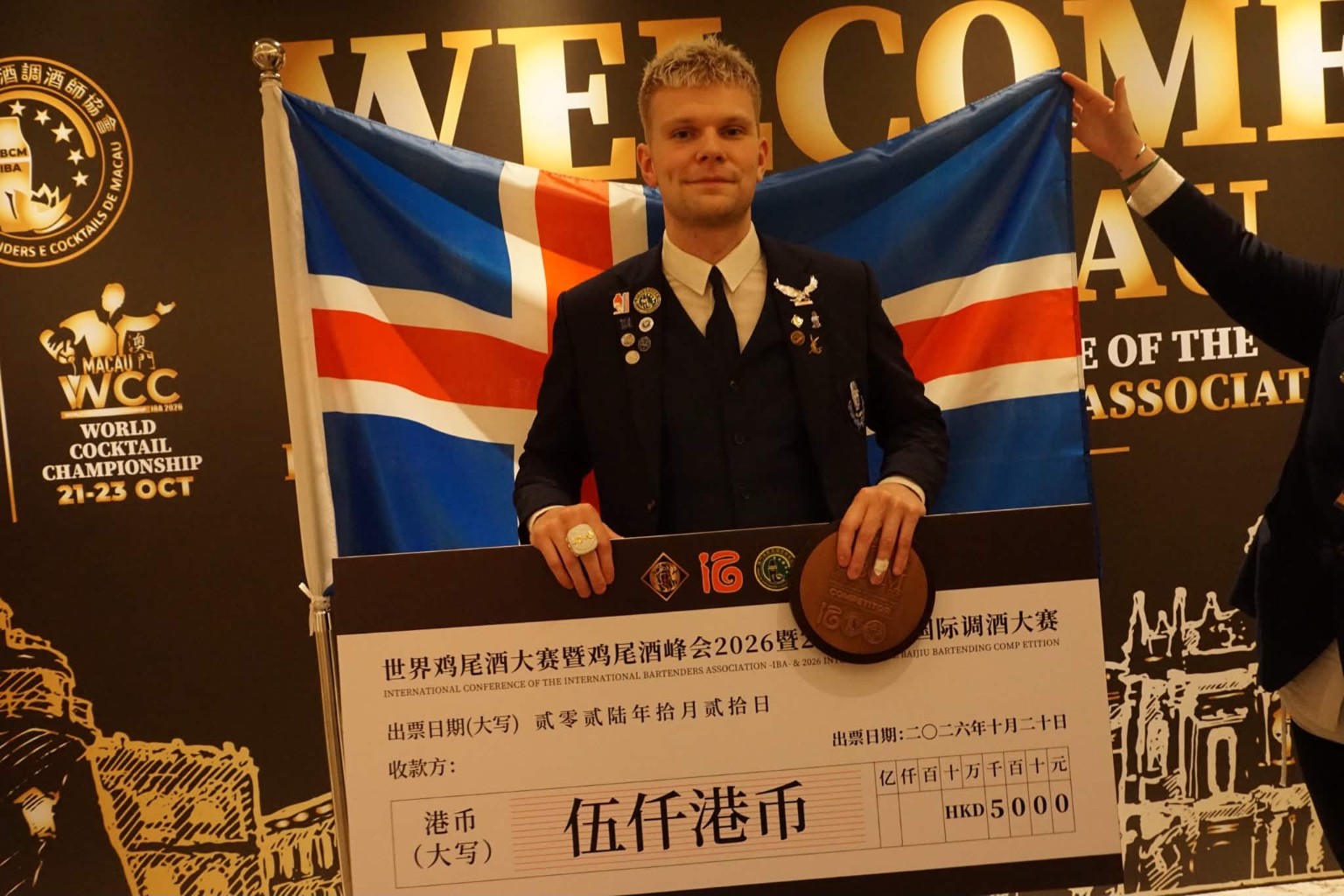
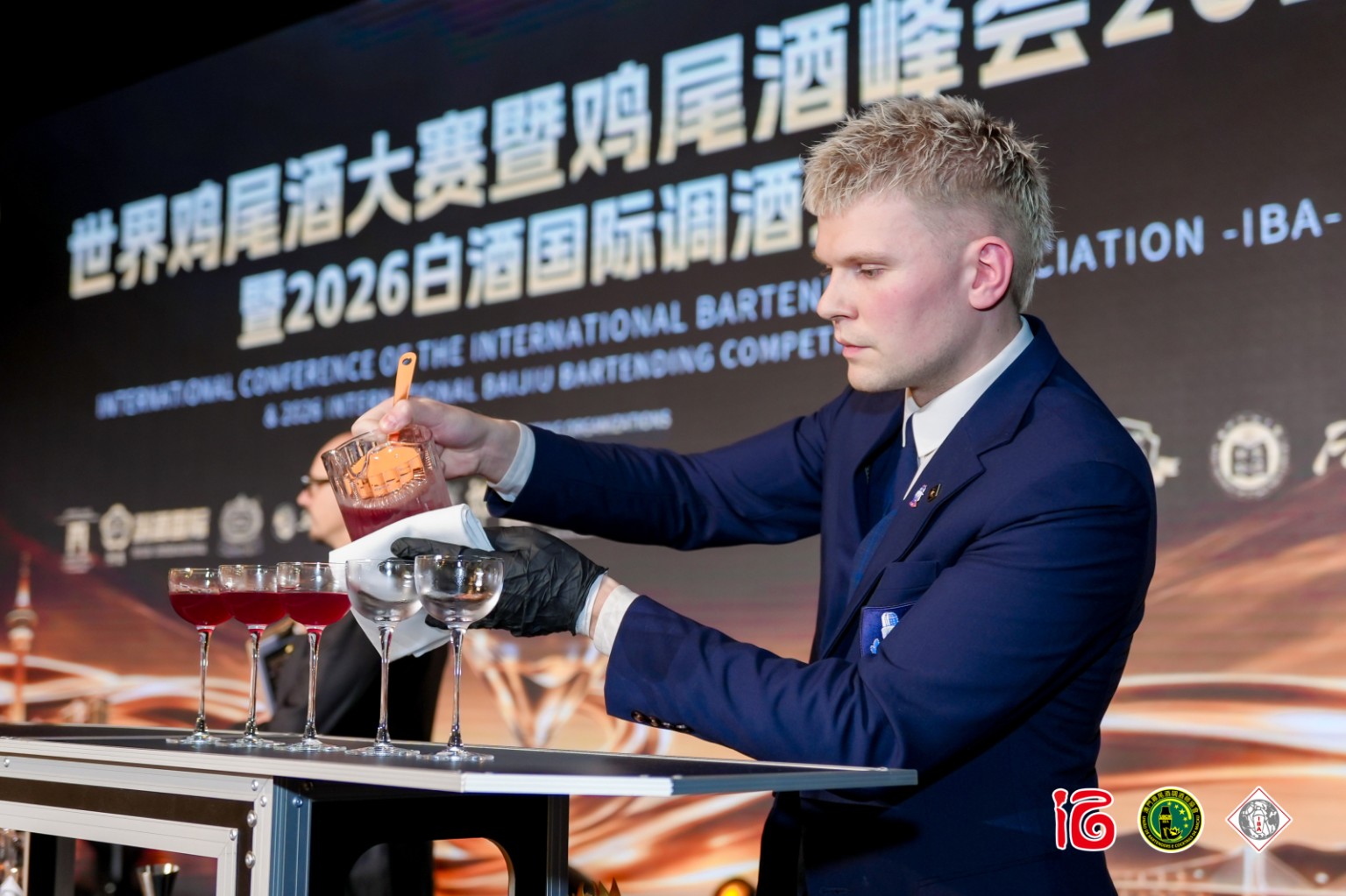
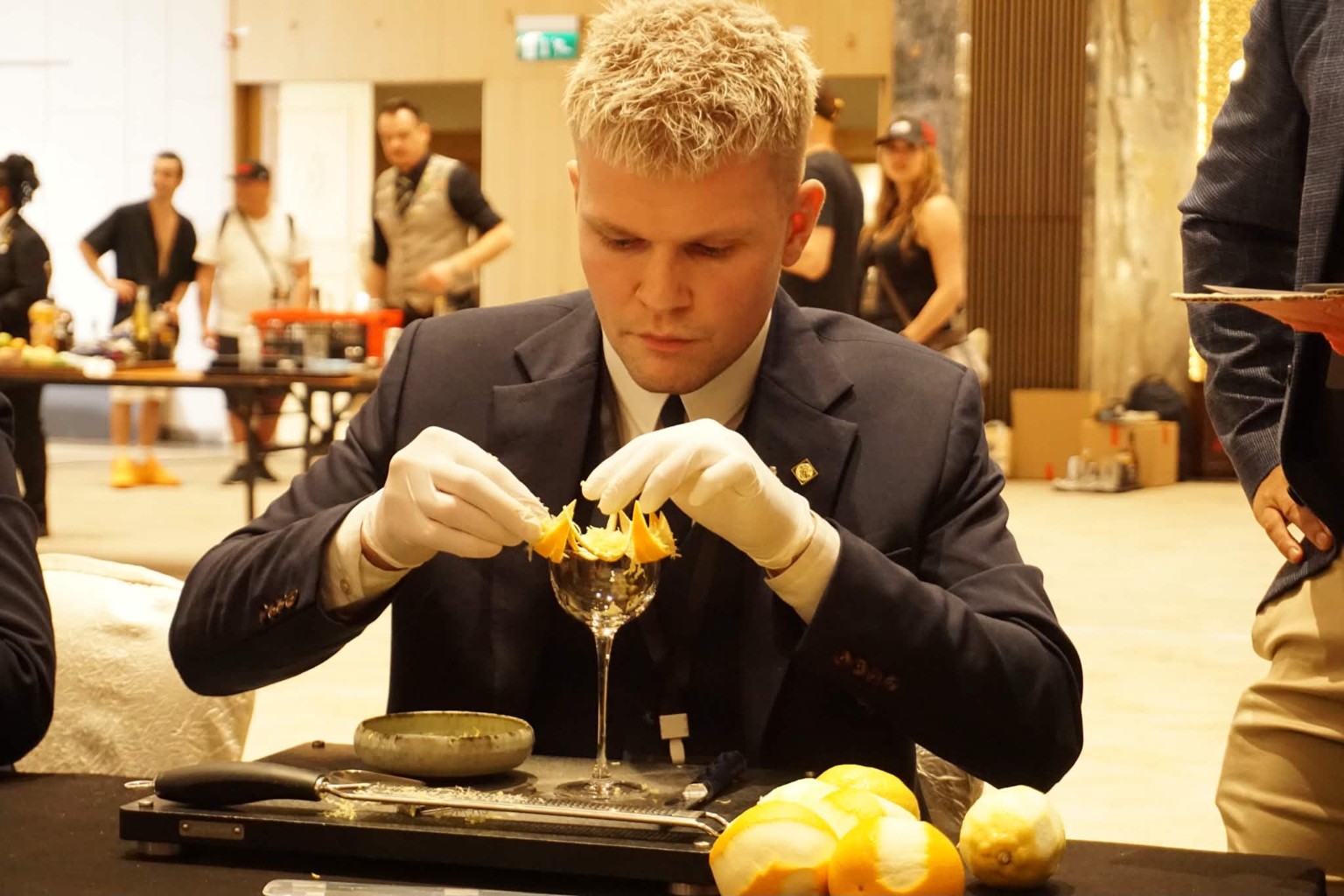
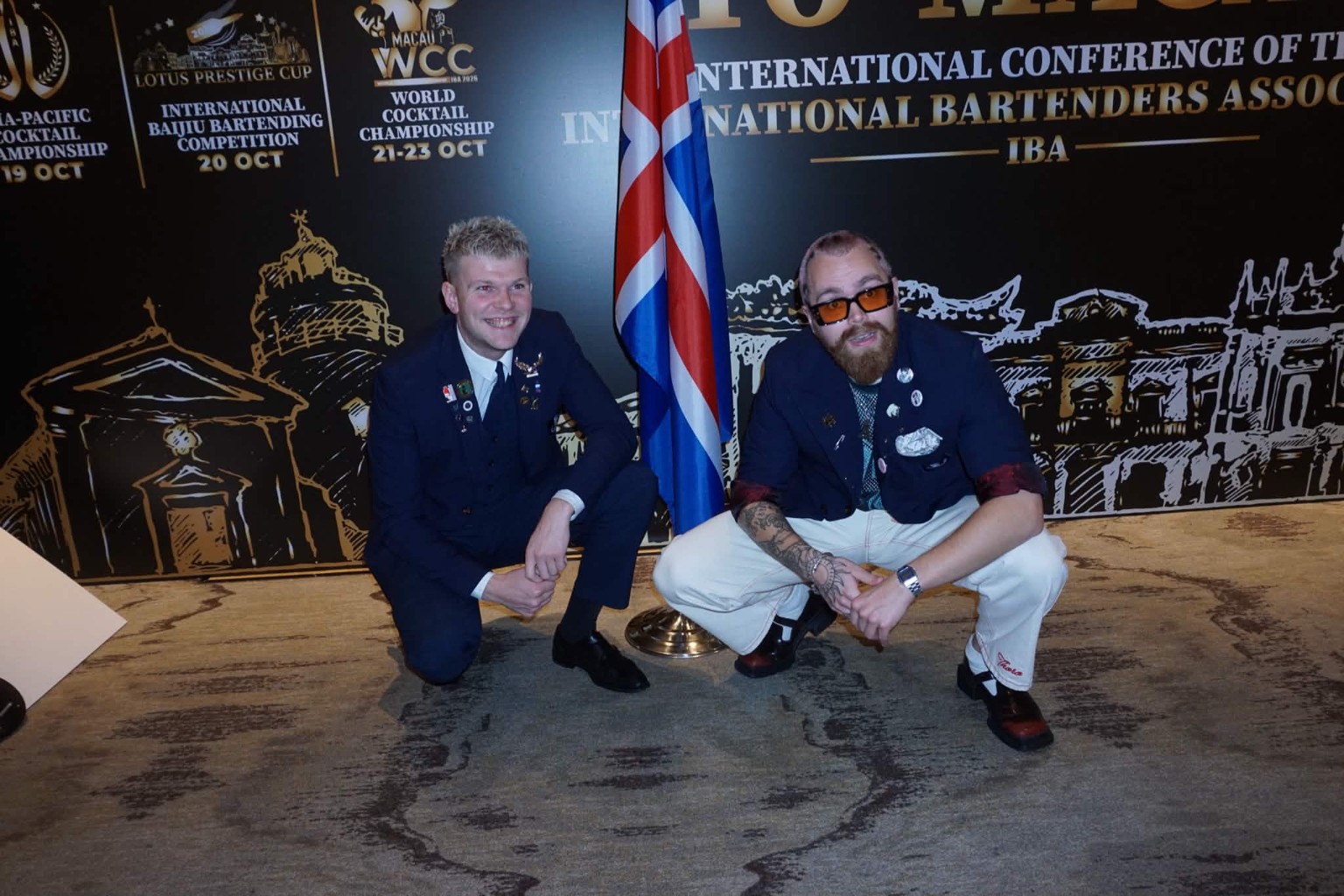
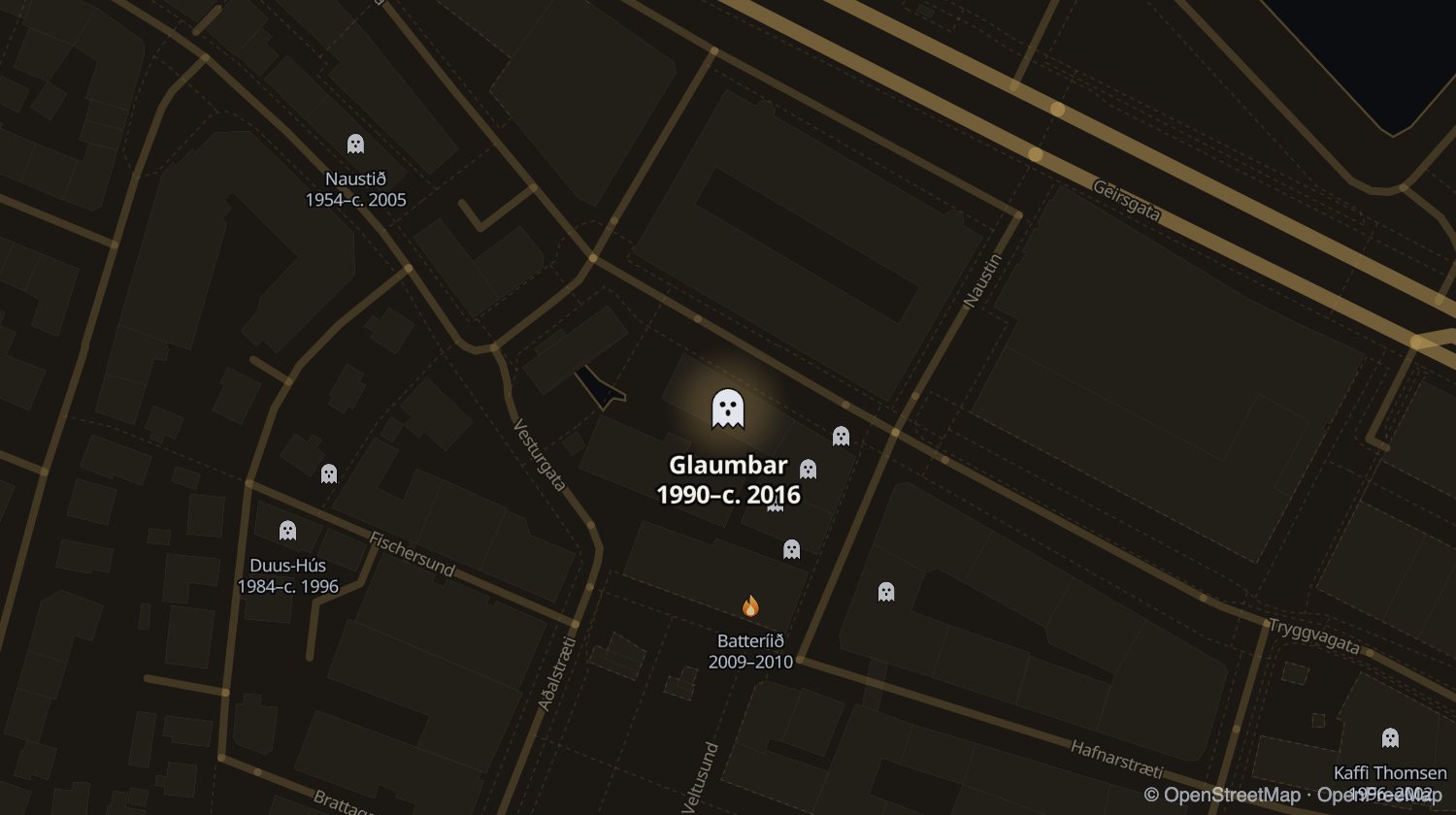
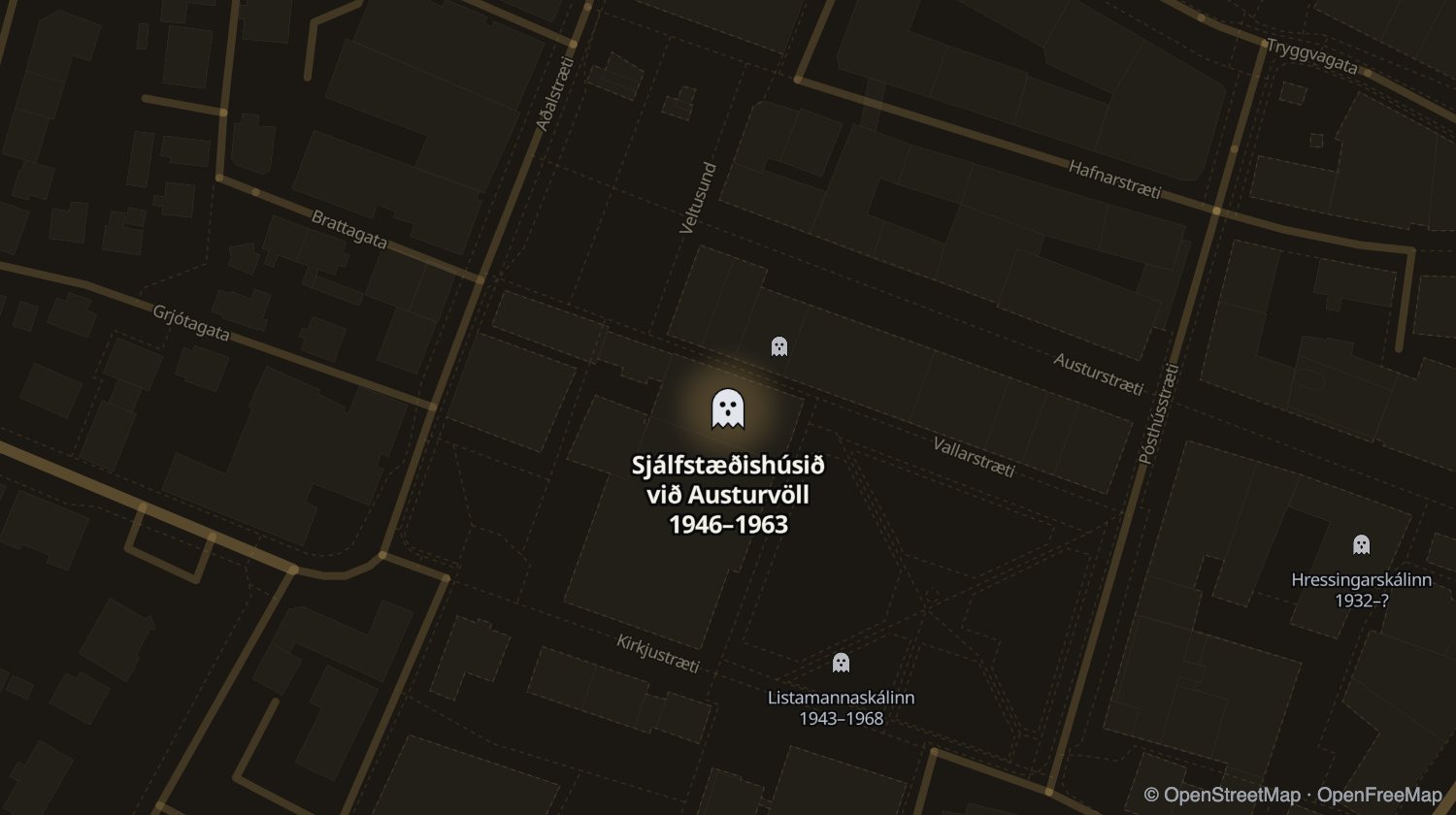
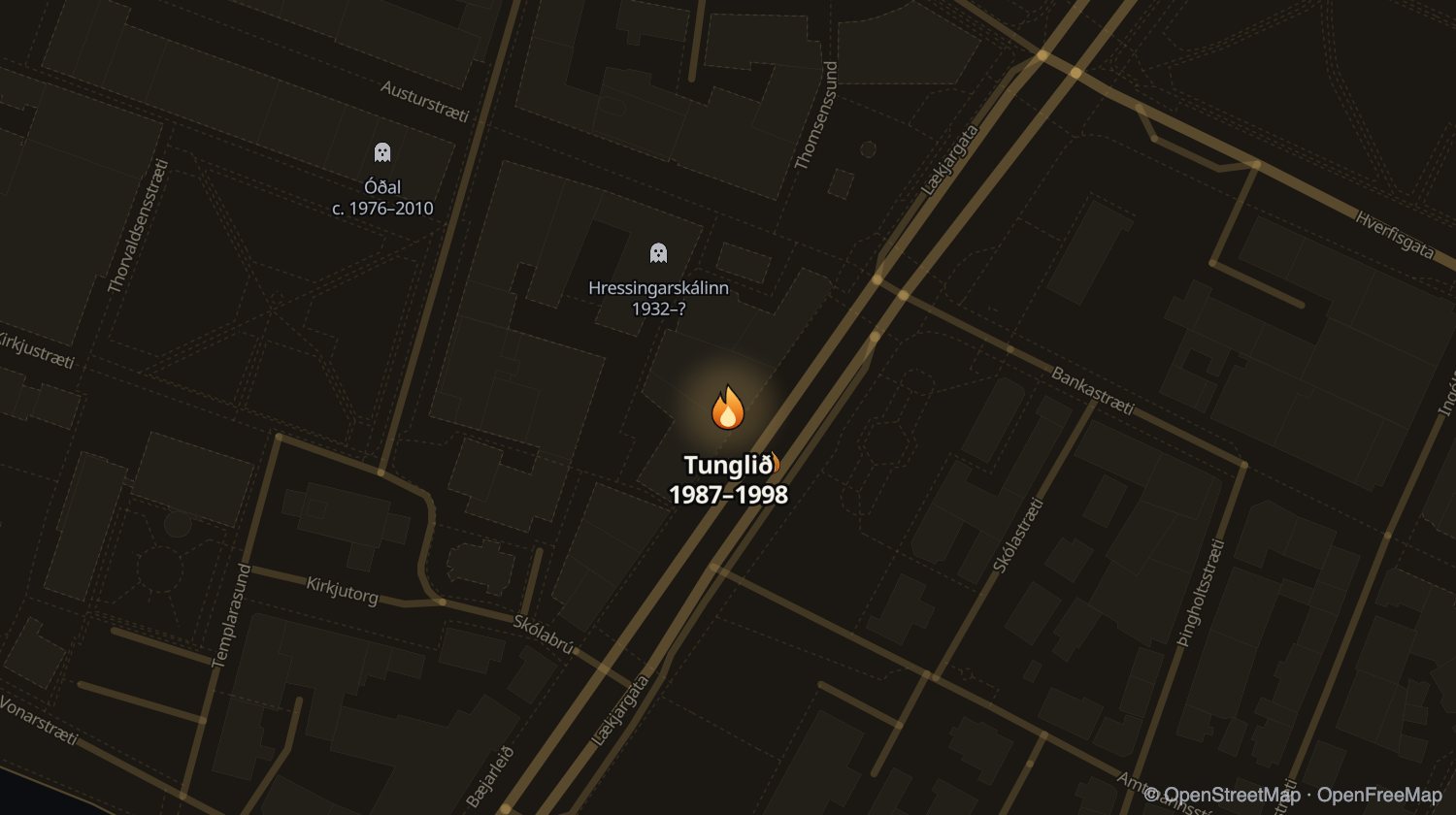 🗺 Open map
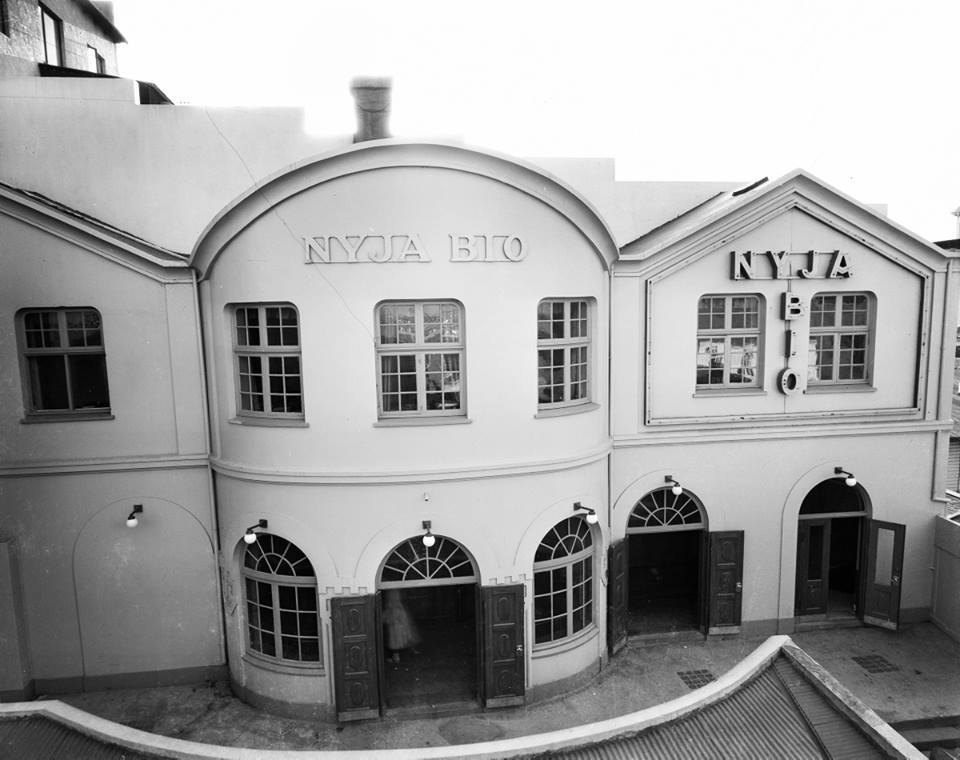
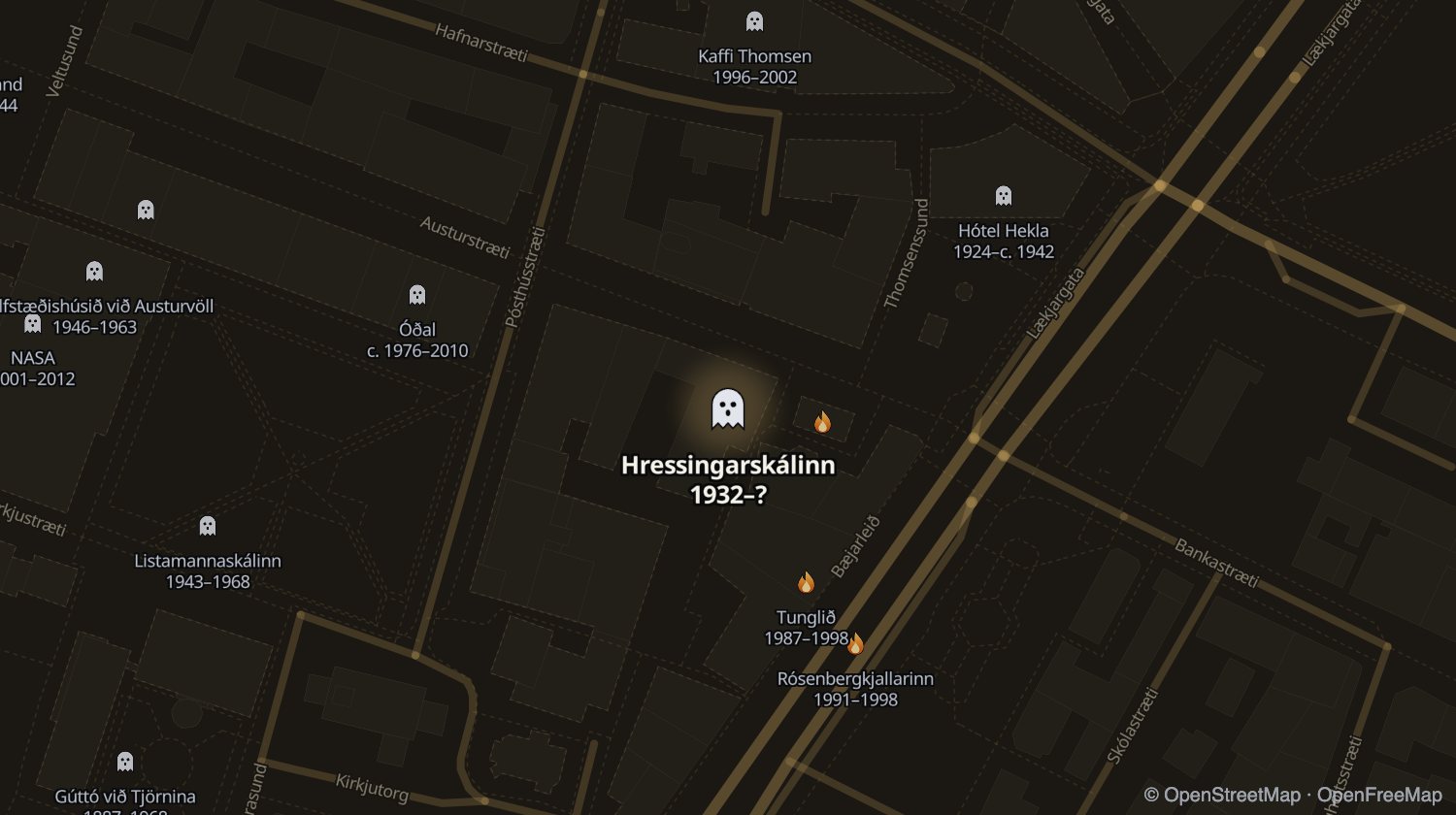 🗺 Open map
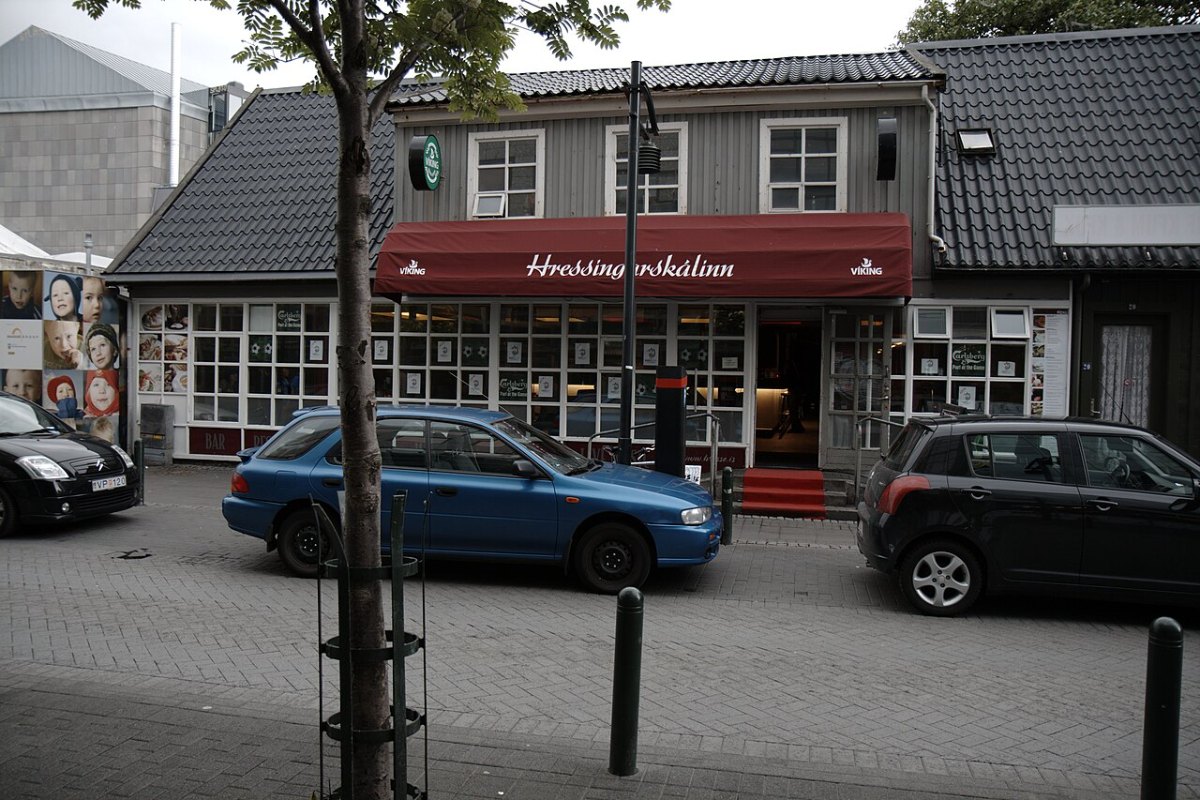
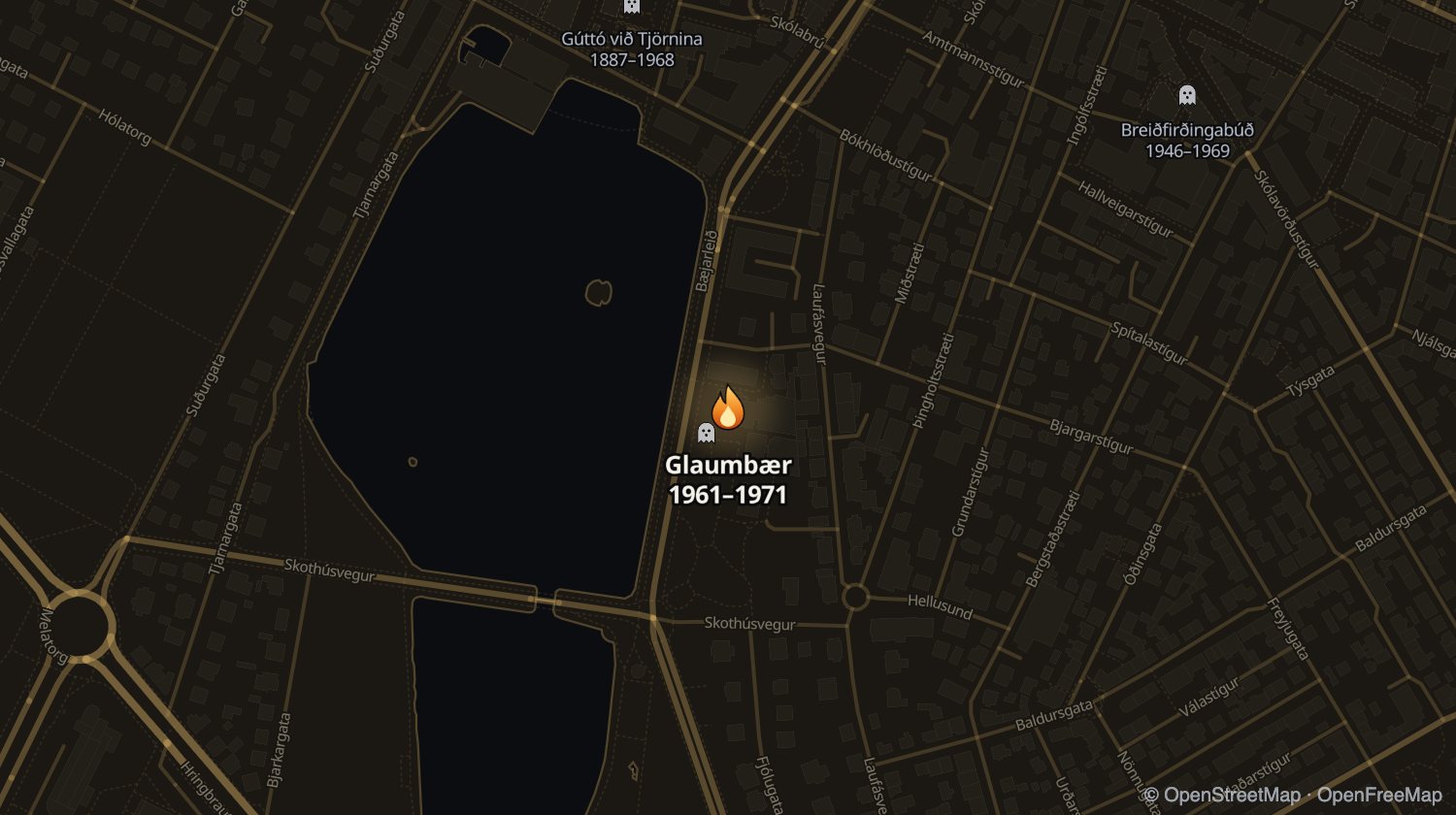
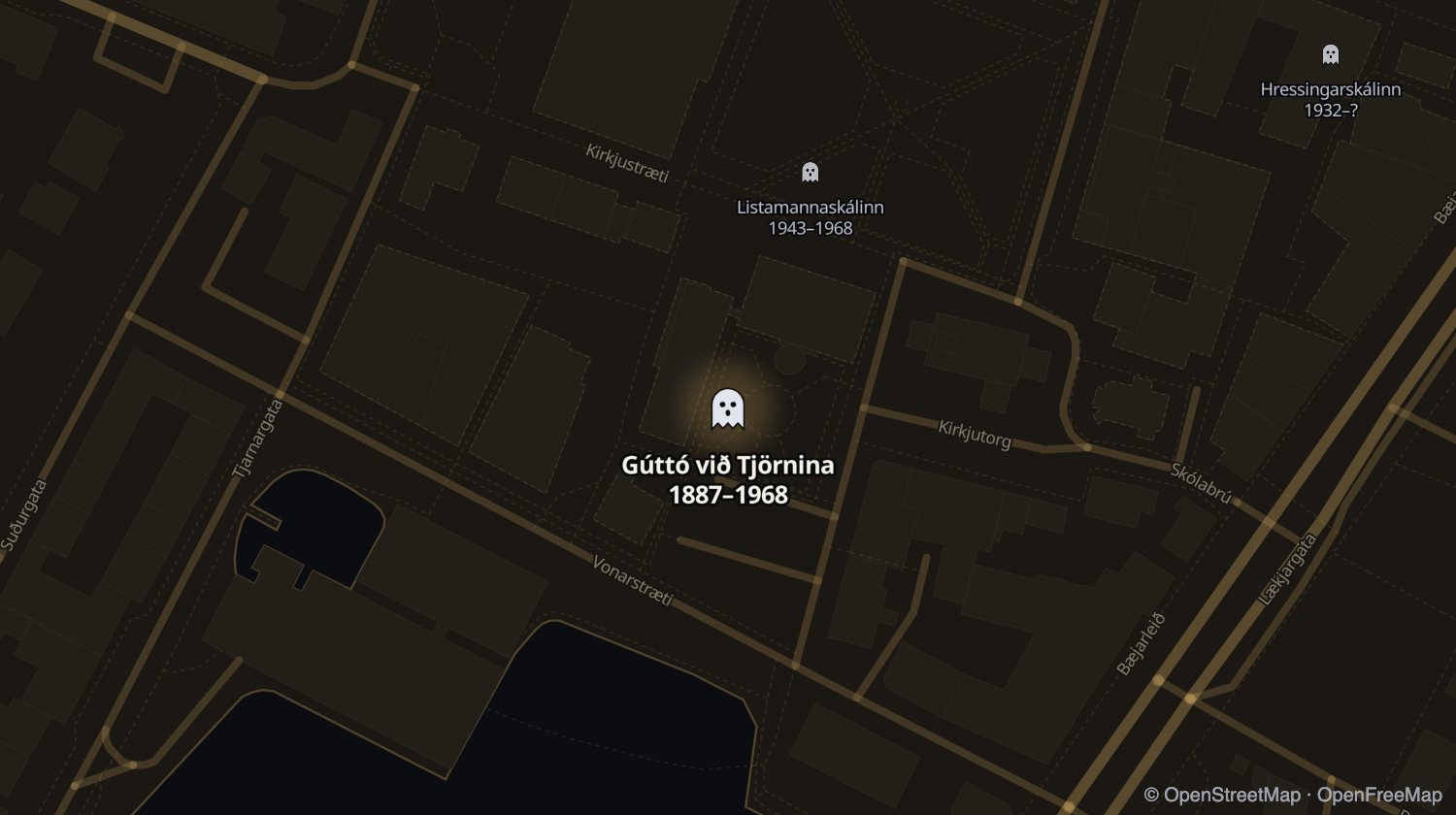 🗺 Open map
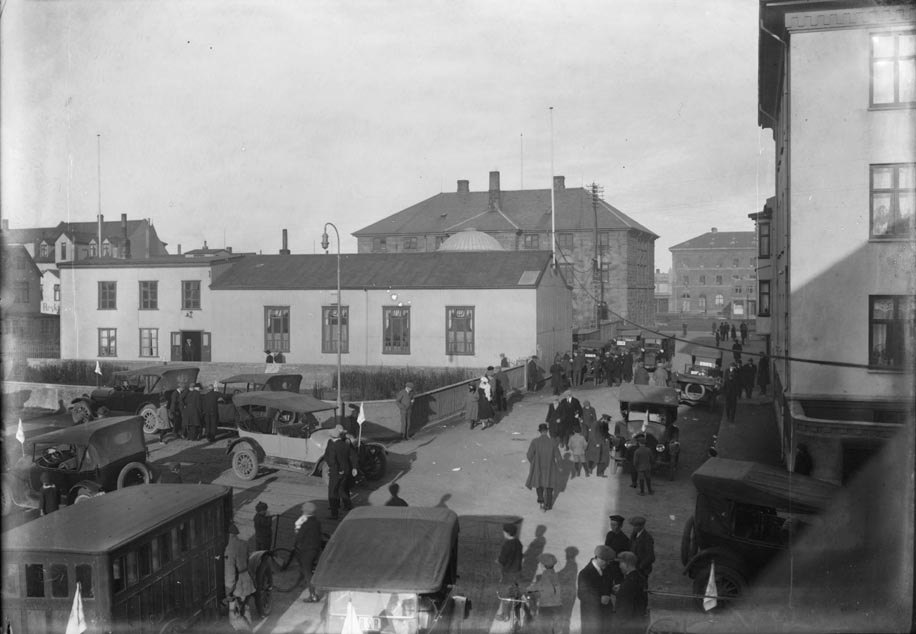
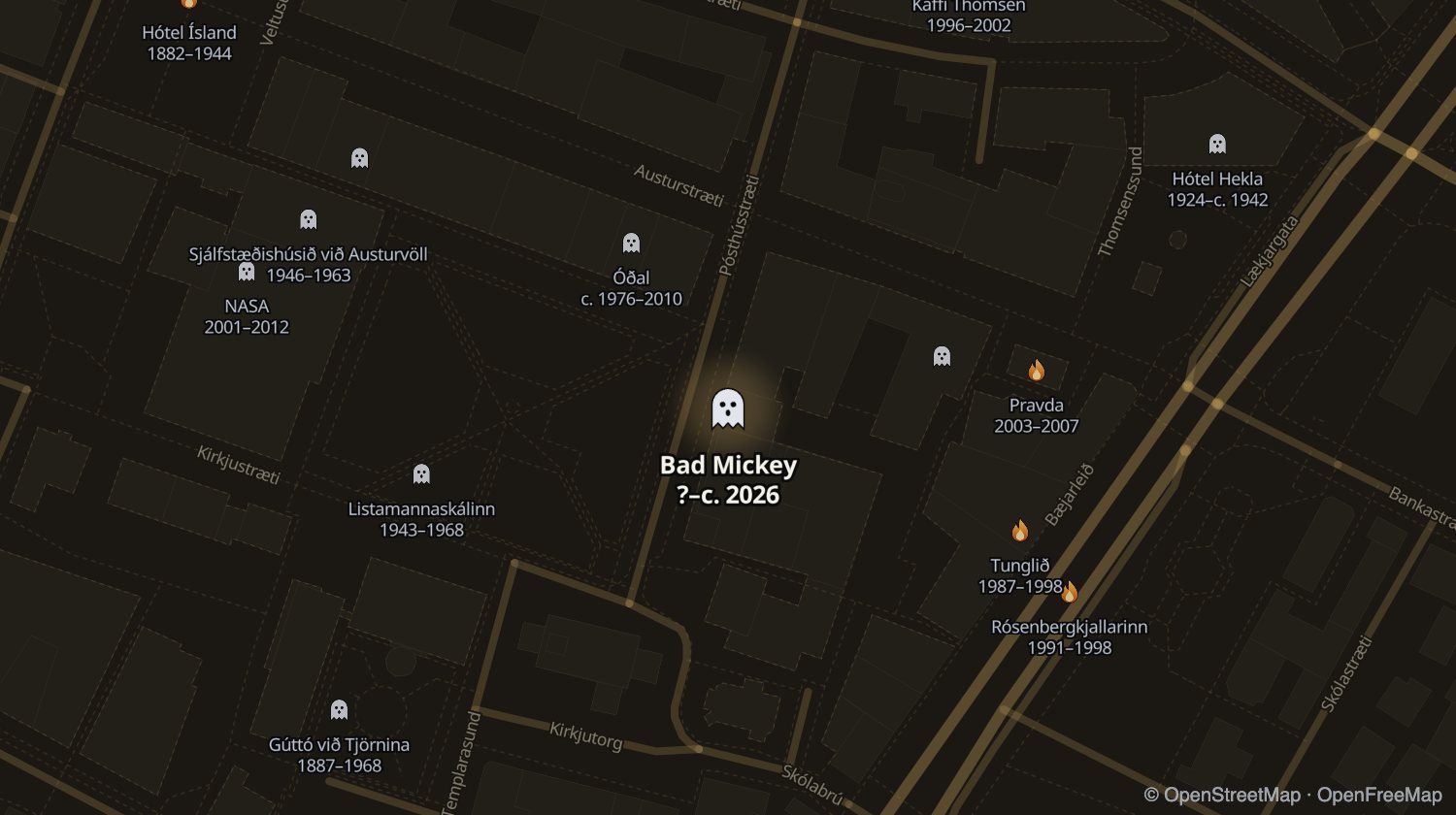
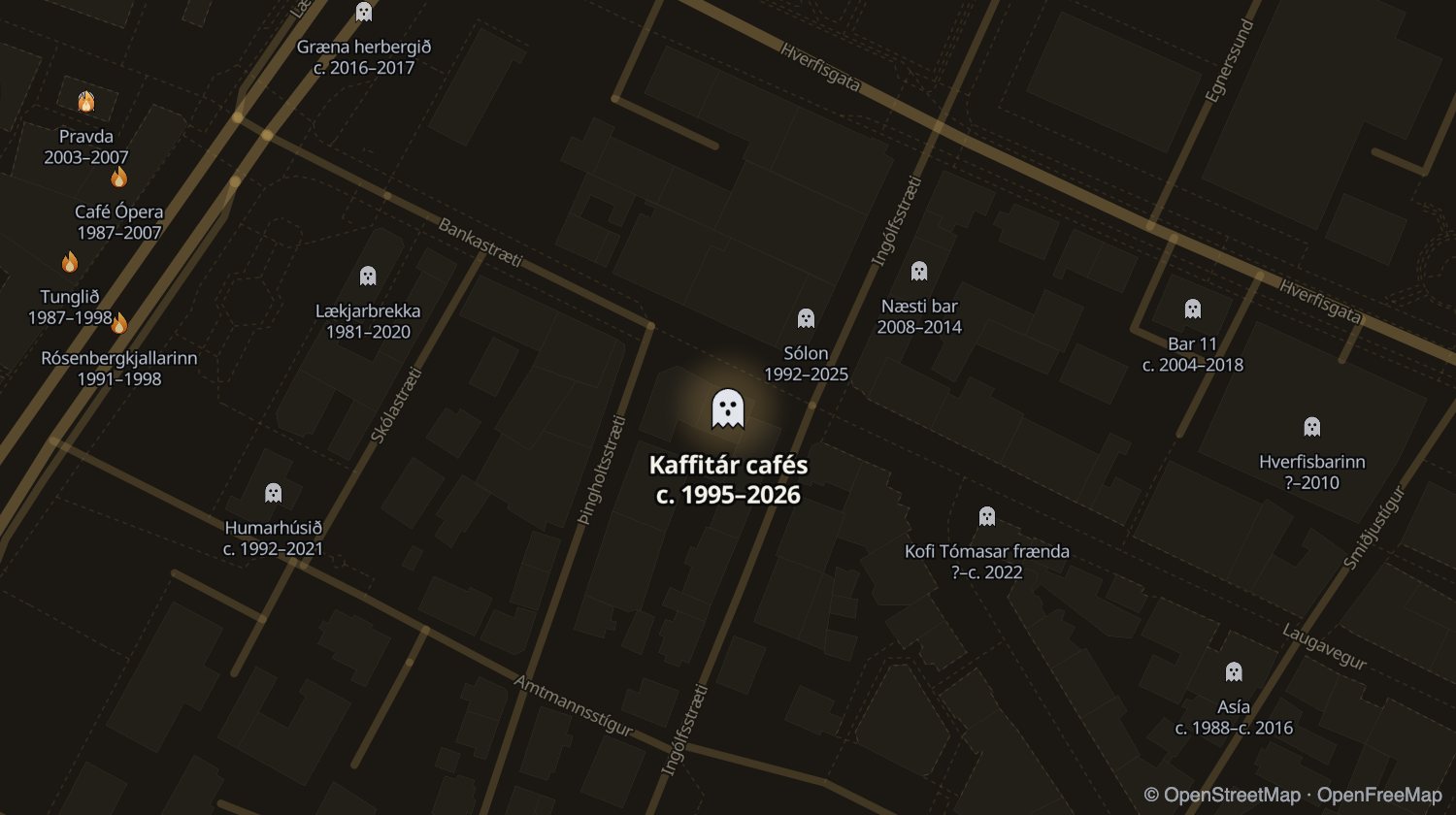
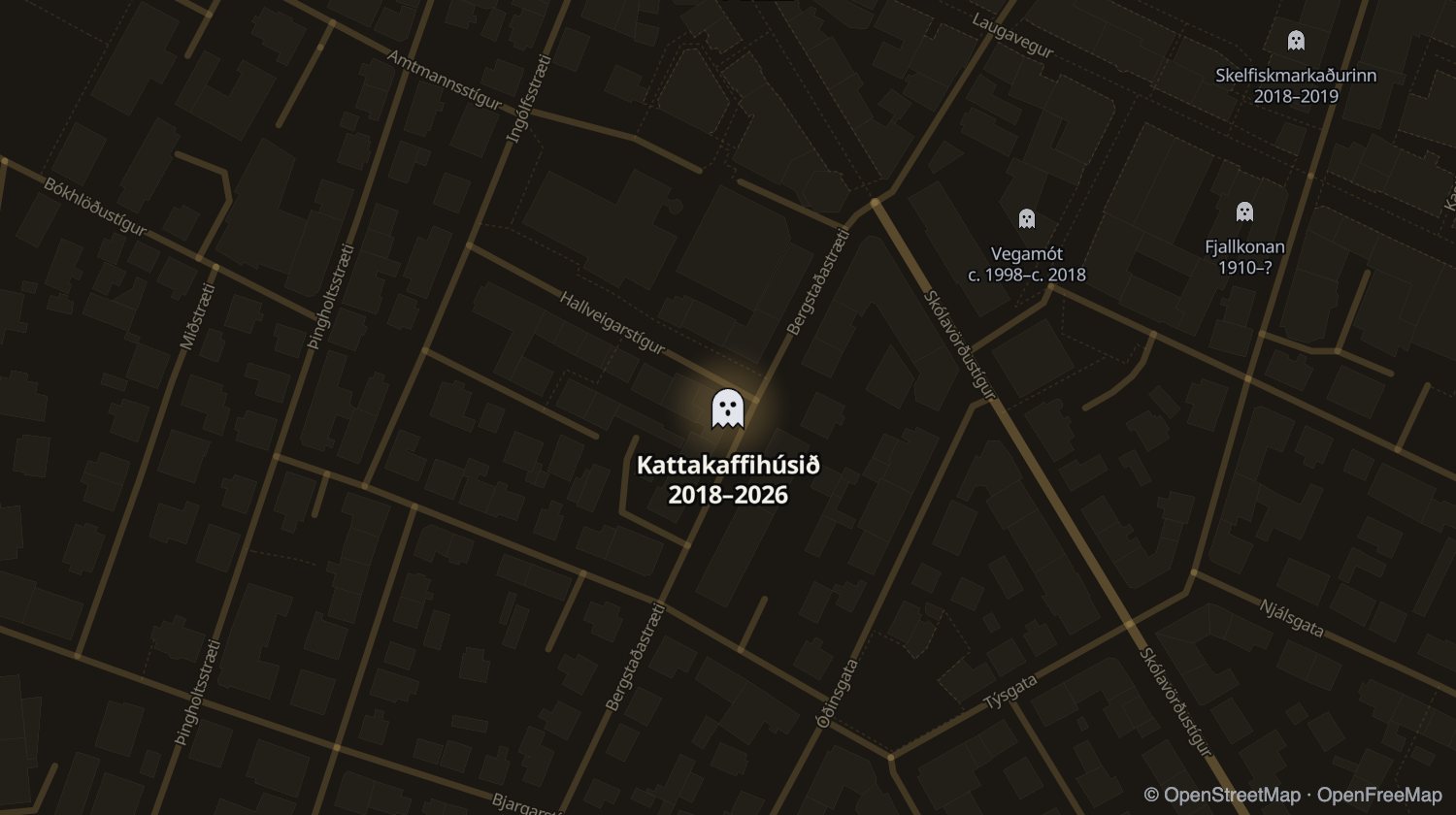
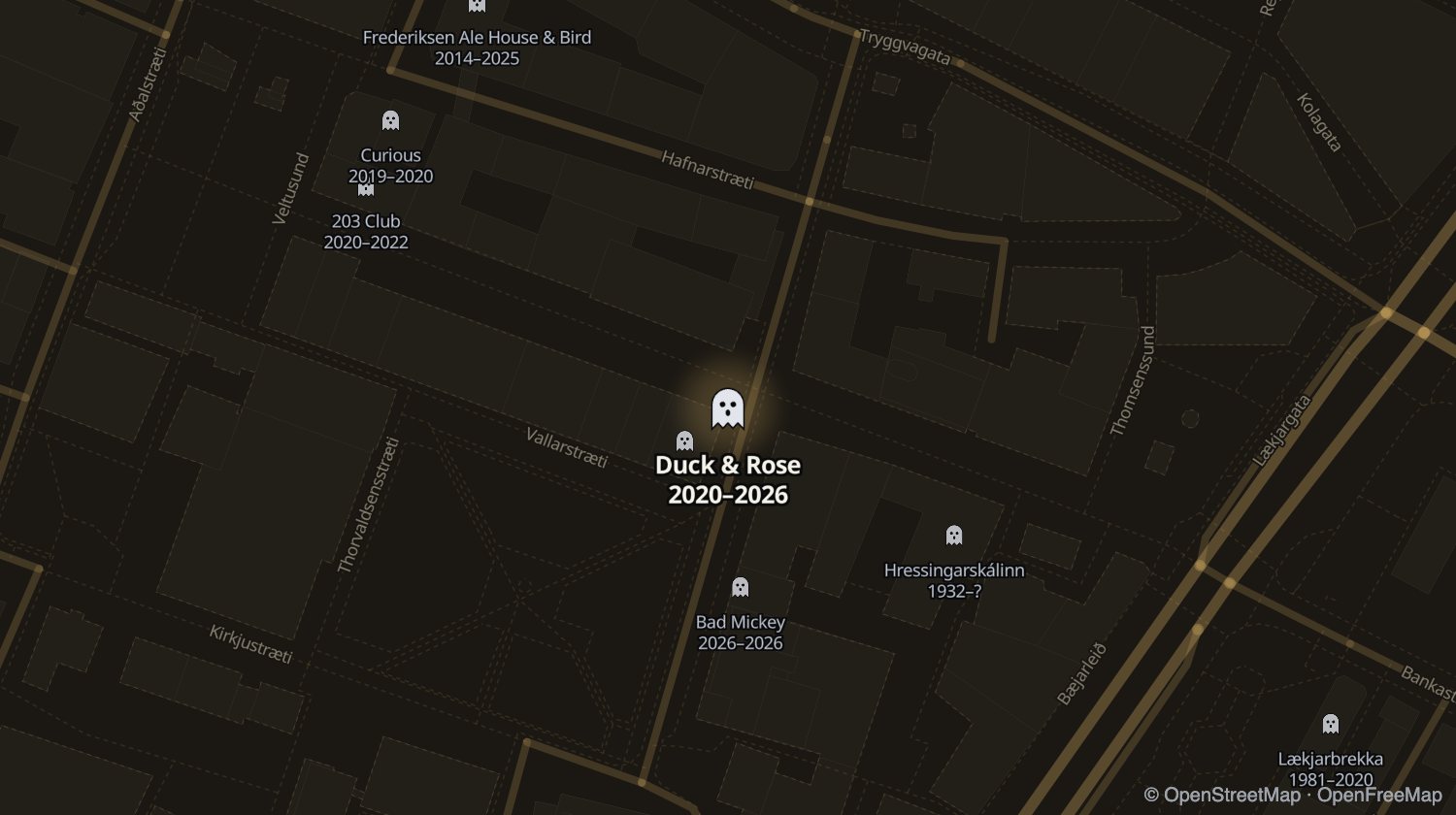
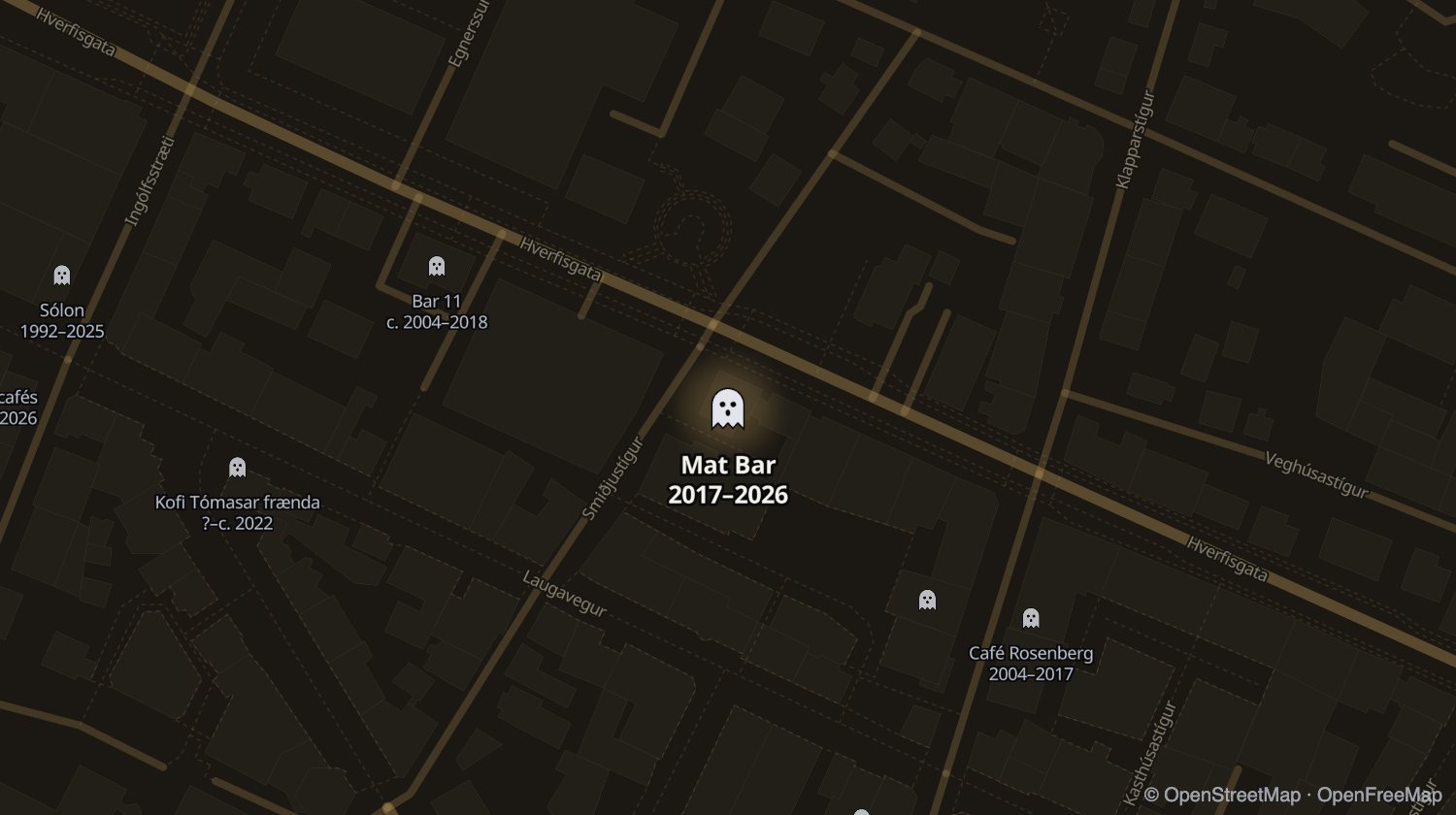
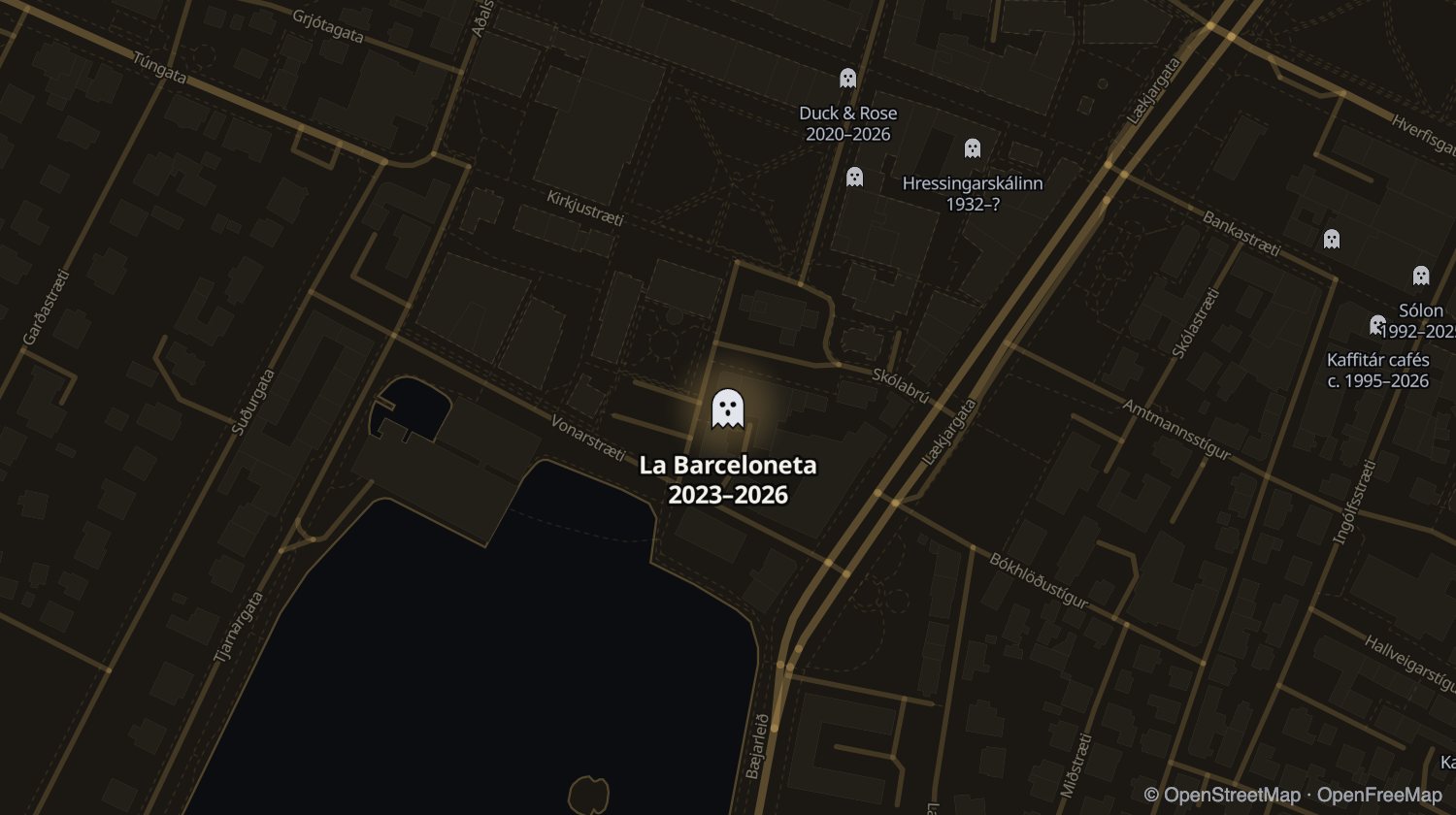
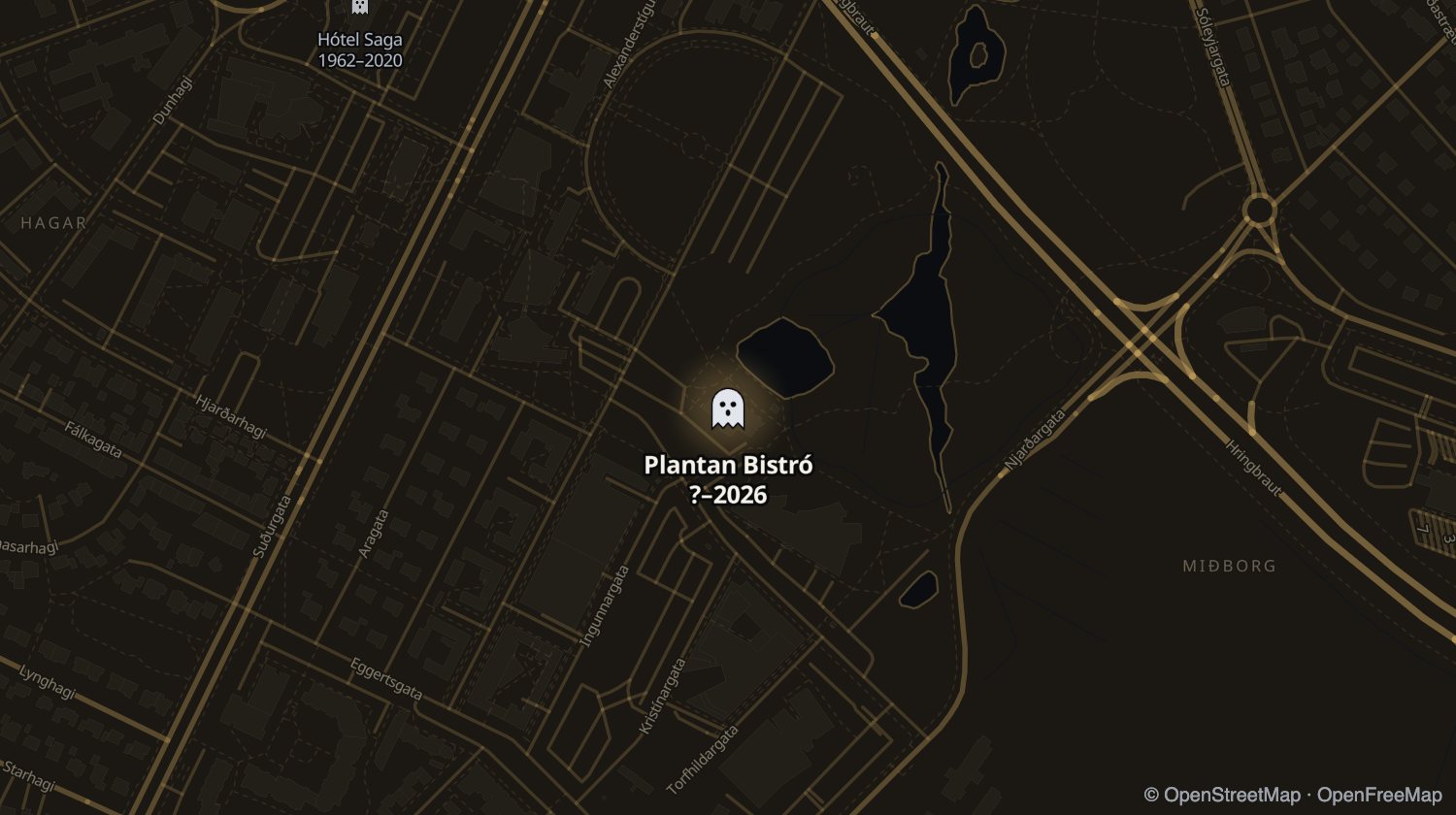
 🗺 Open map
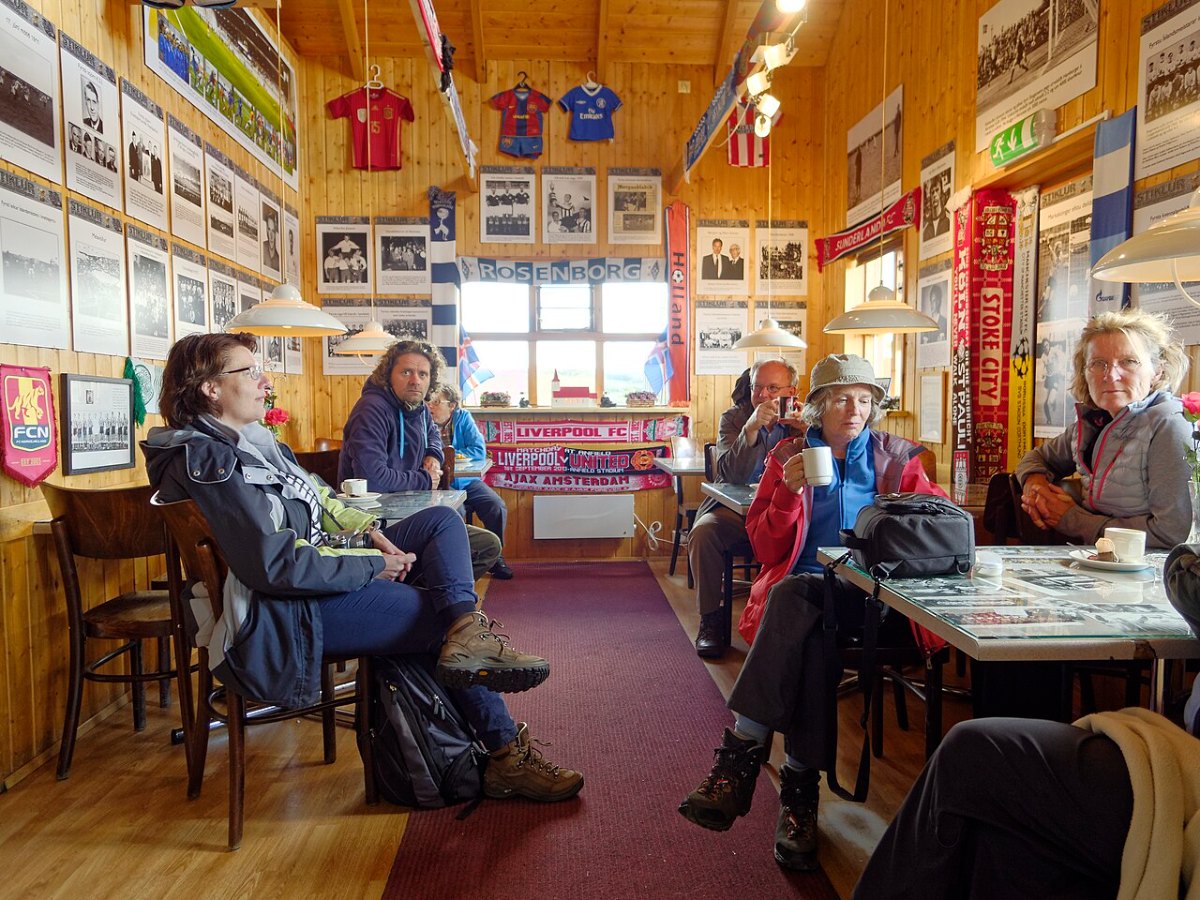
 🗺 Open map
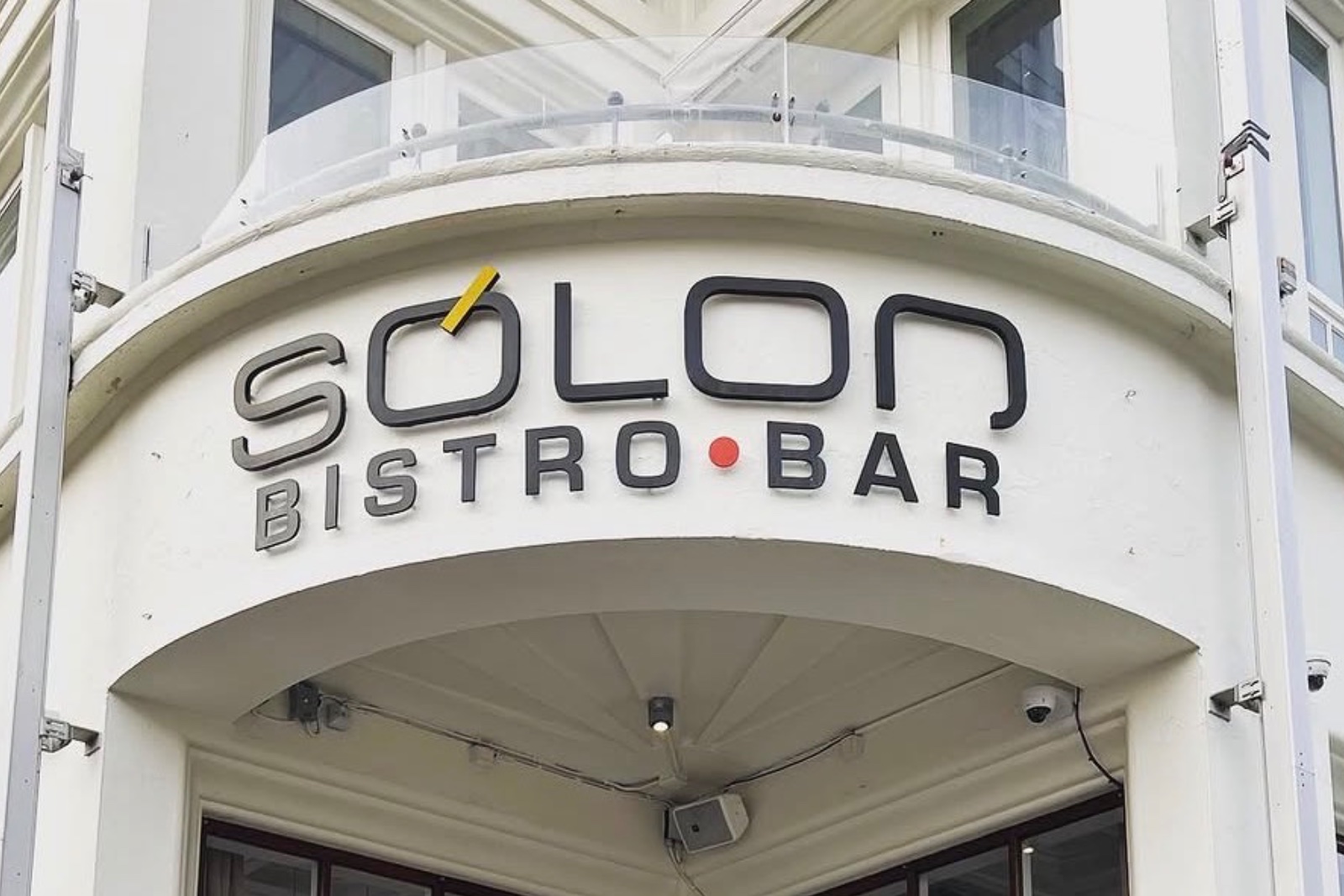
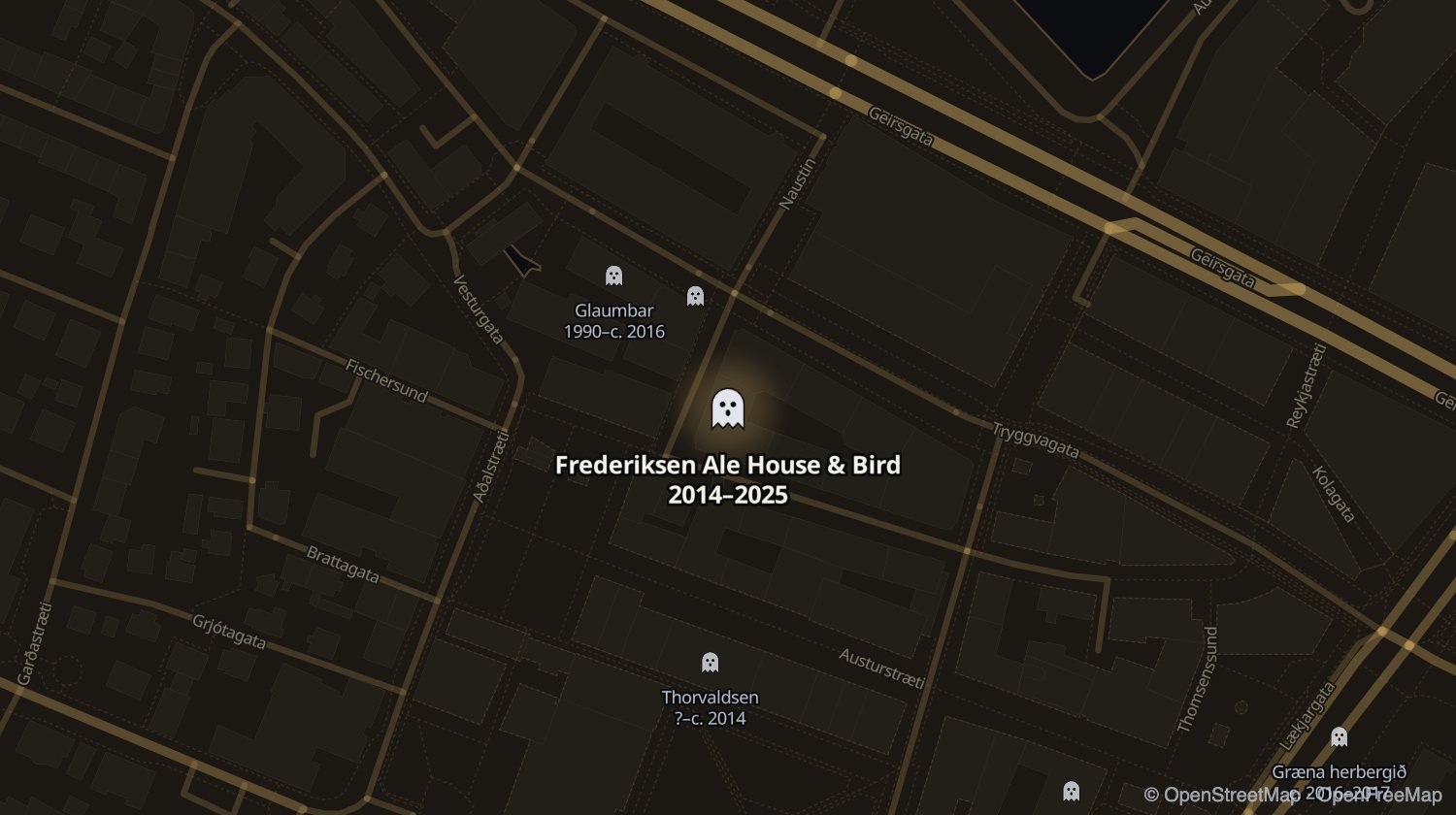
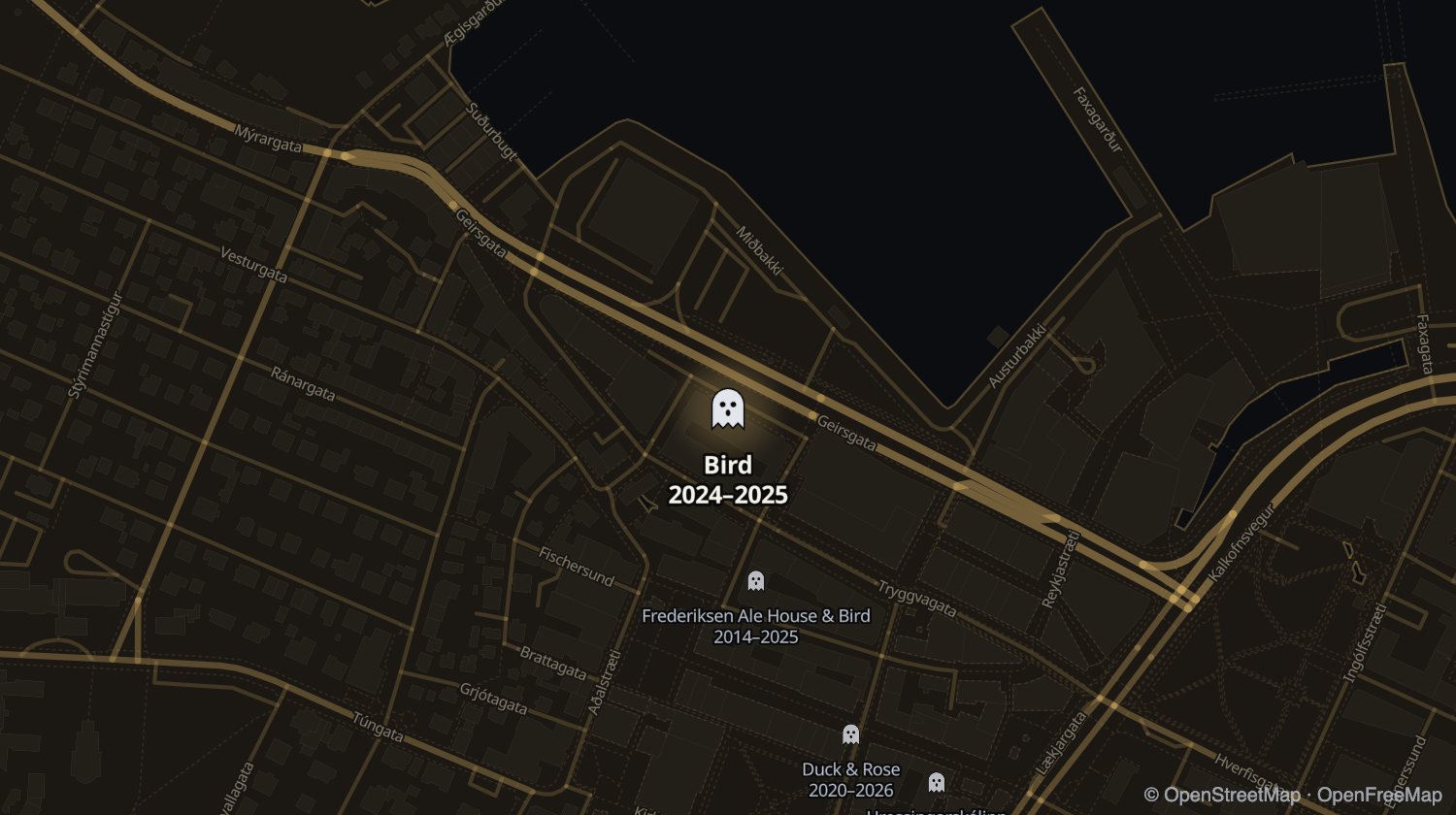
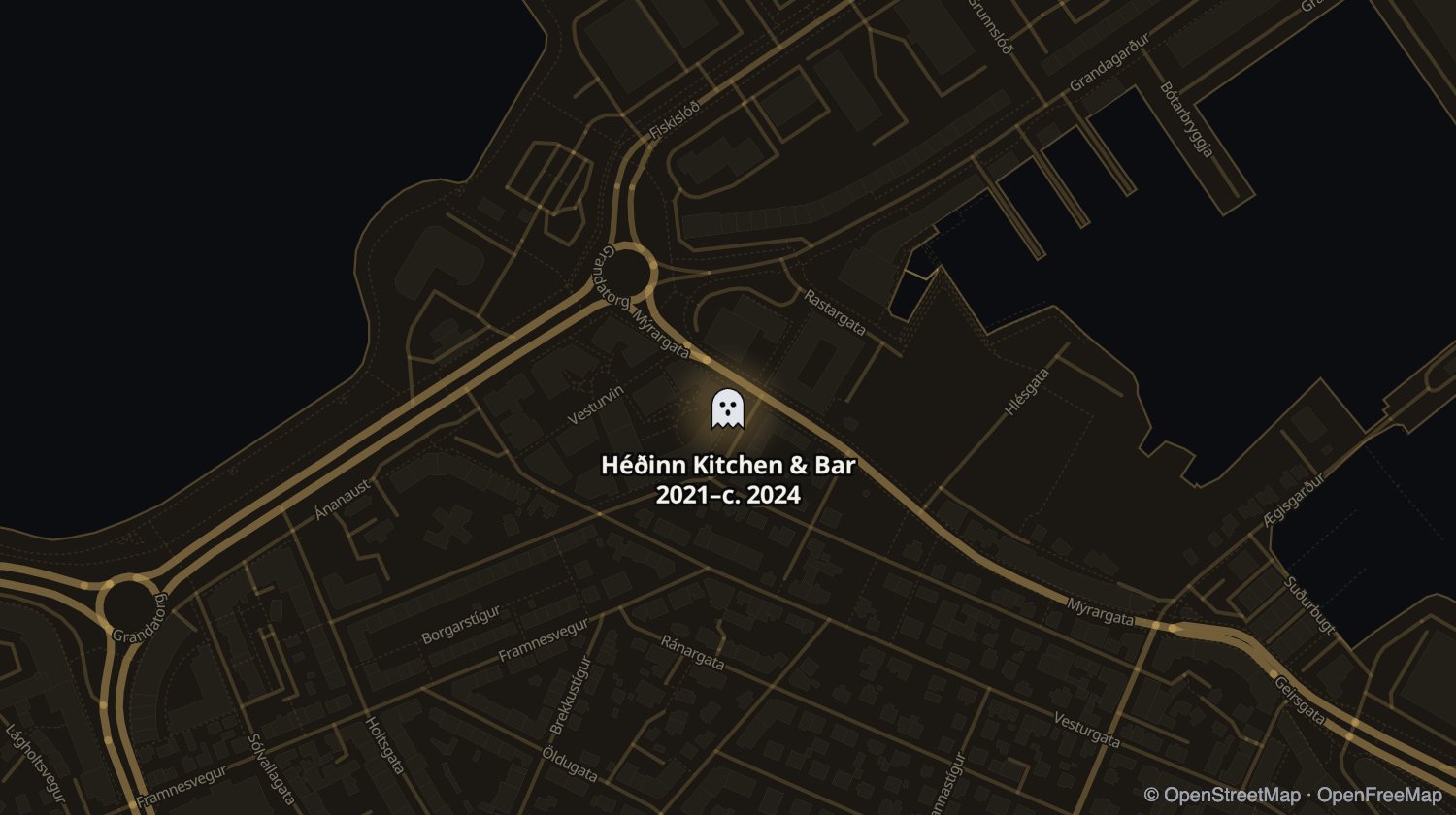
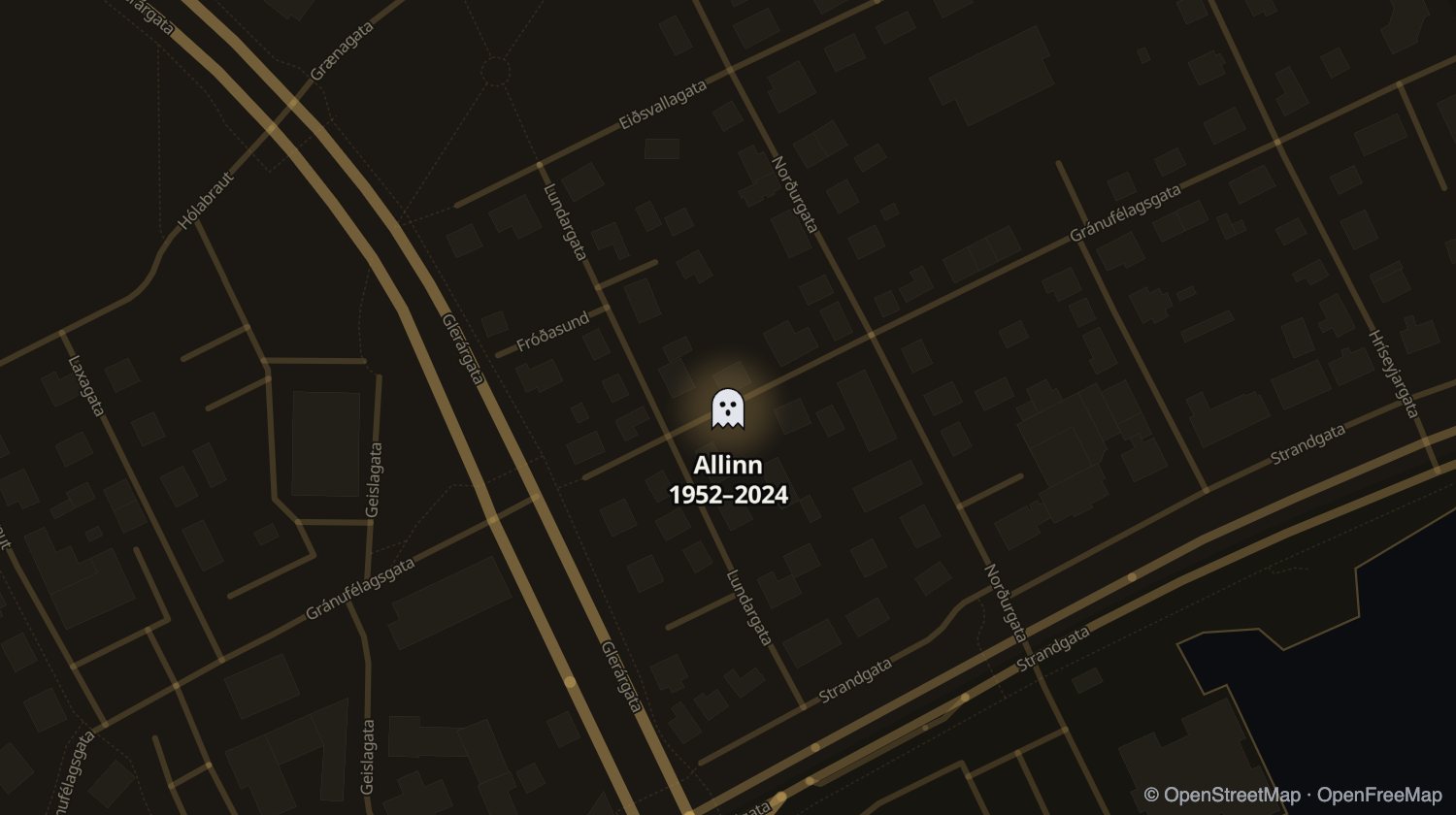
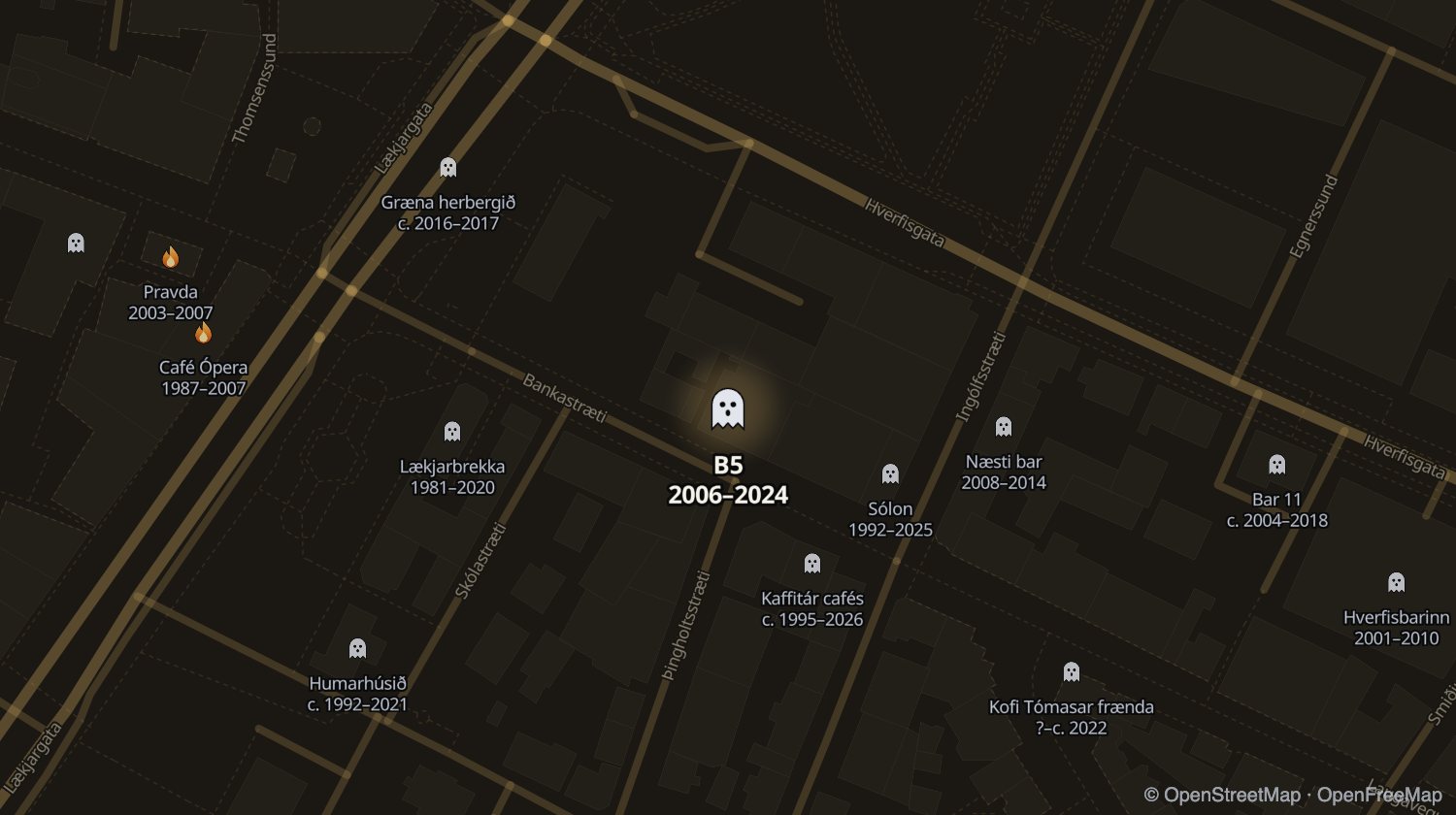
 🗺 Open map
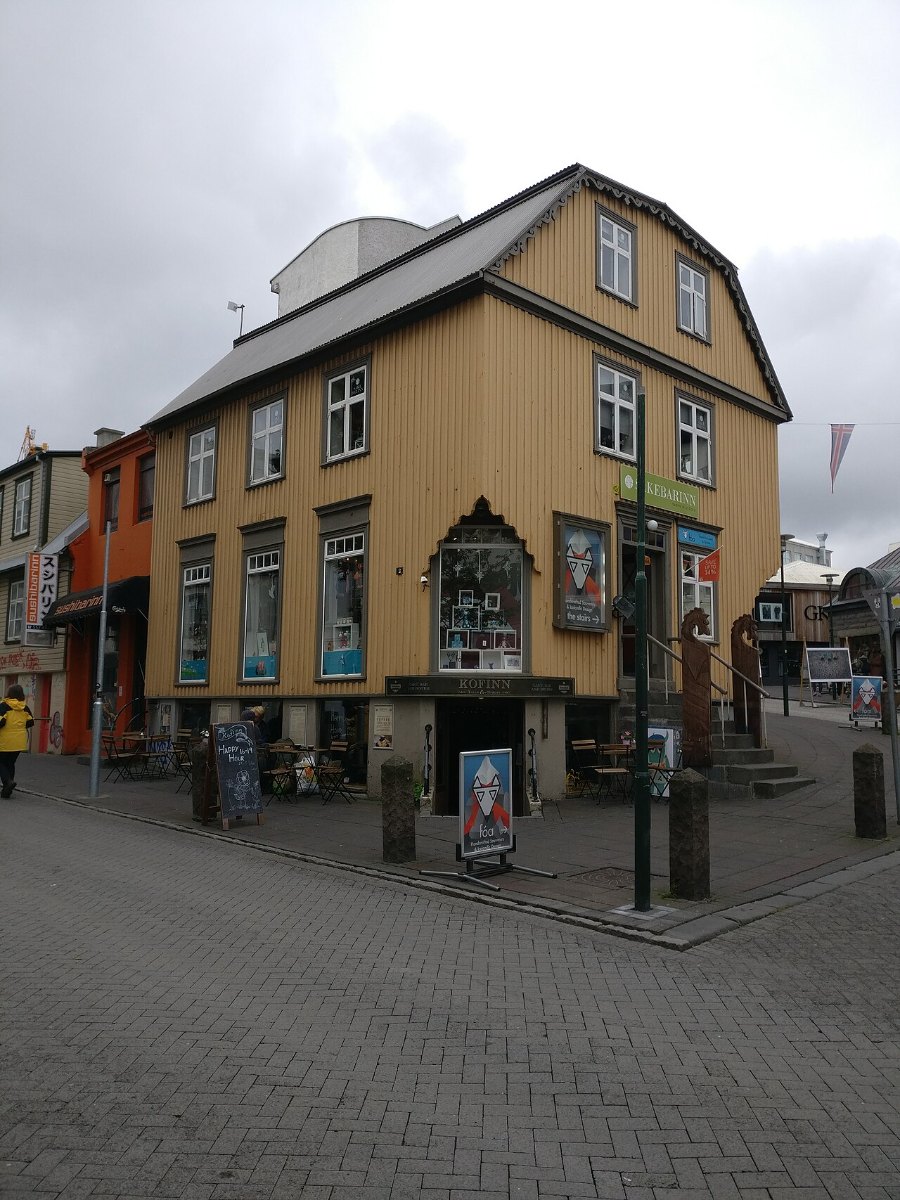
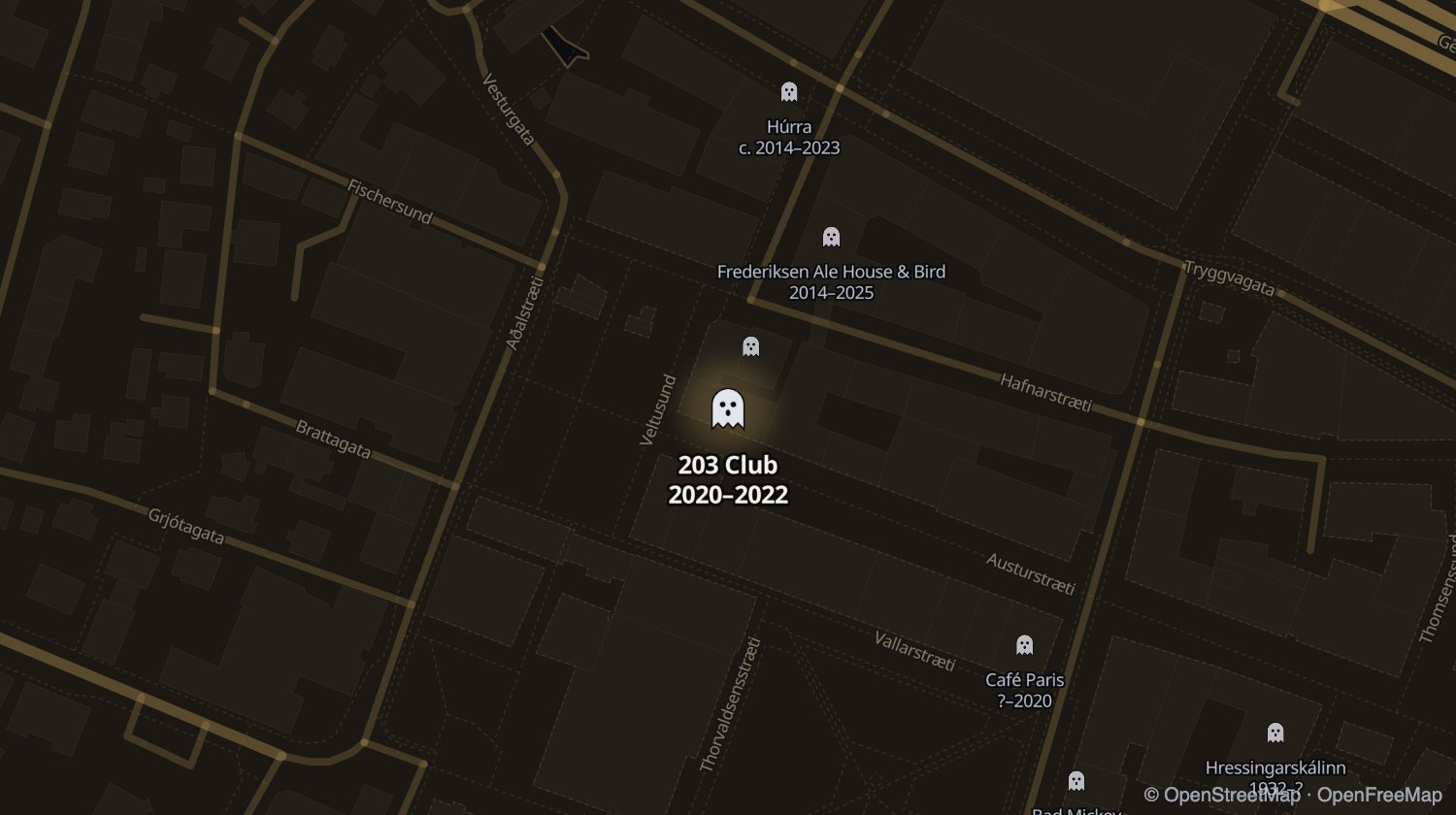
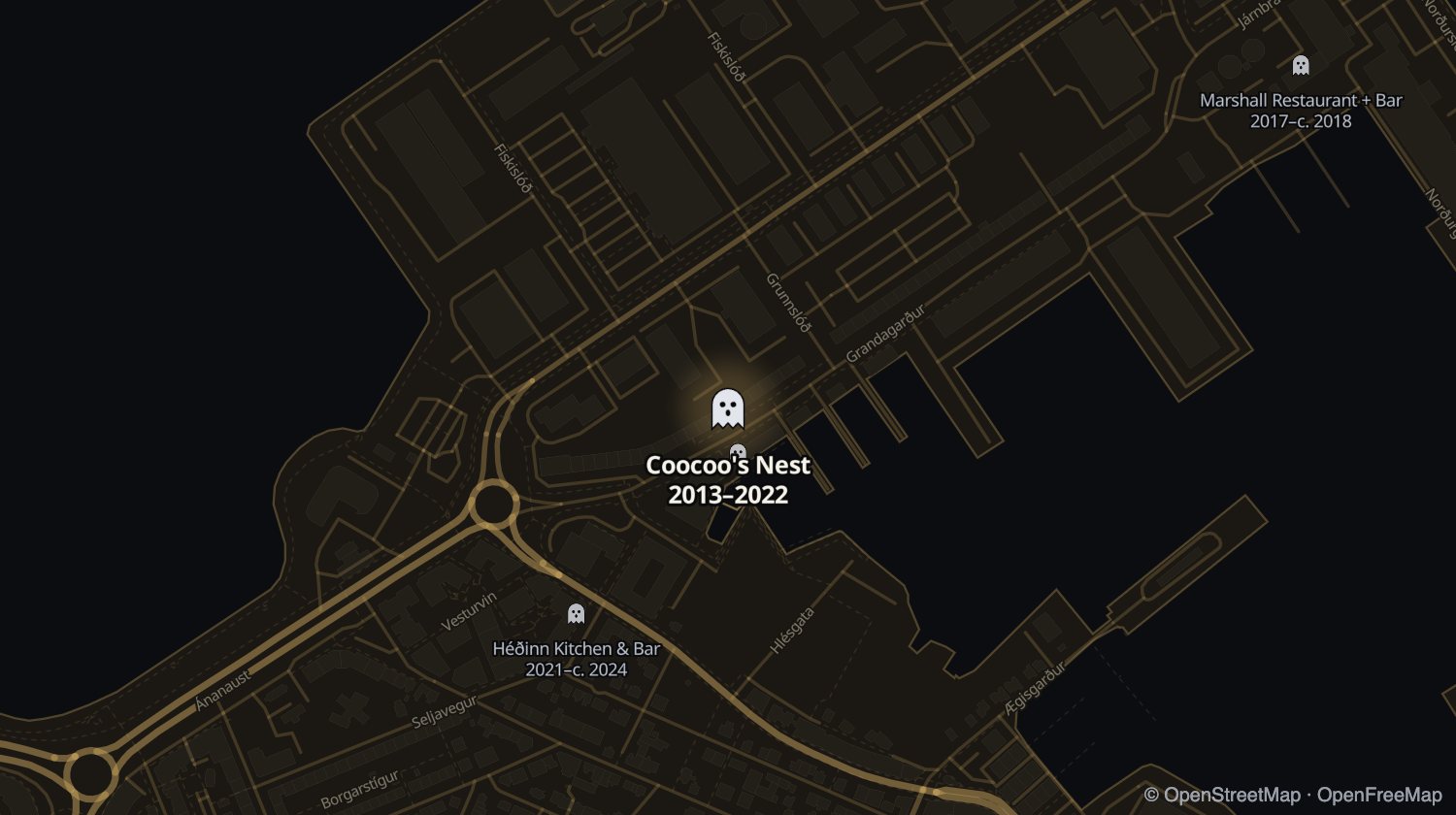
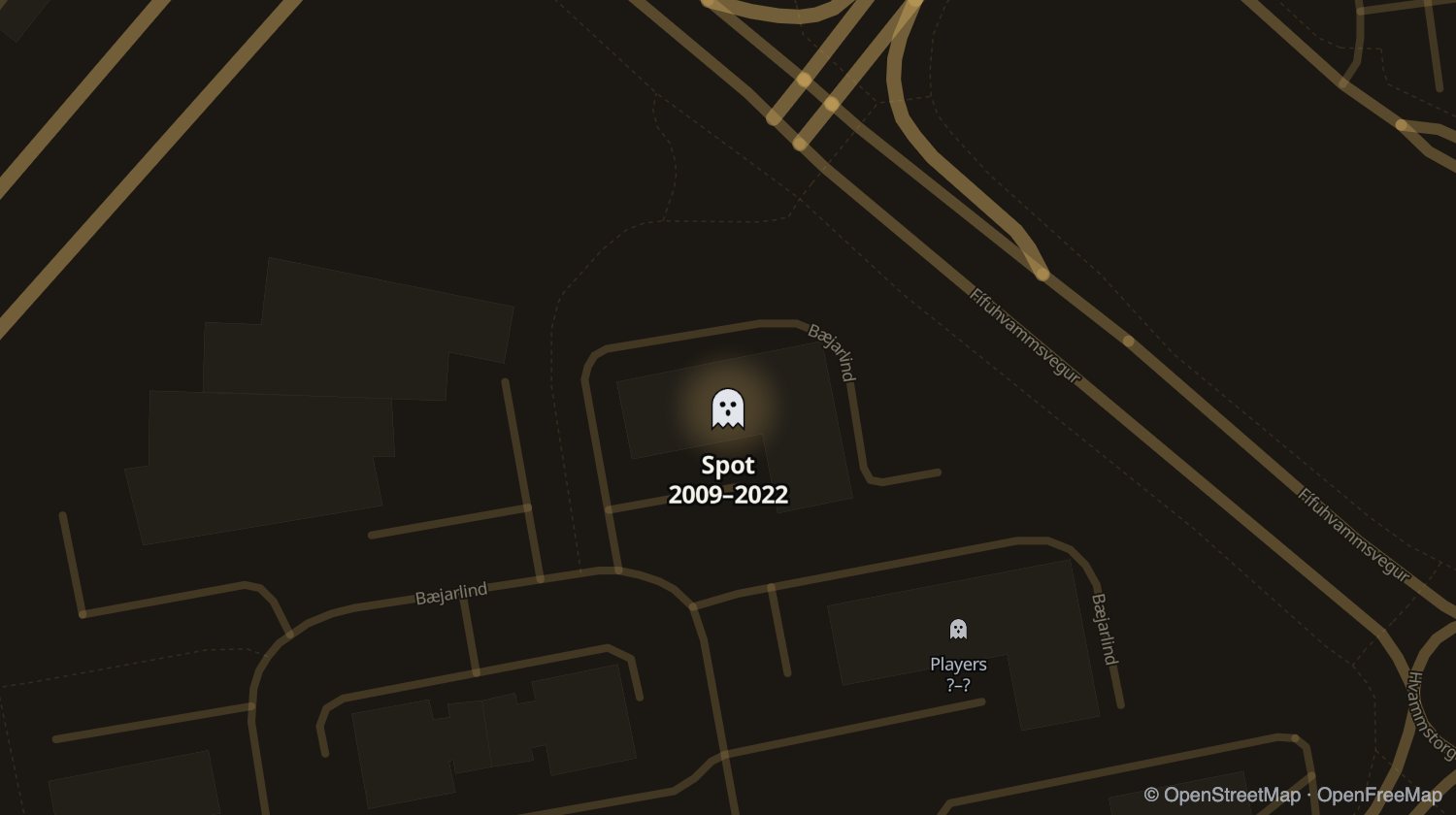
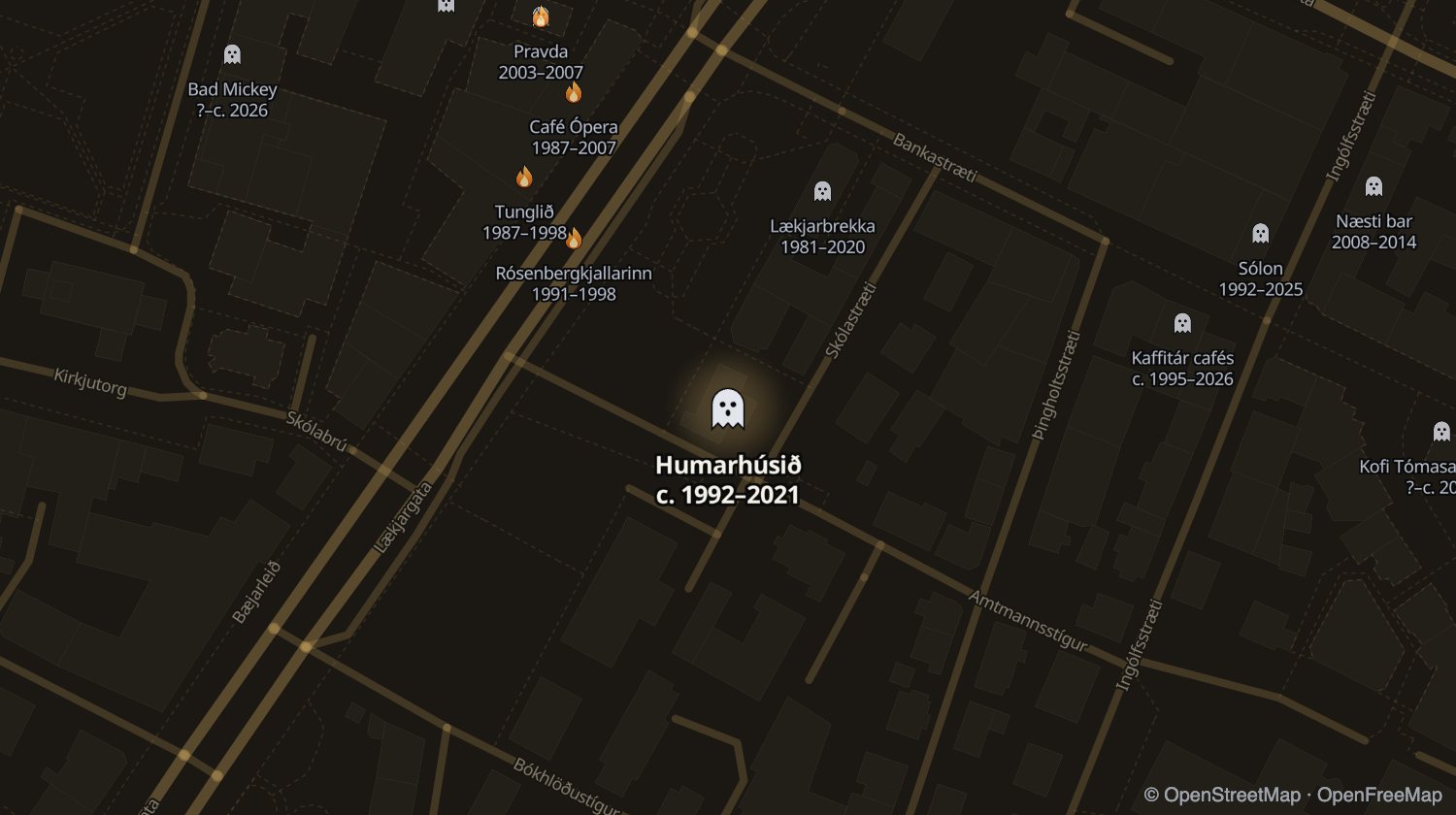
 🗺 Open map
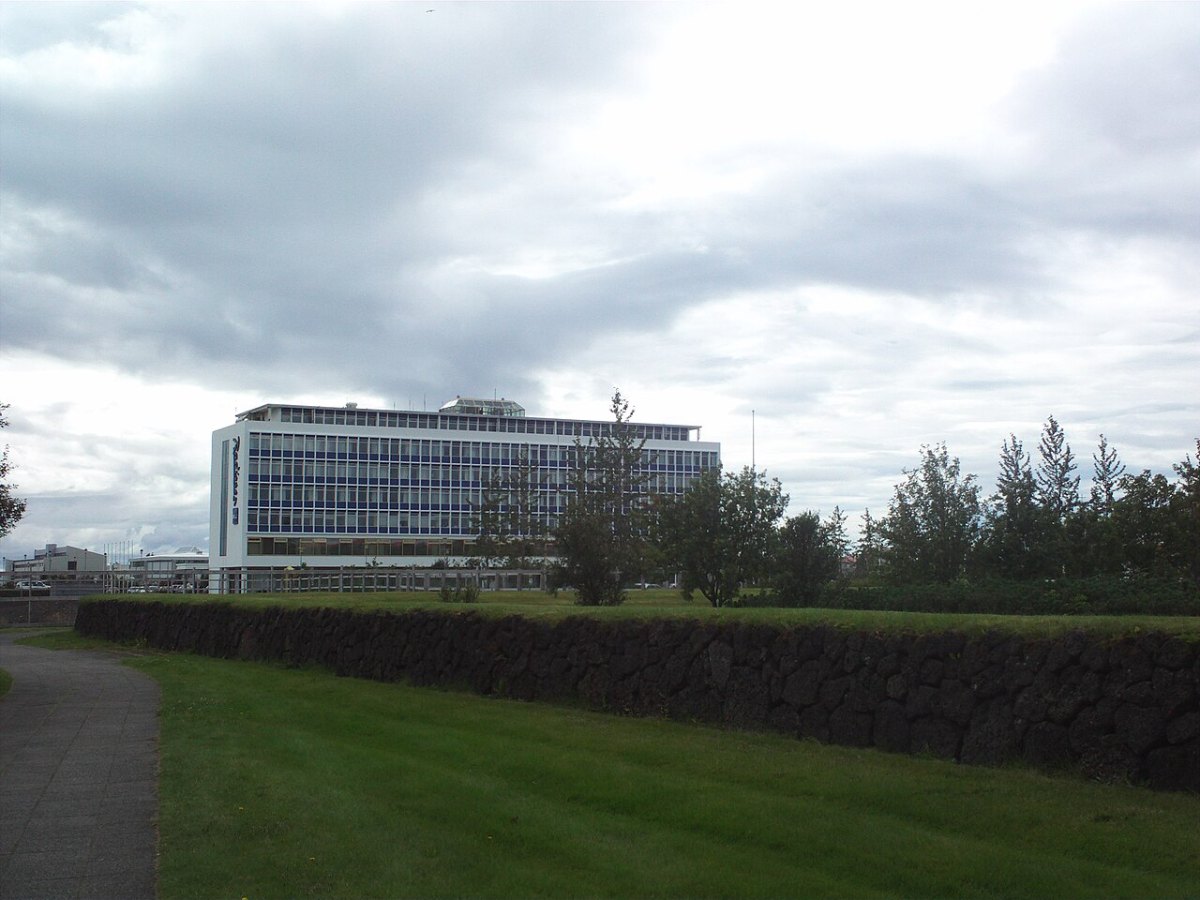
 🗺 Open map
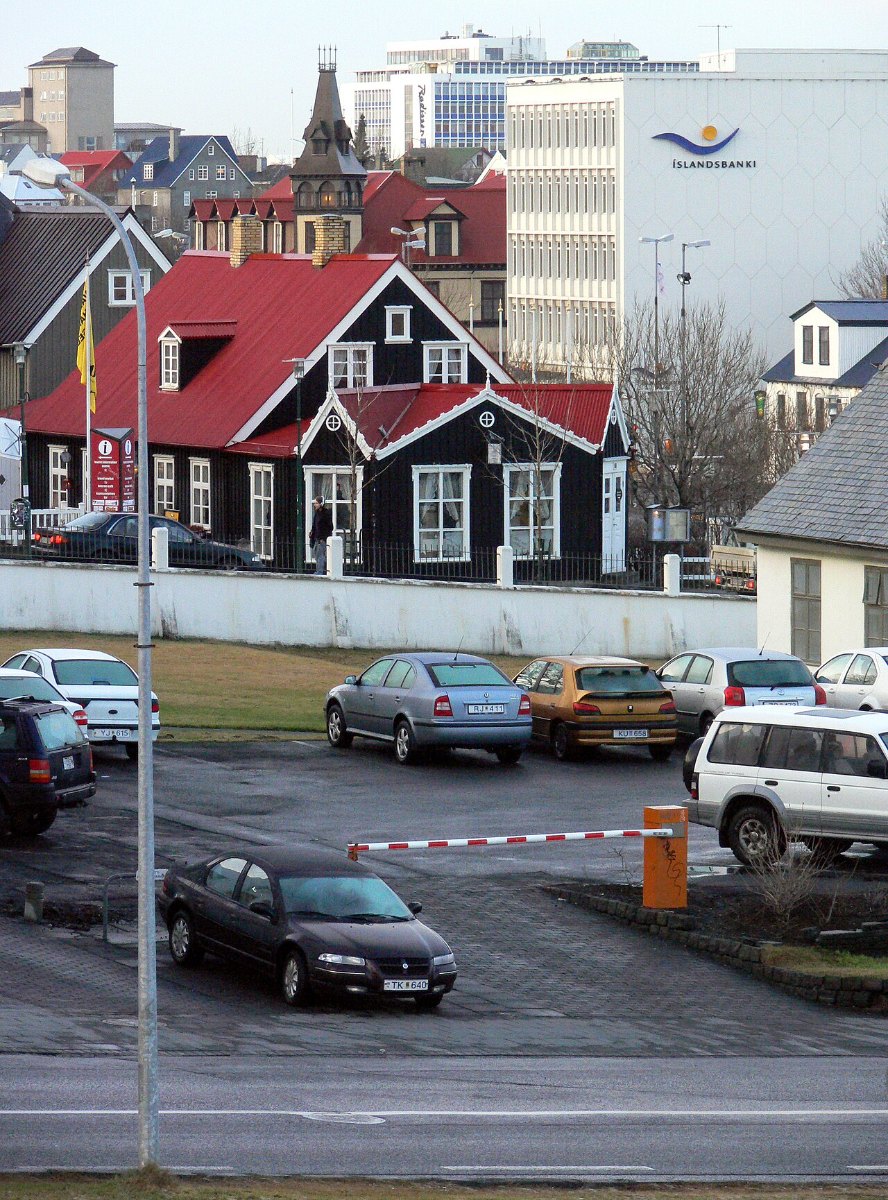
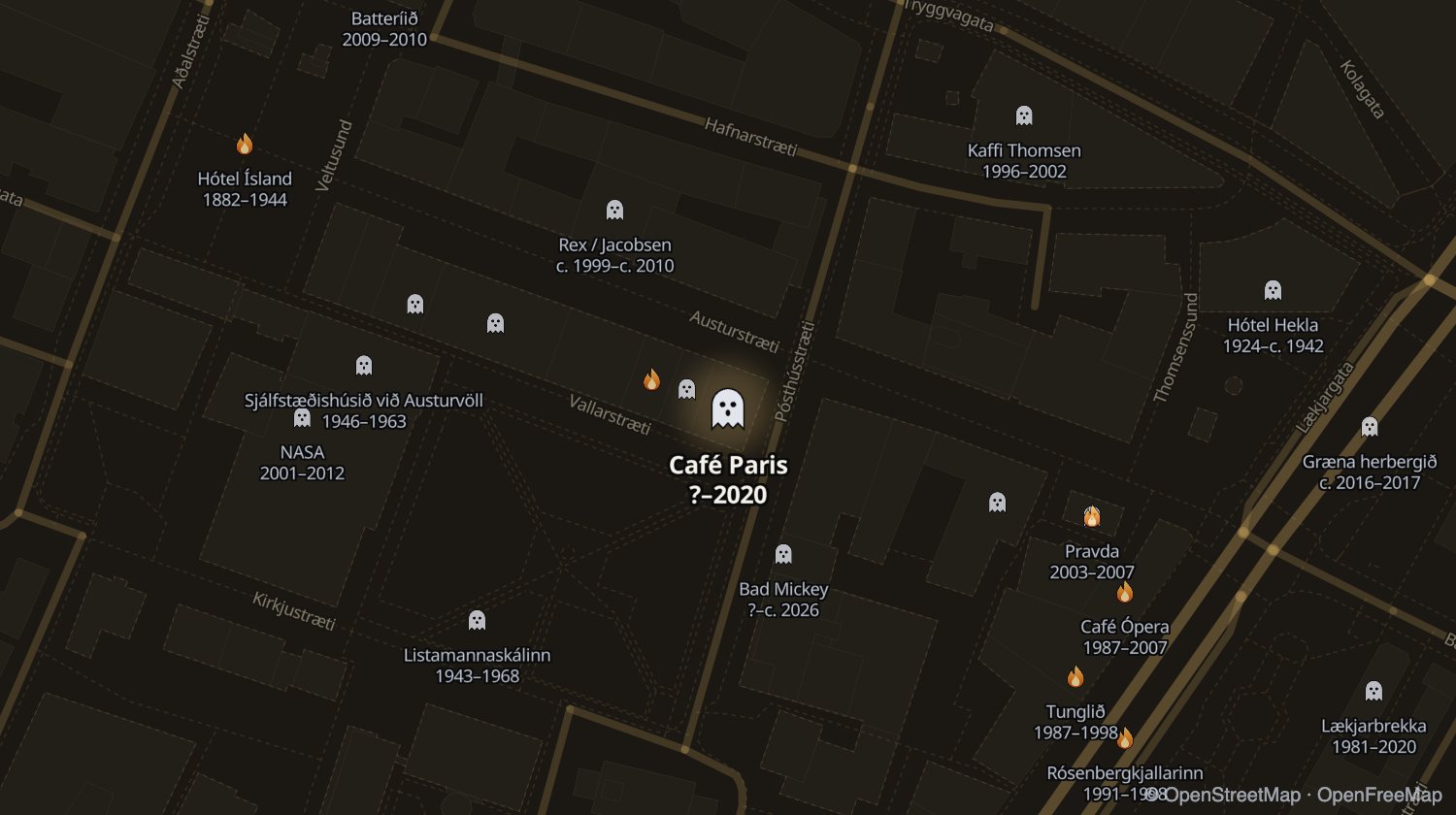 🗺 Open map
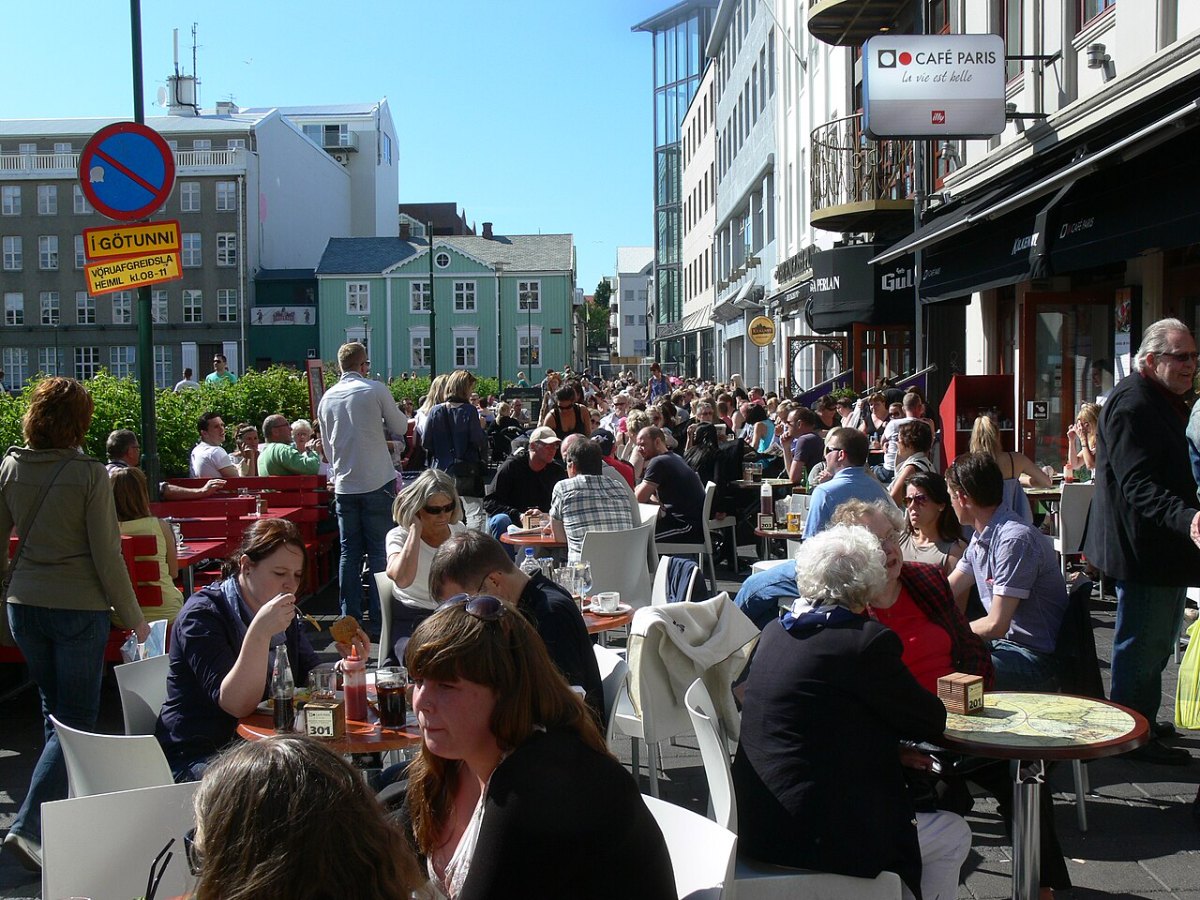
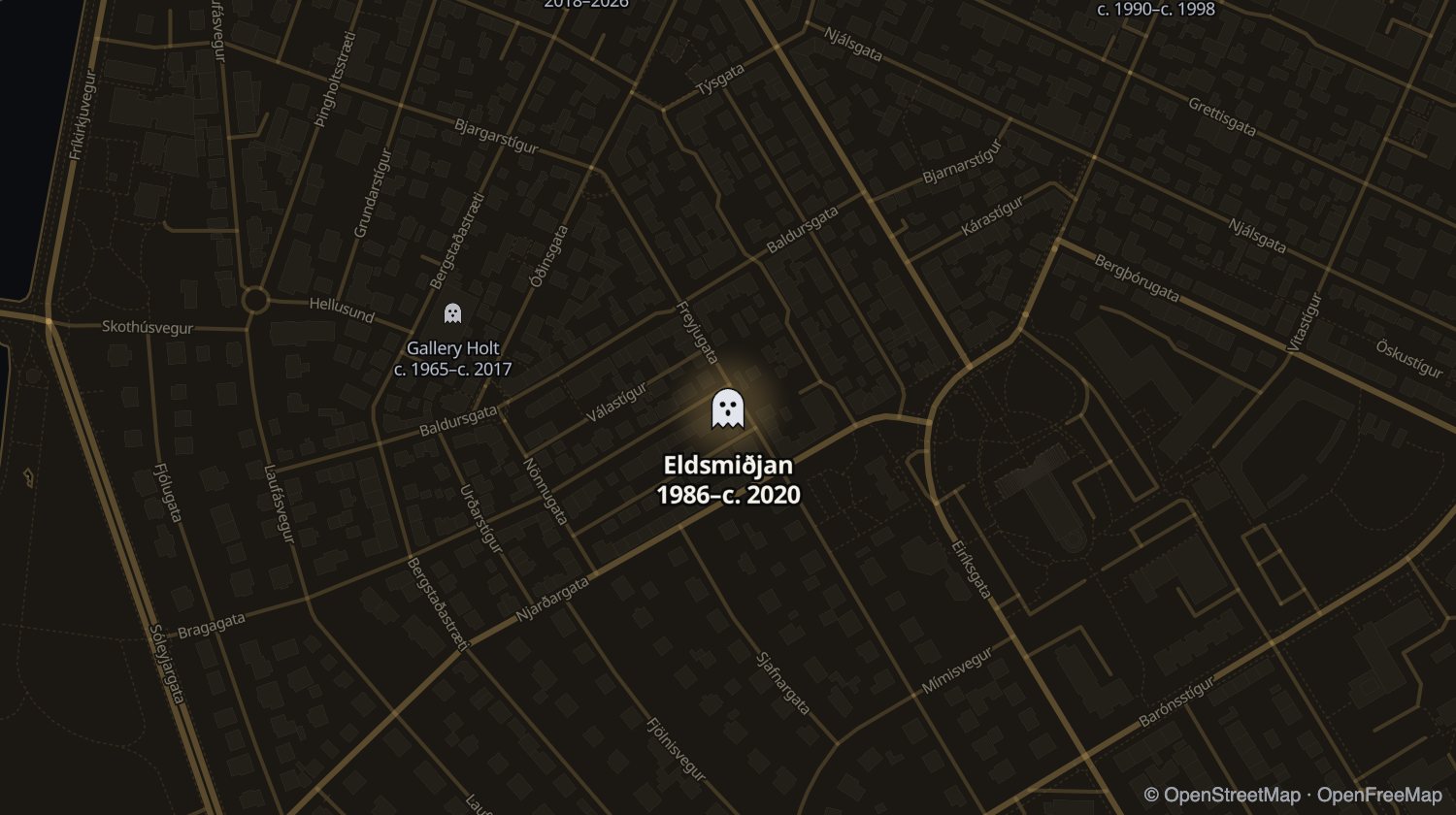
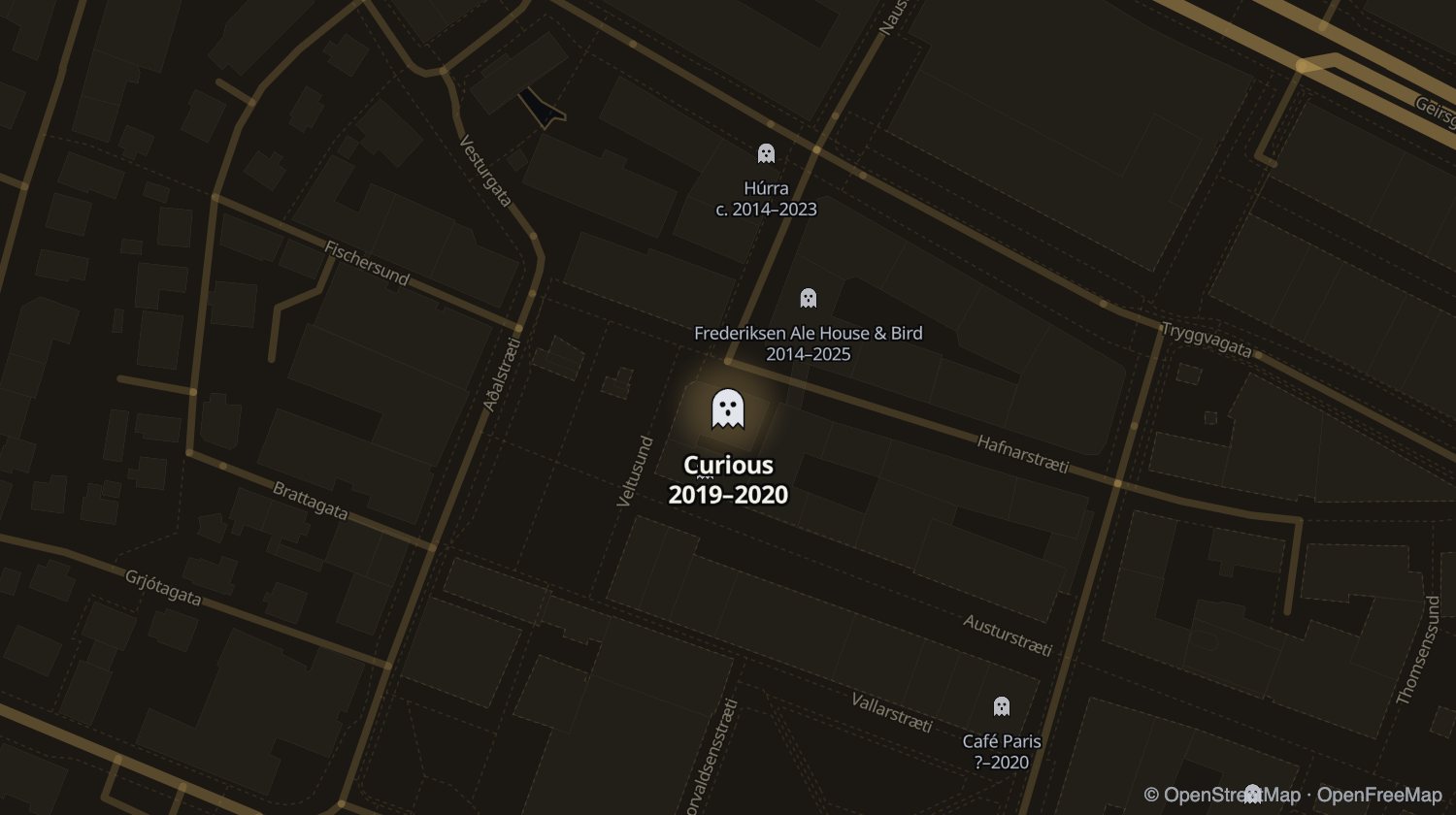
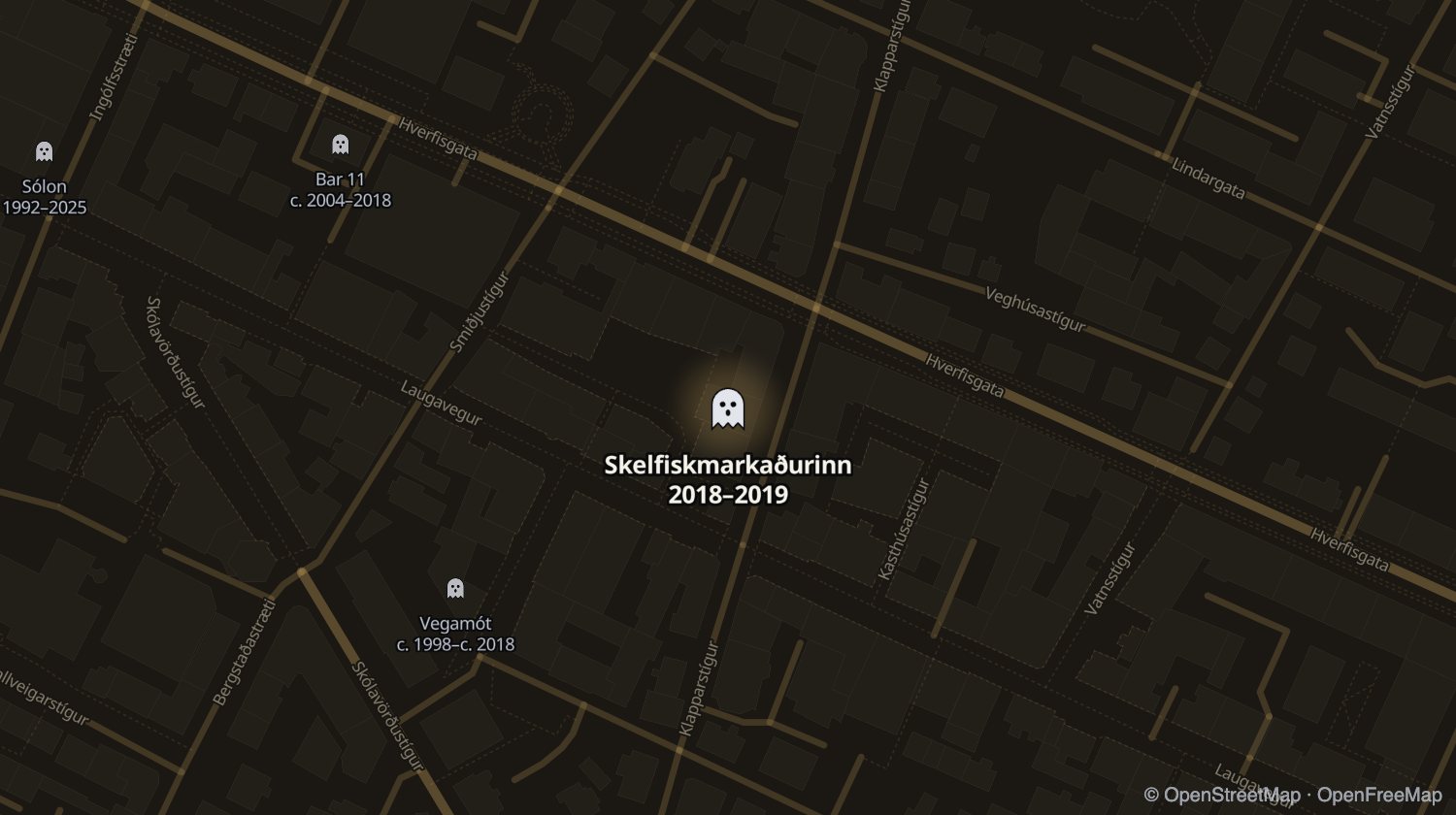
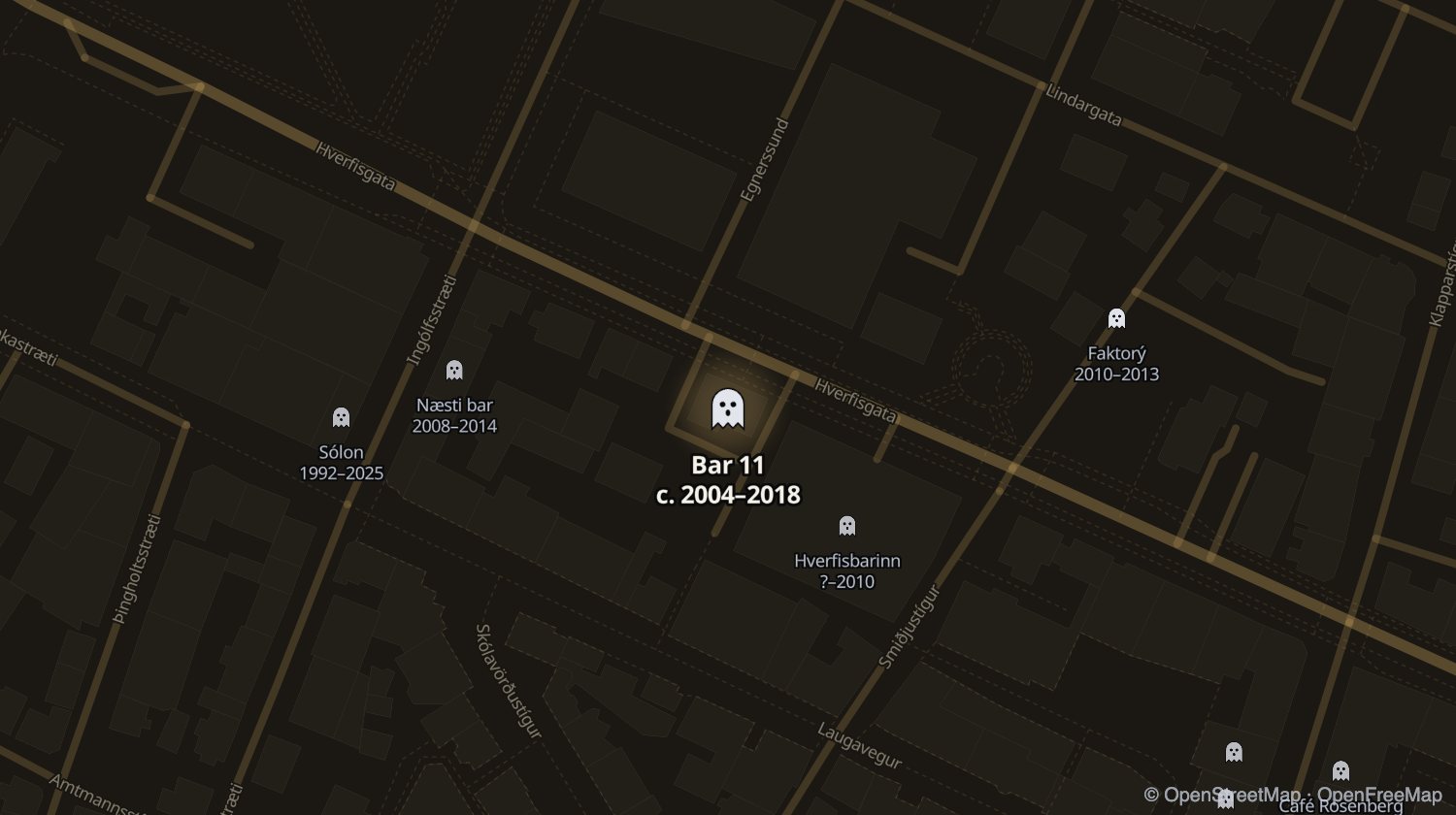
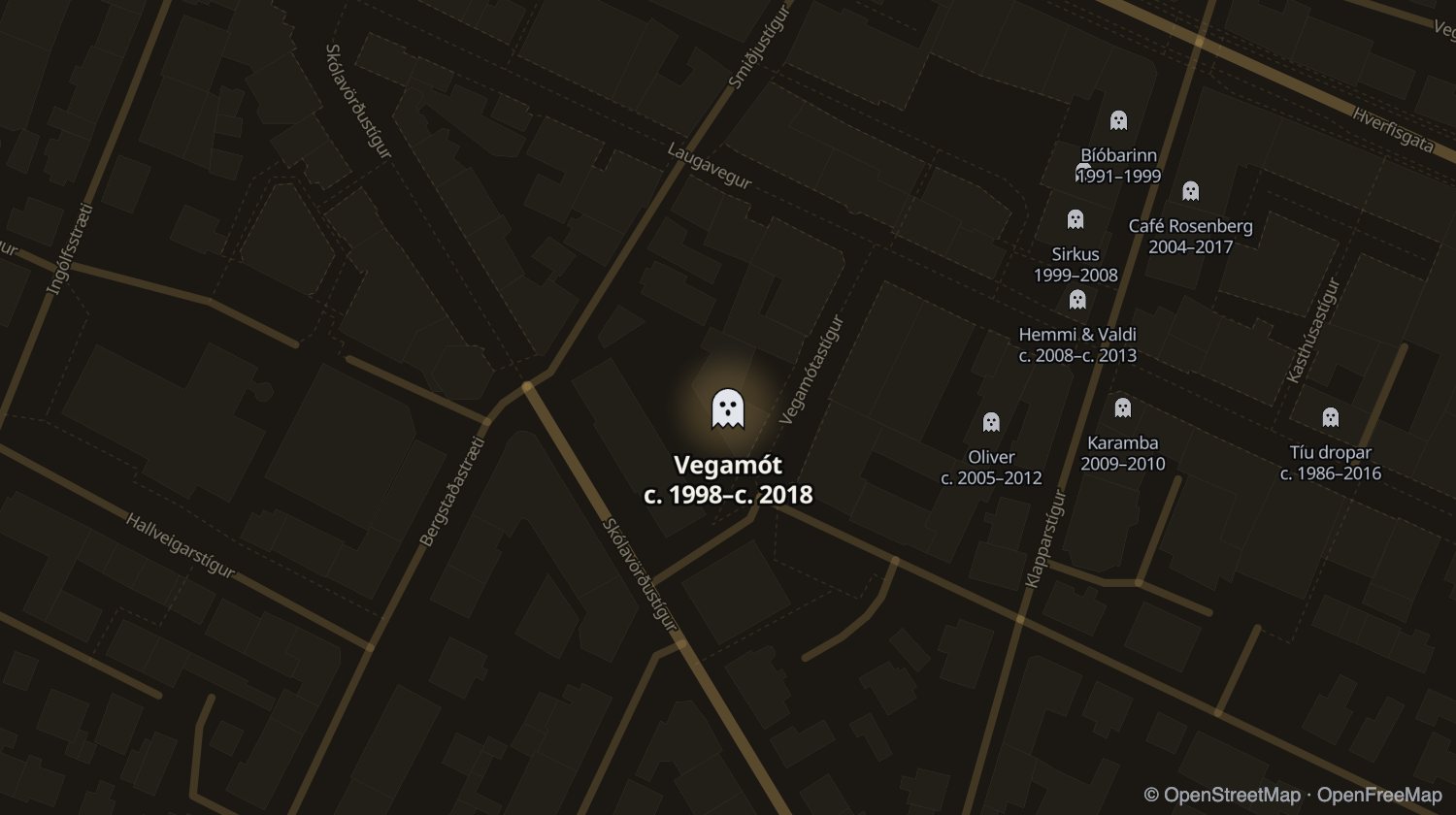
 🗺 Open map
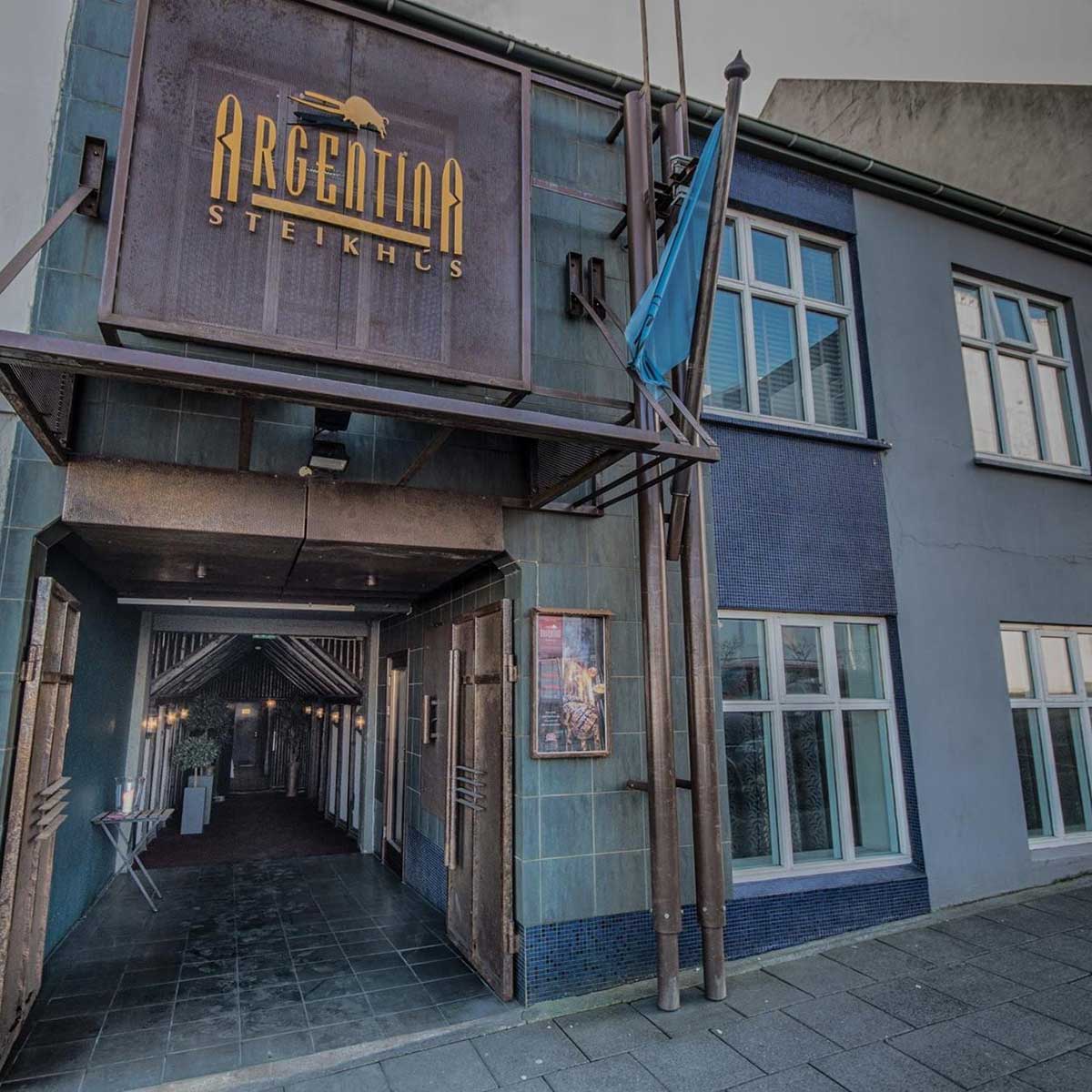
 🗺 Open map
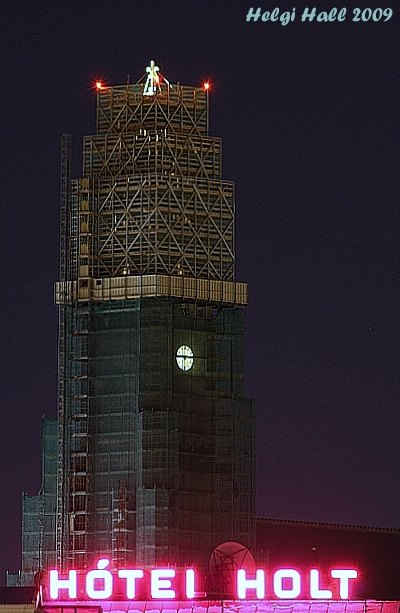
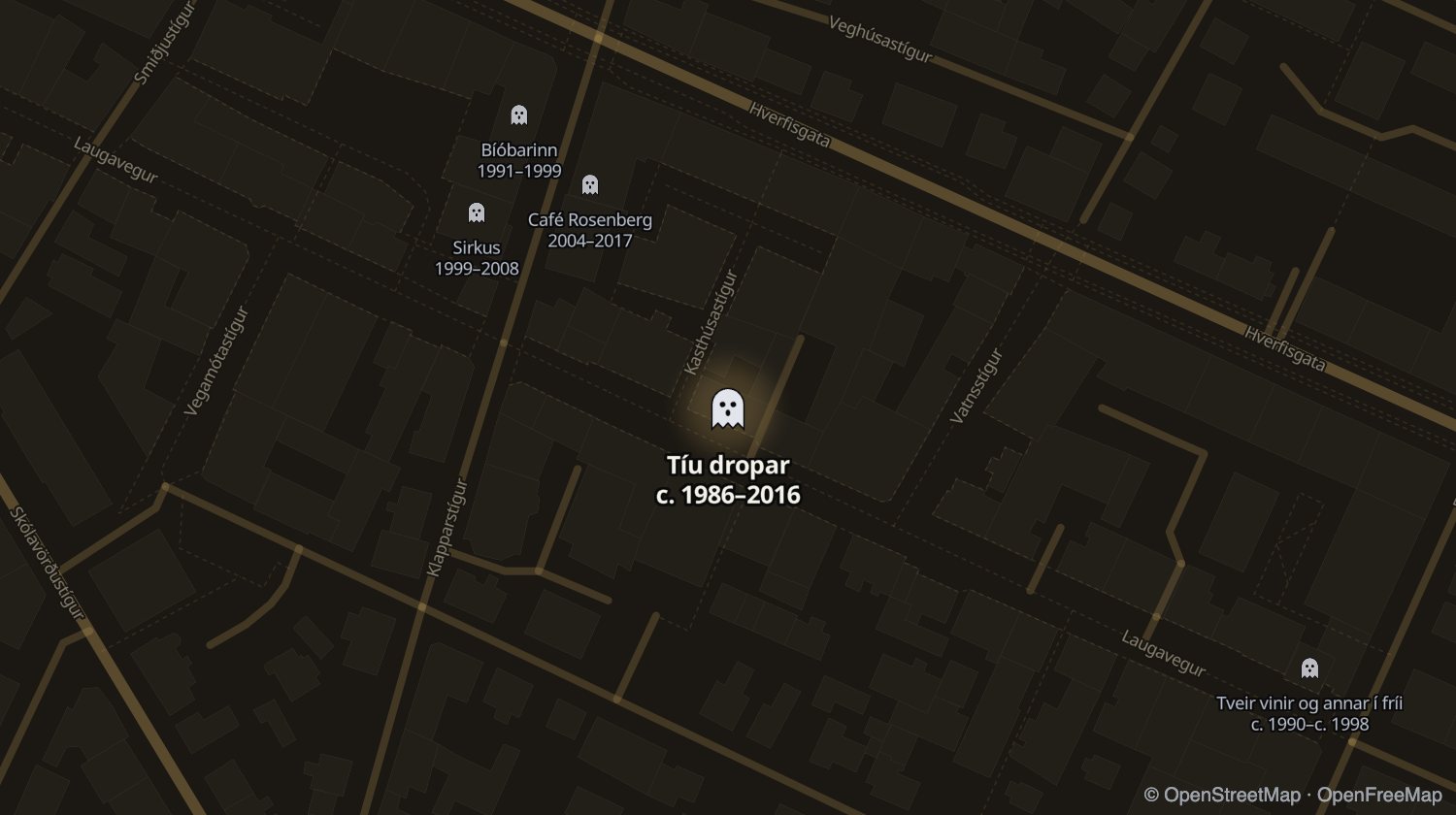
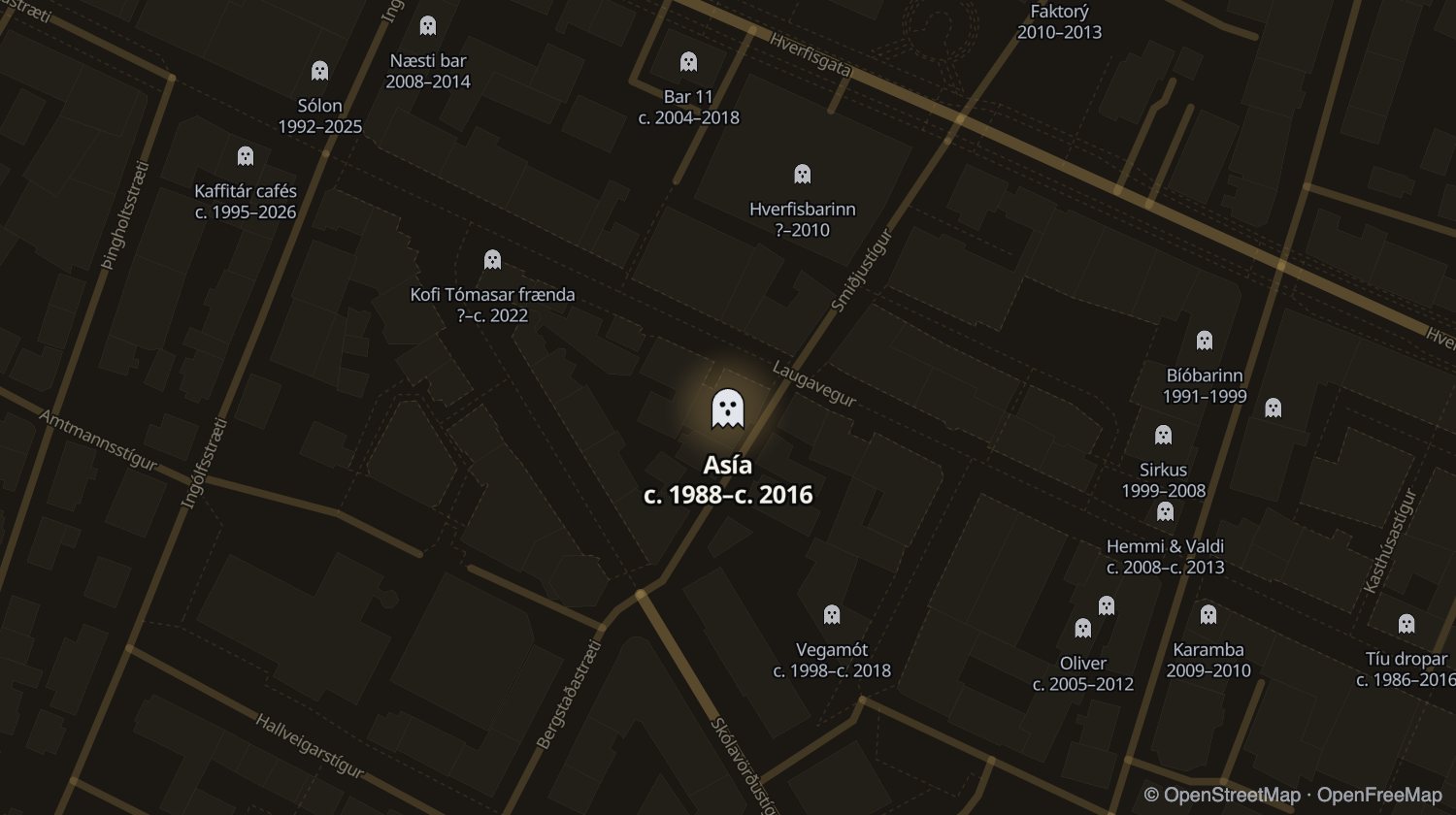
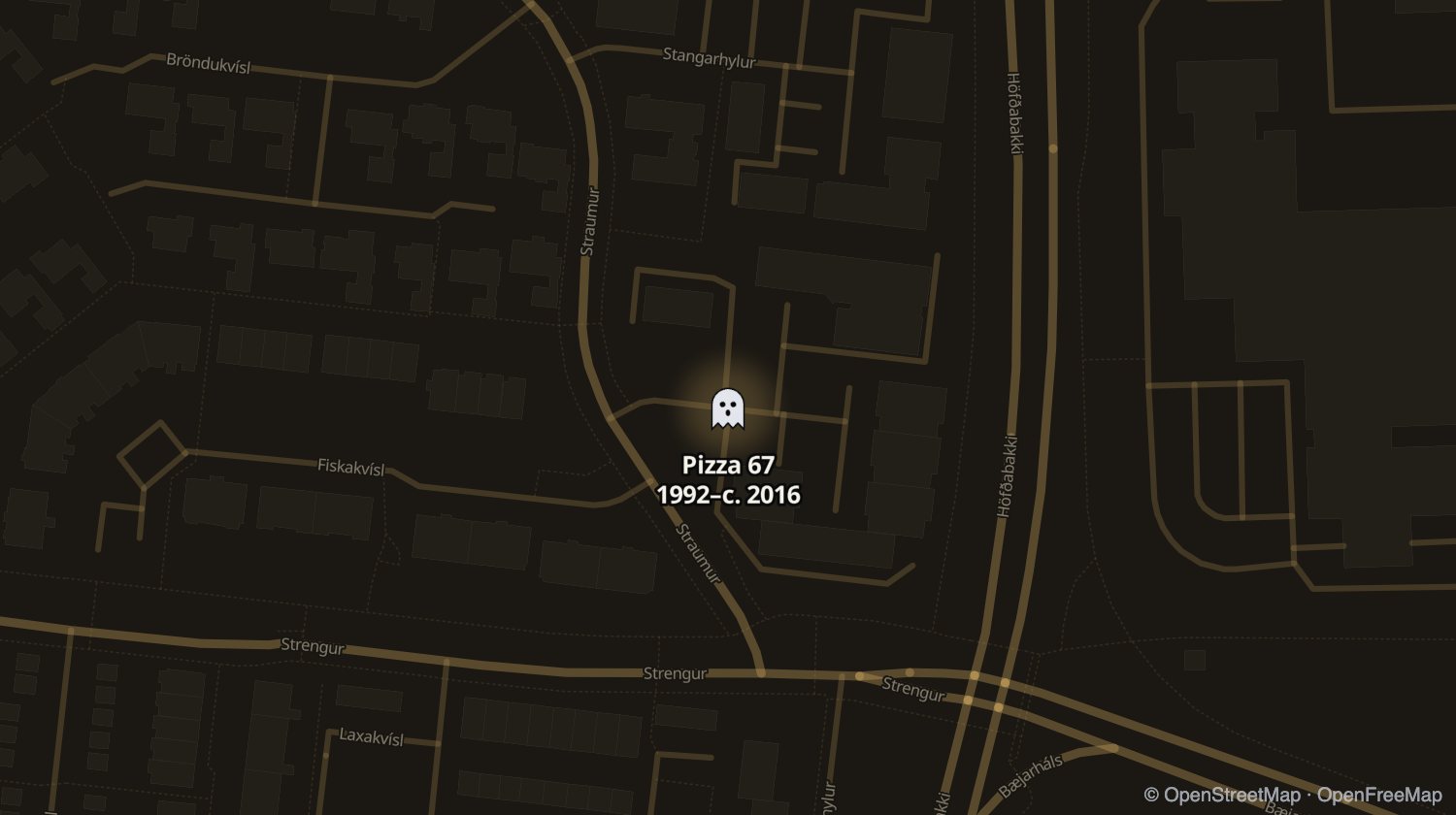
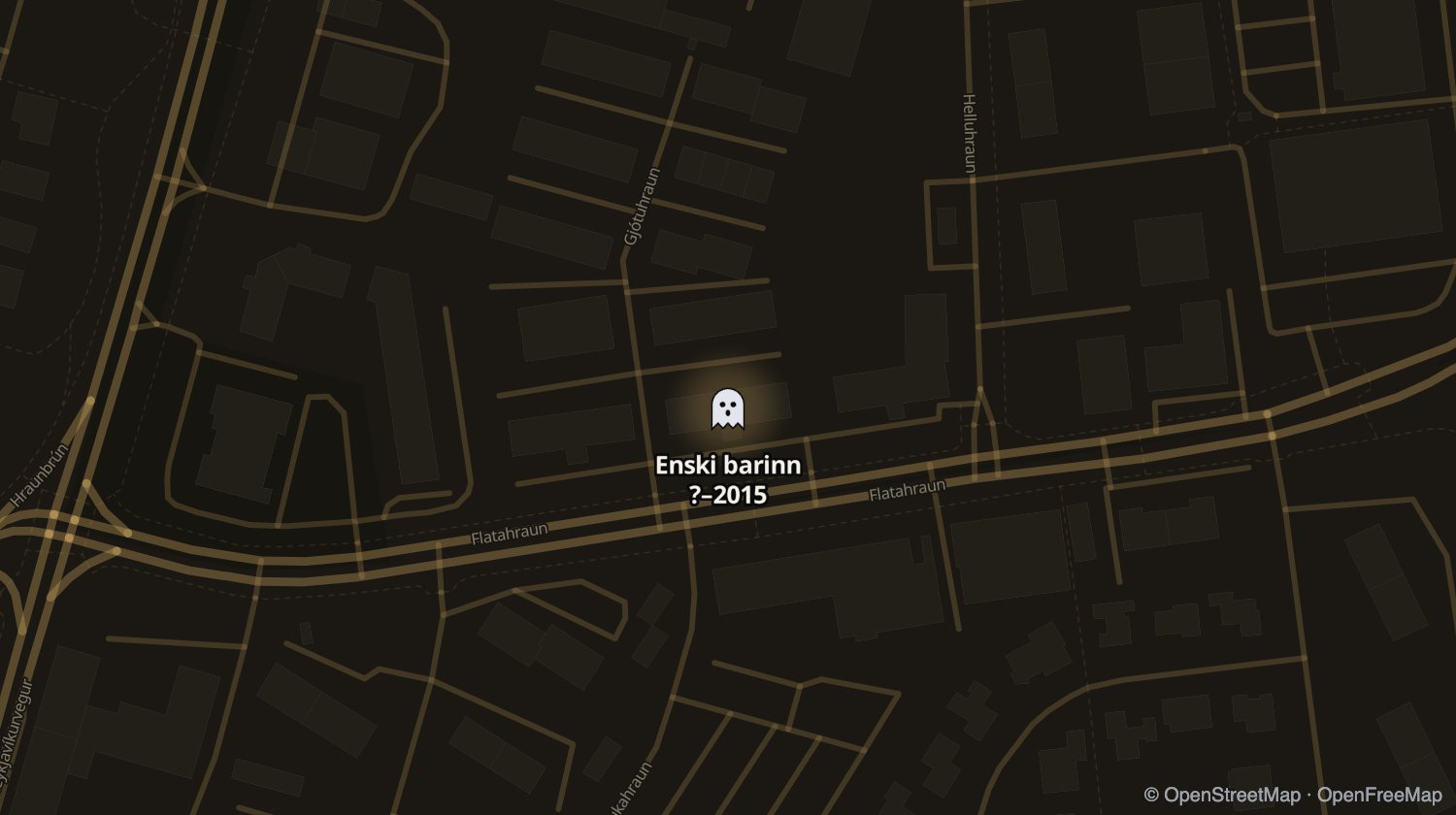
 🗺 Open map
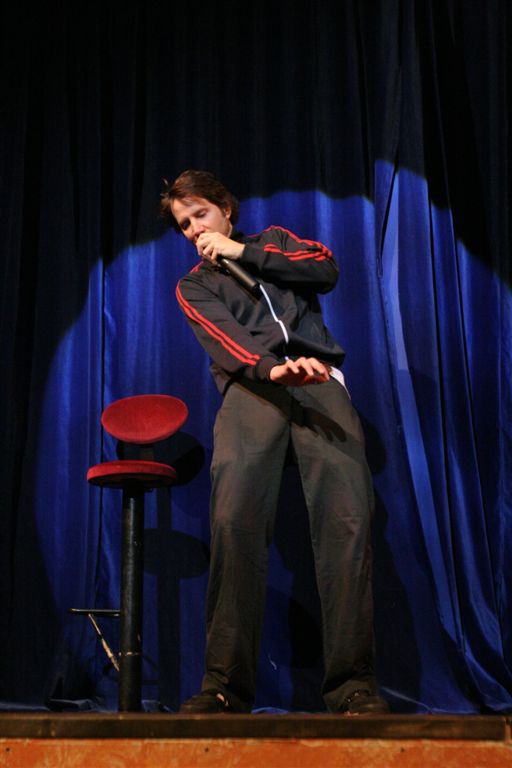
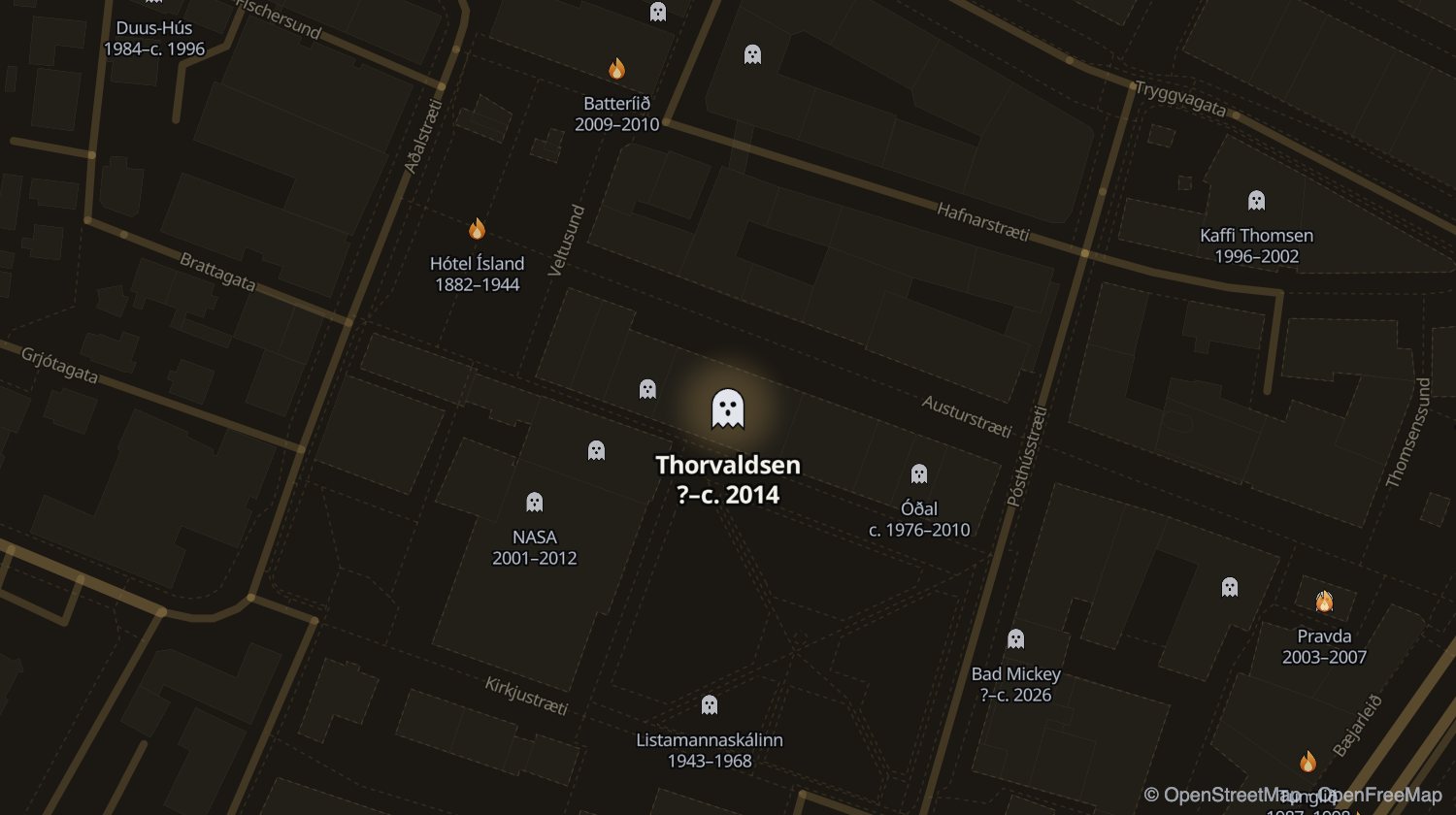
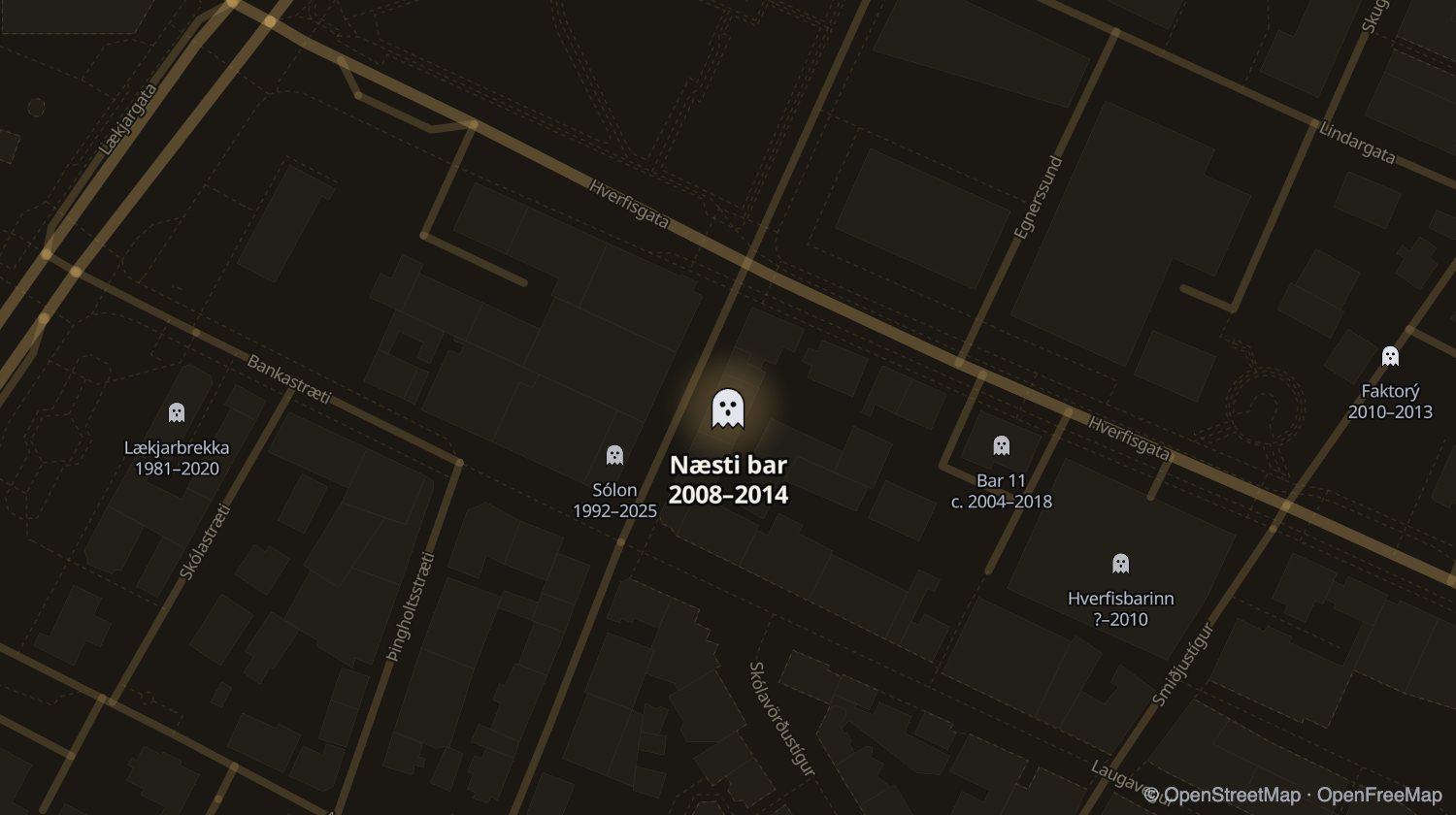
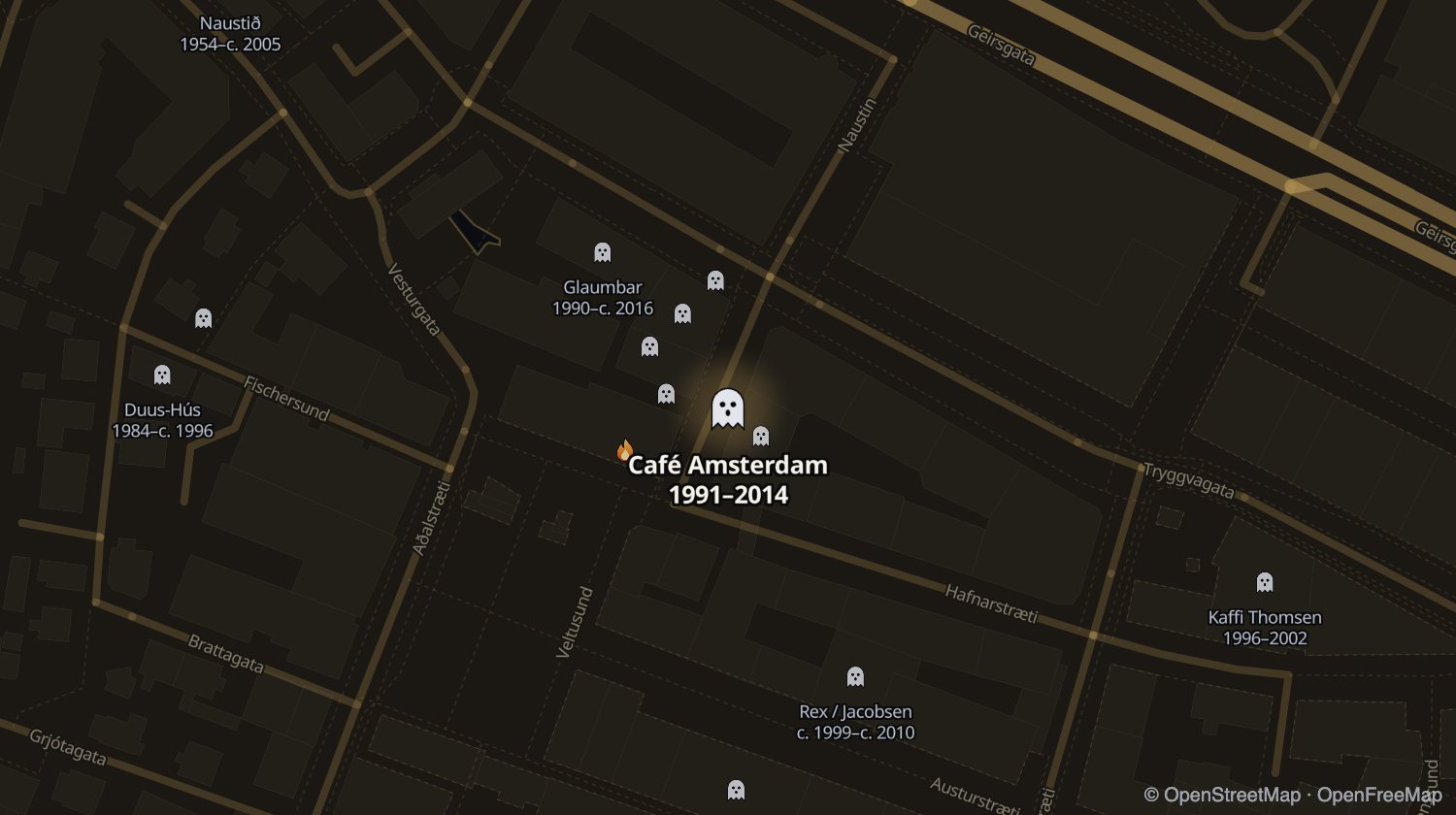
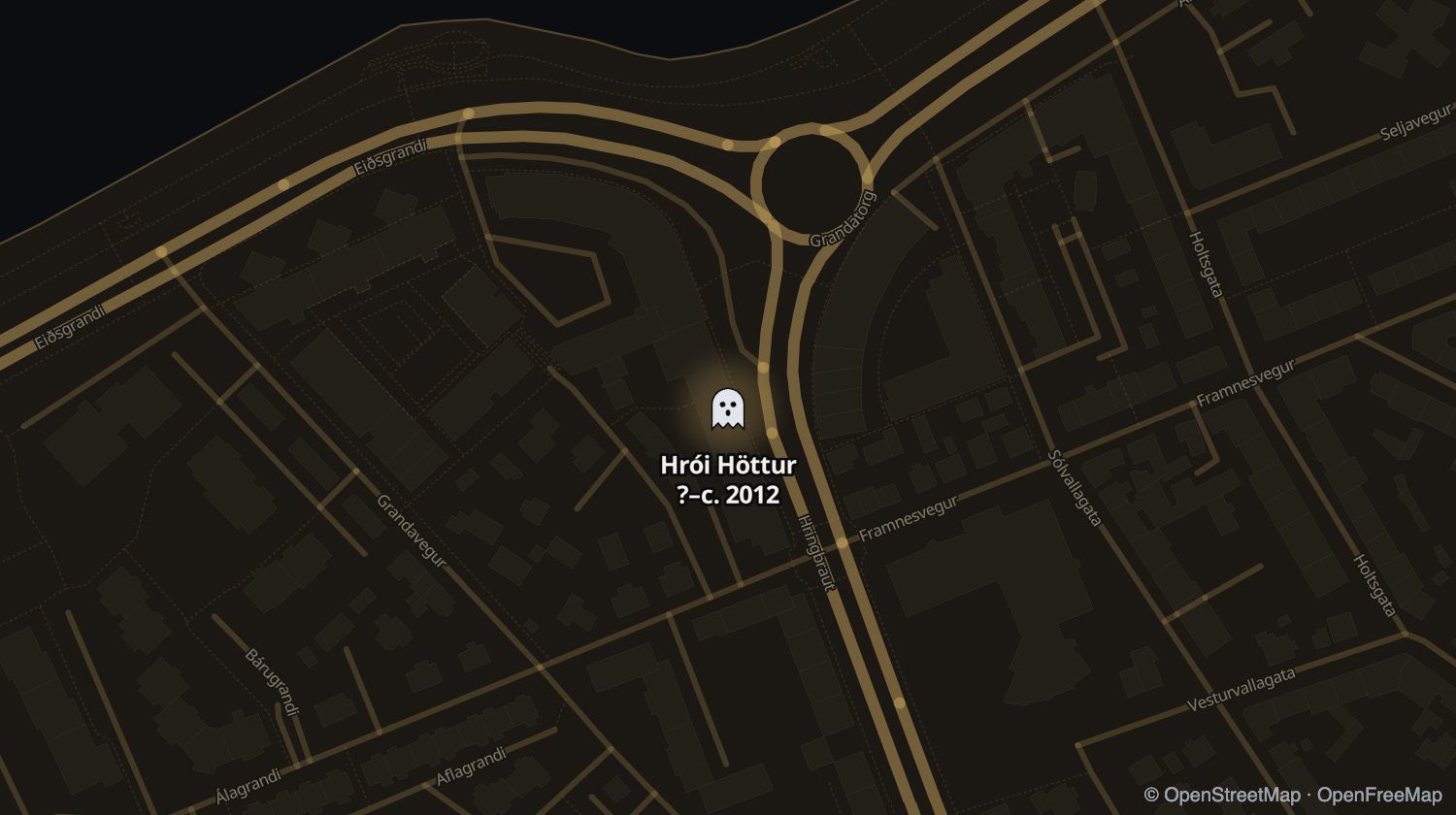
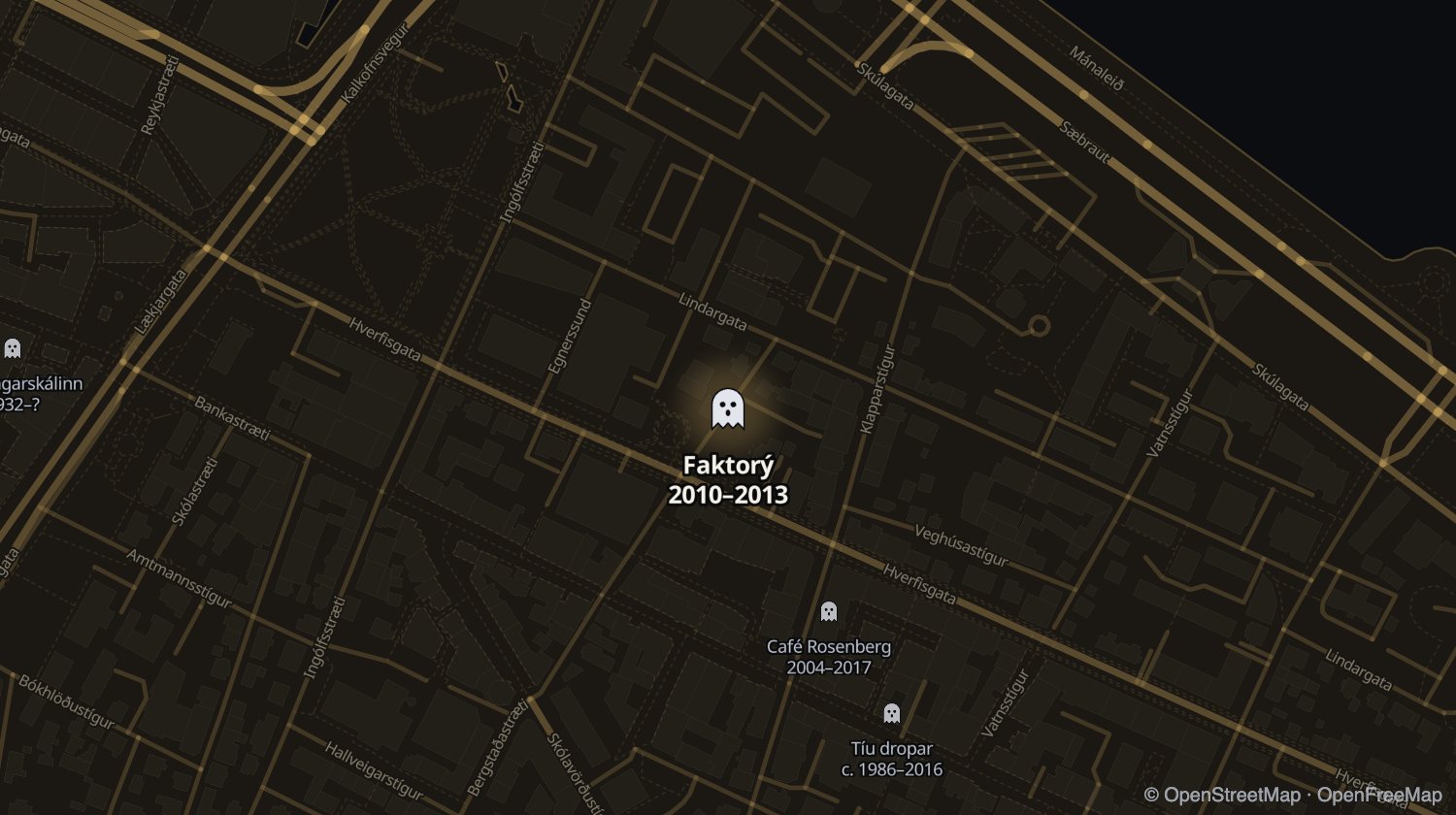
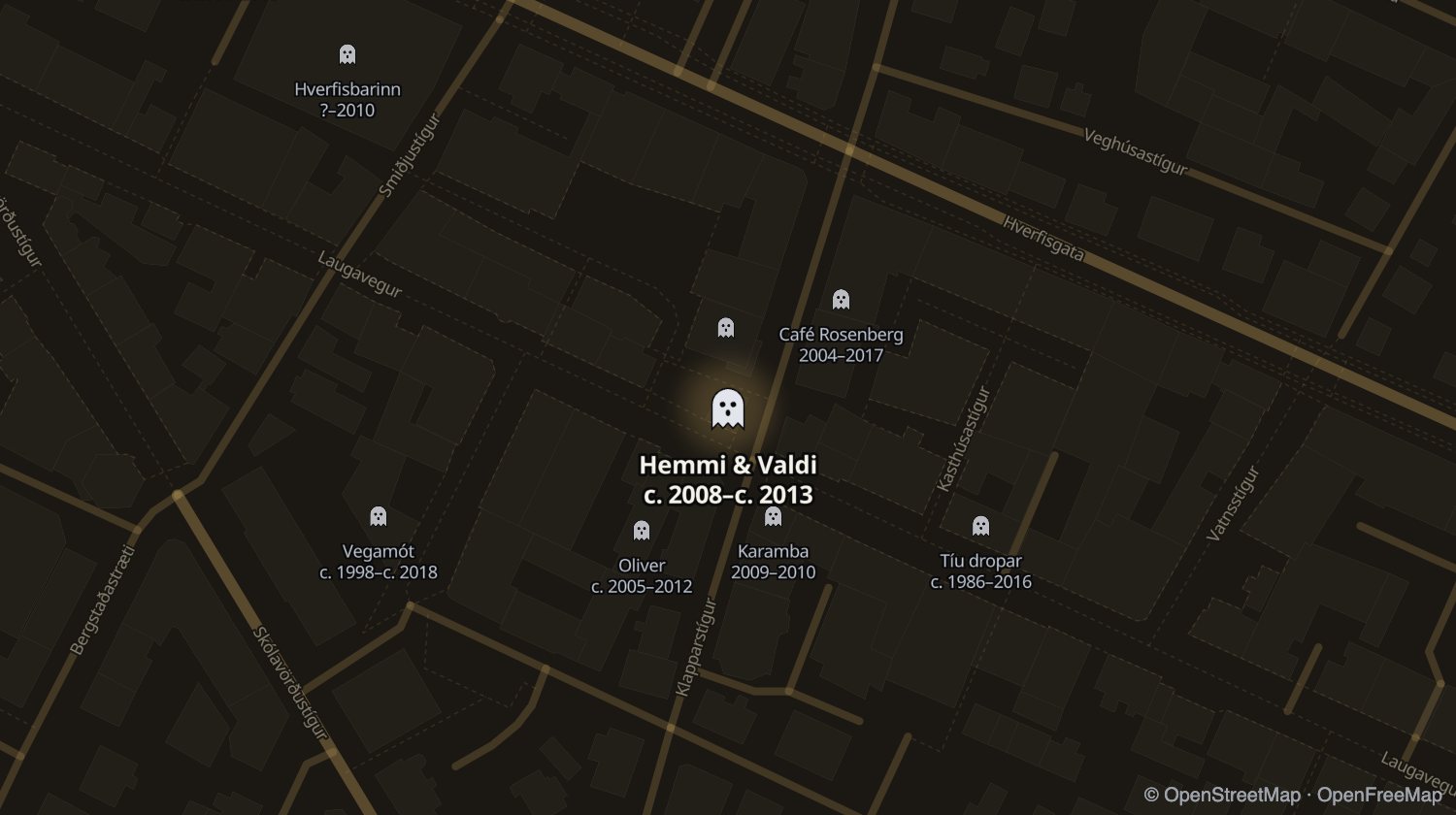 🗺 Open map
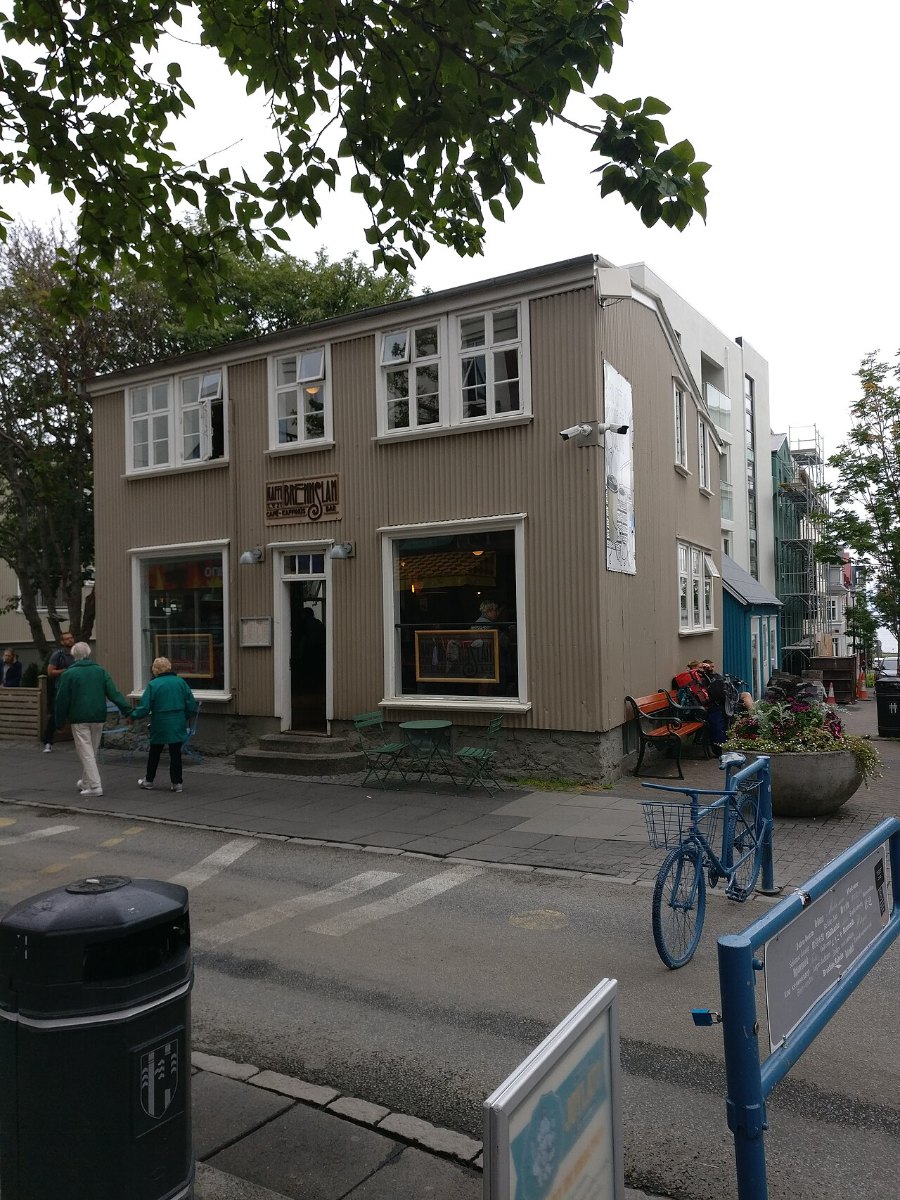
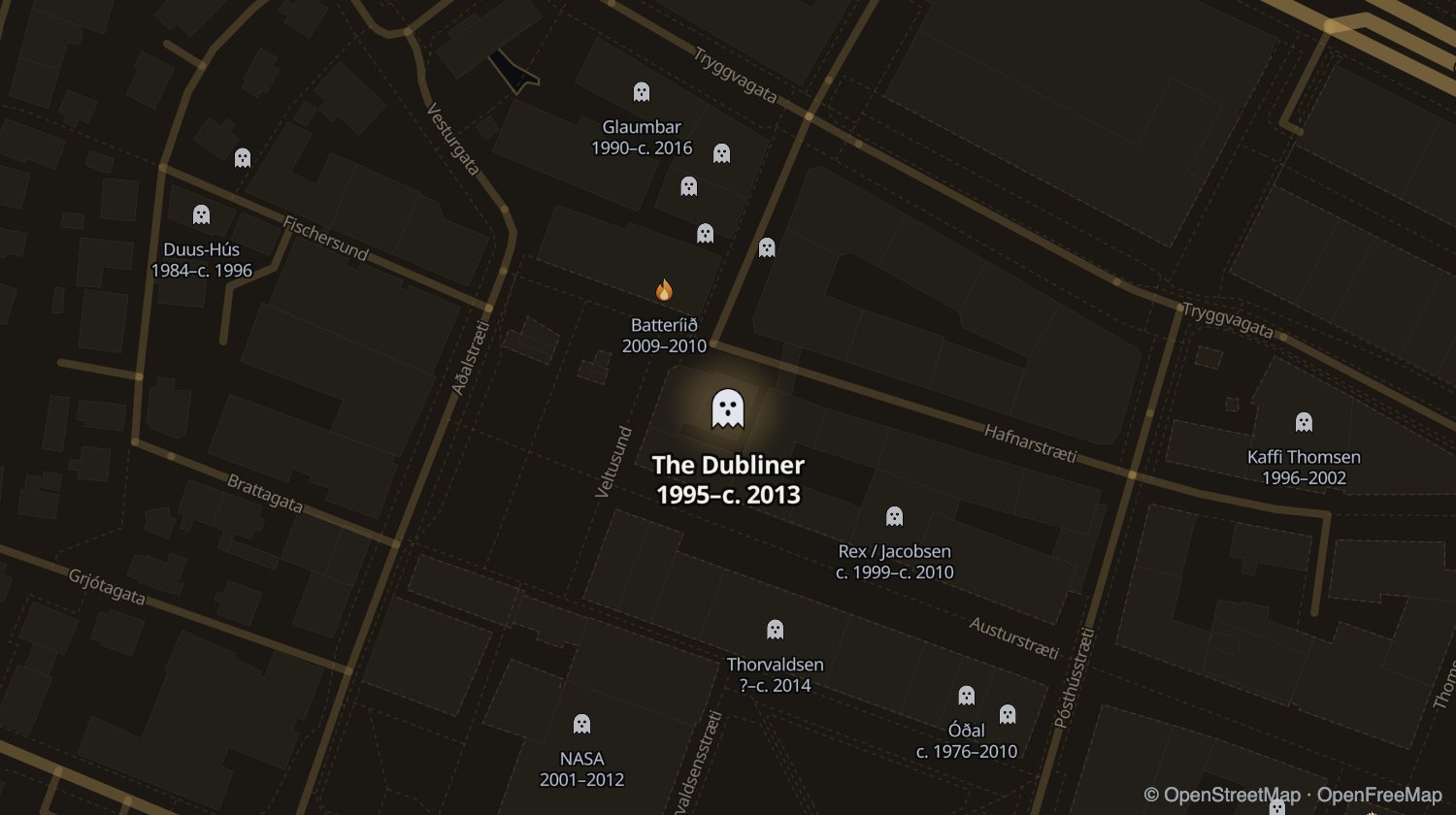 🗺 Open map
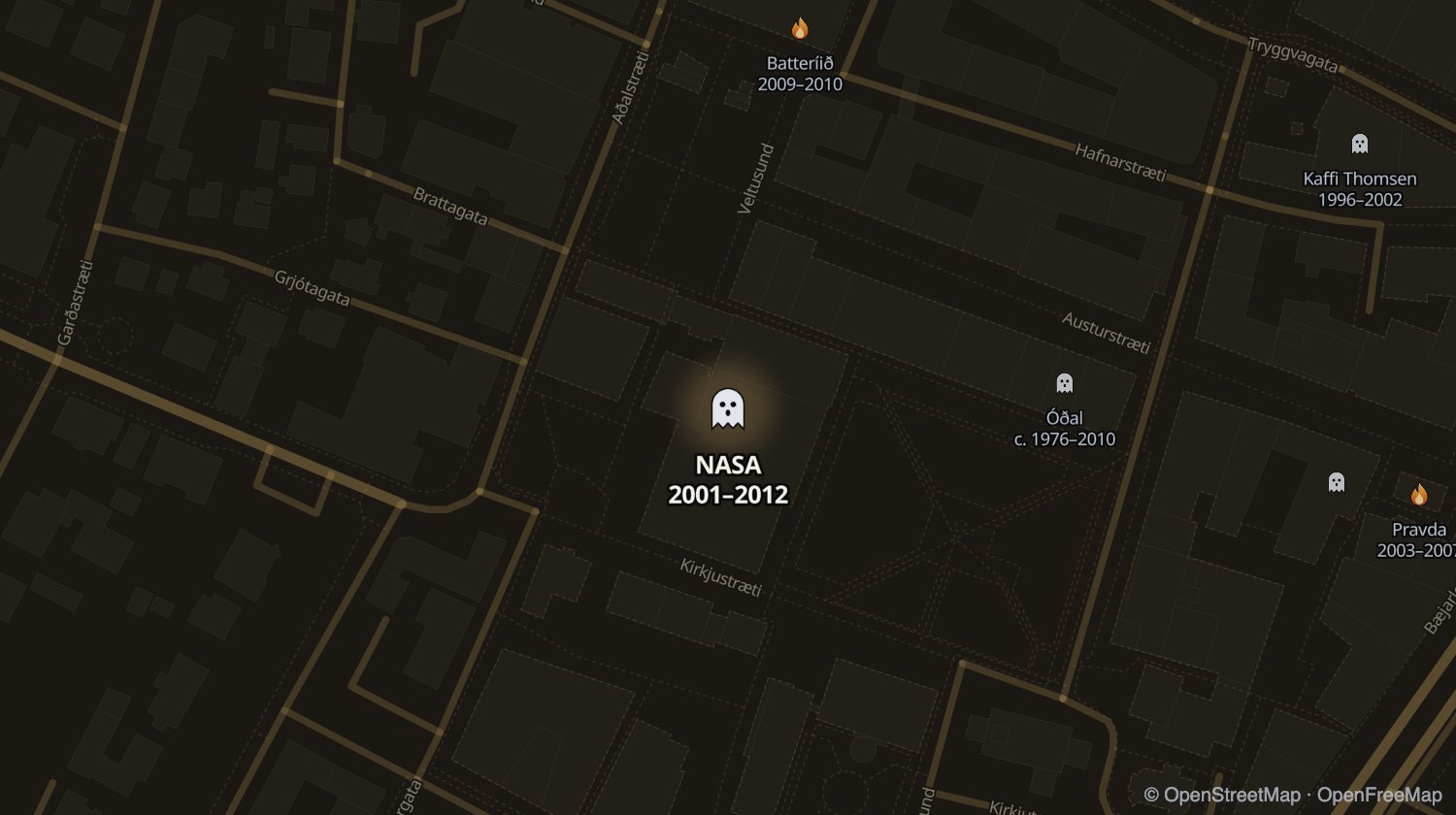 🗺 Open map
 +28










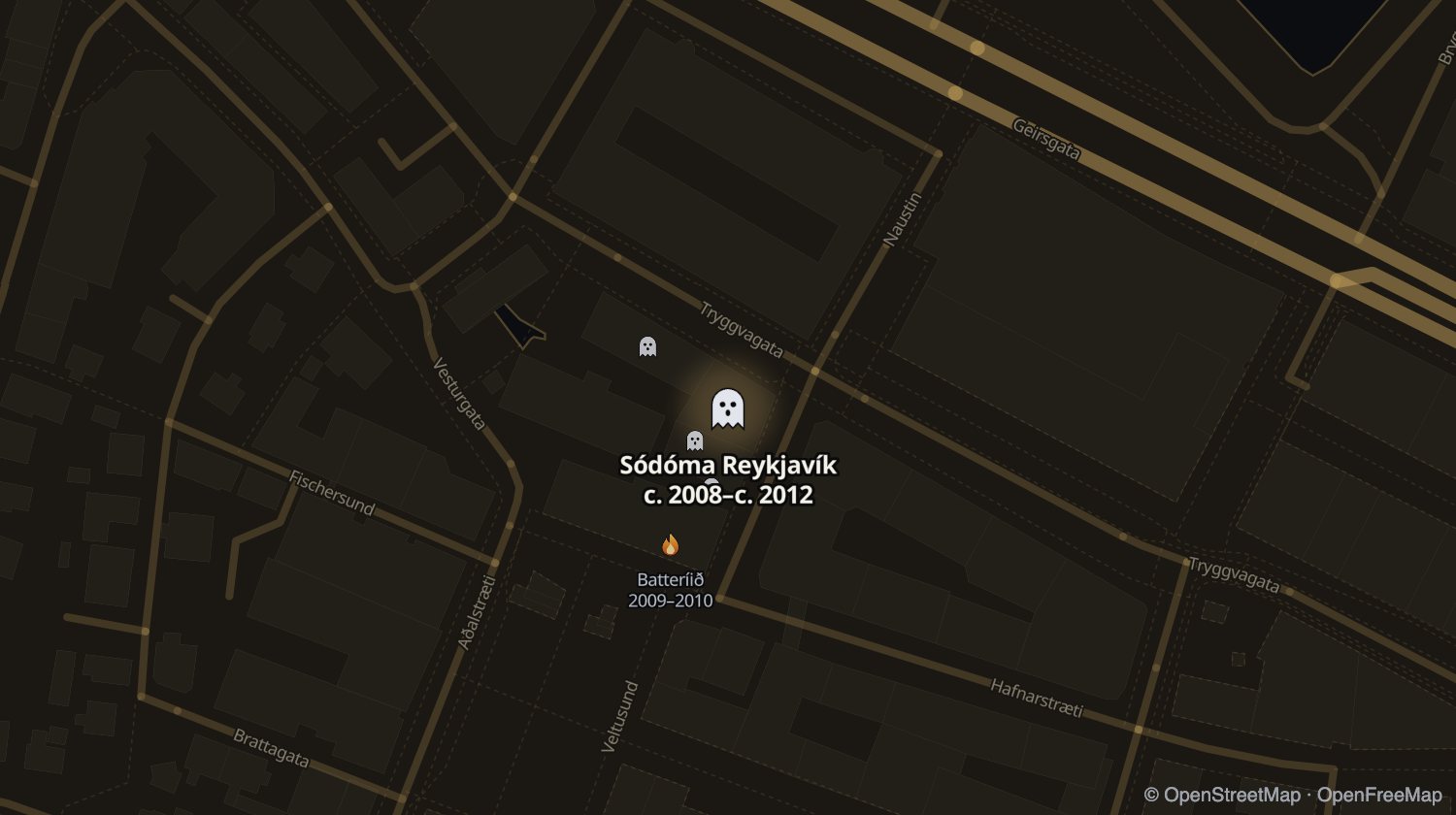
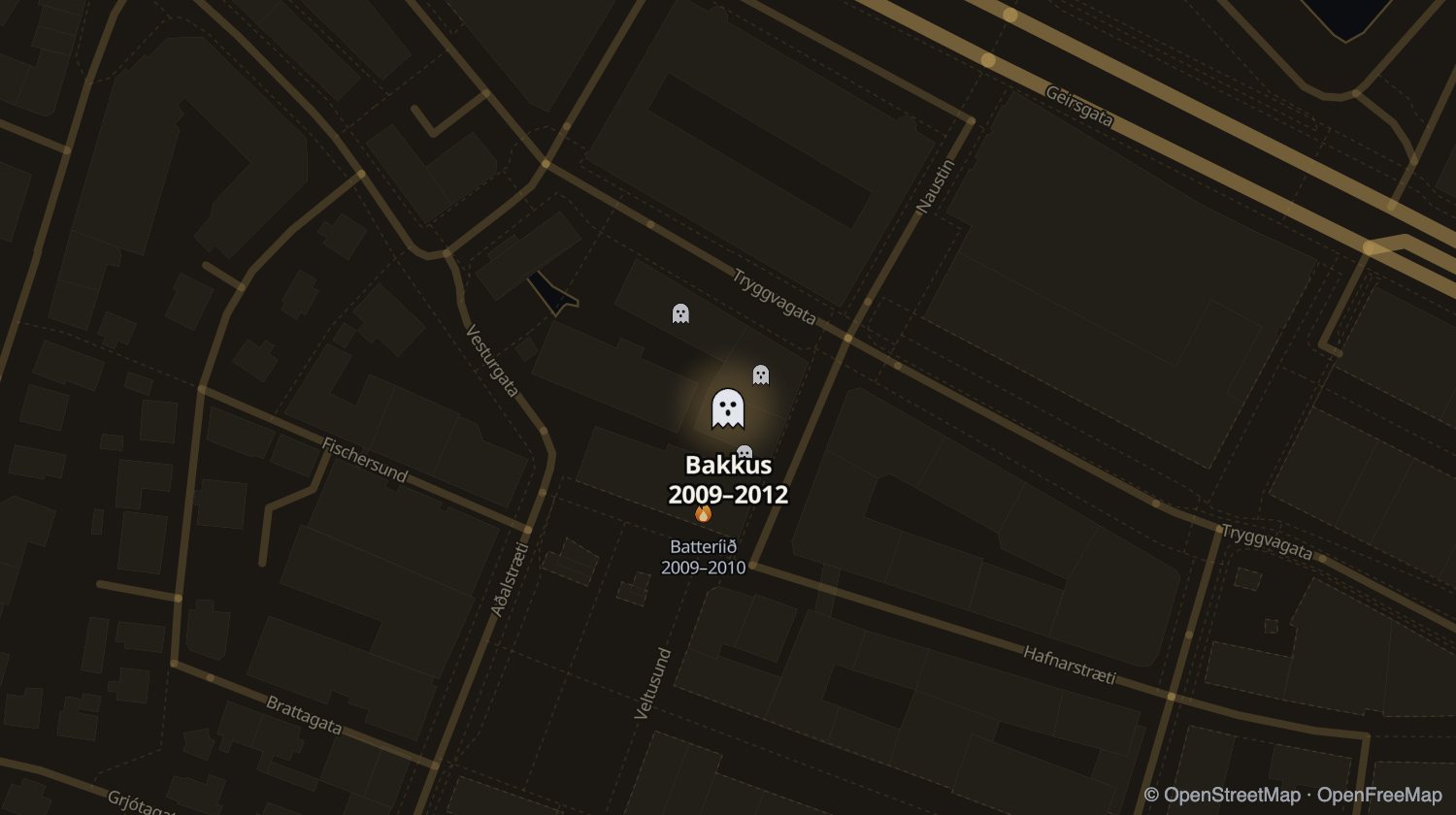
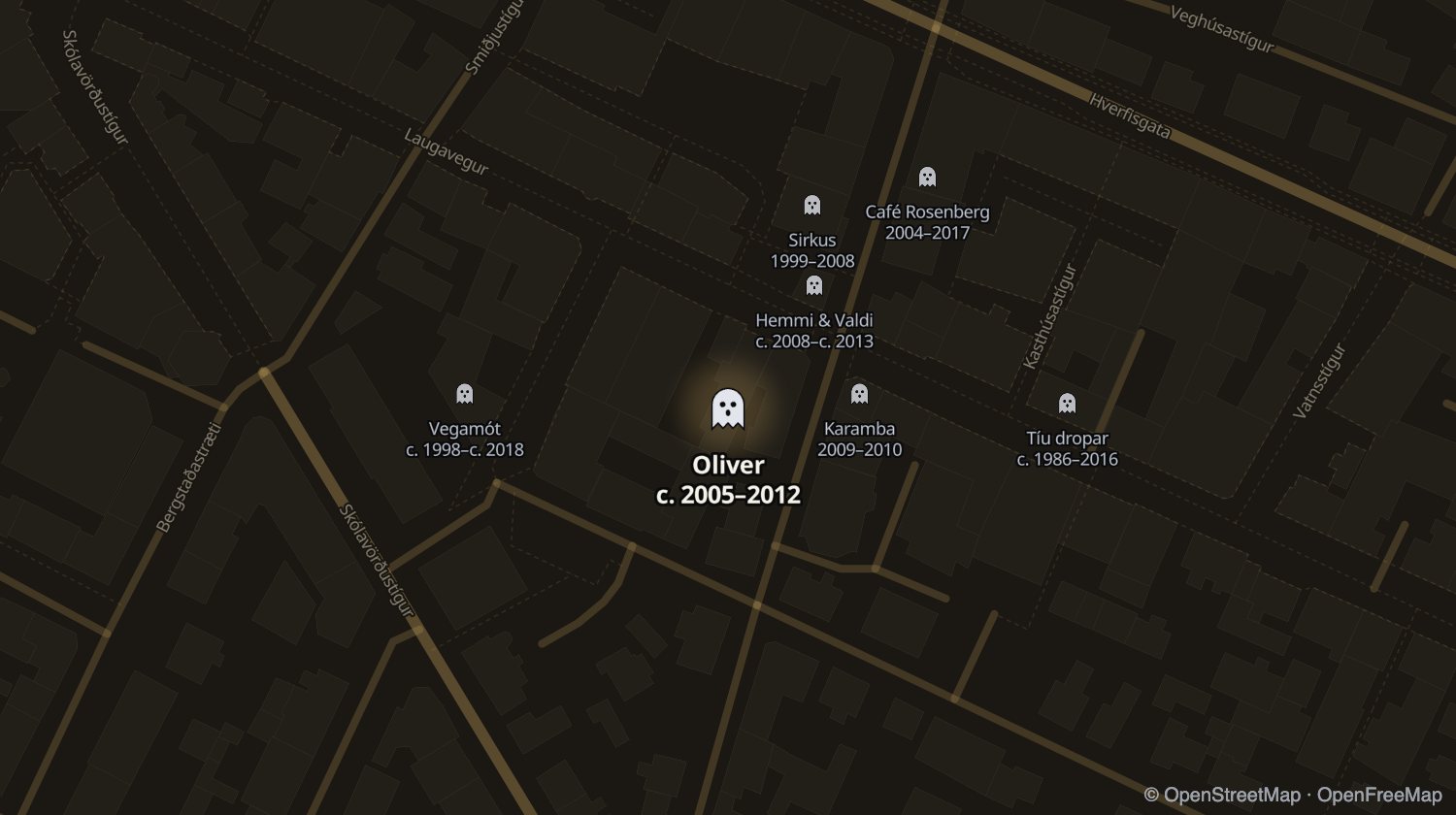
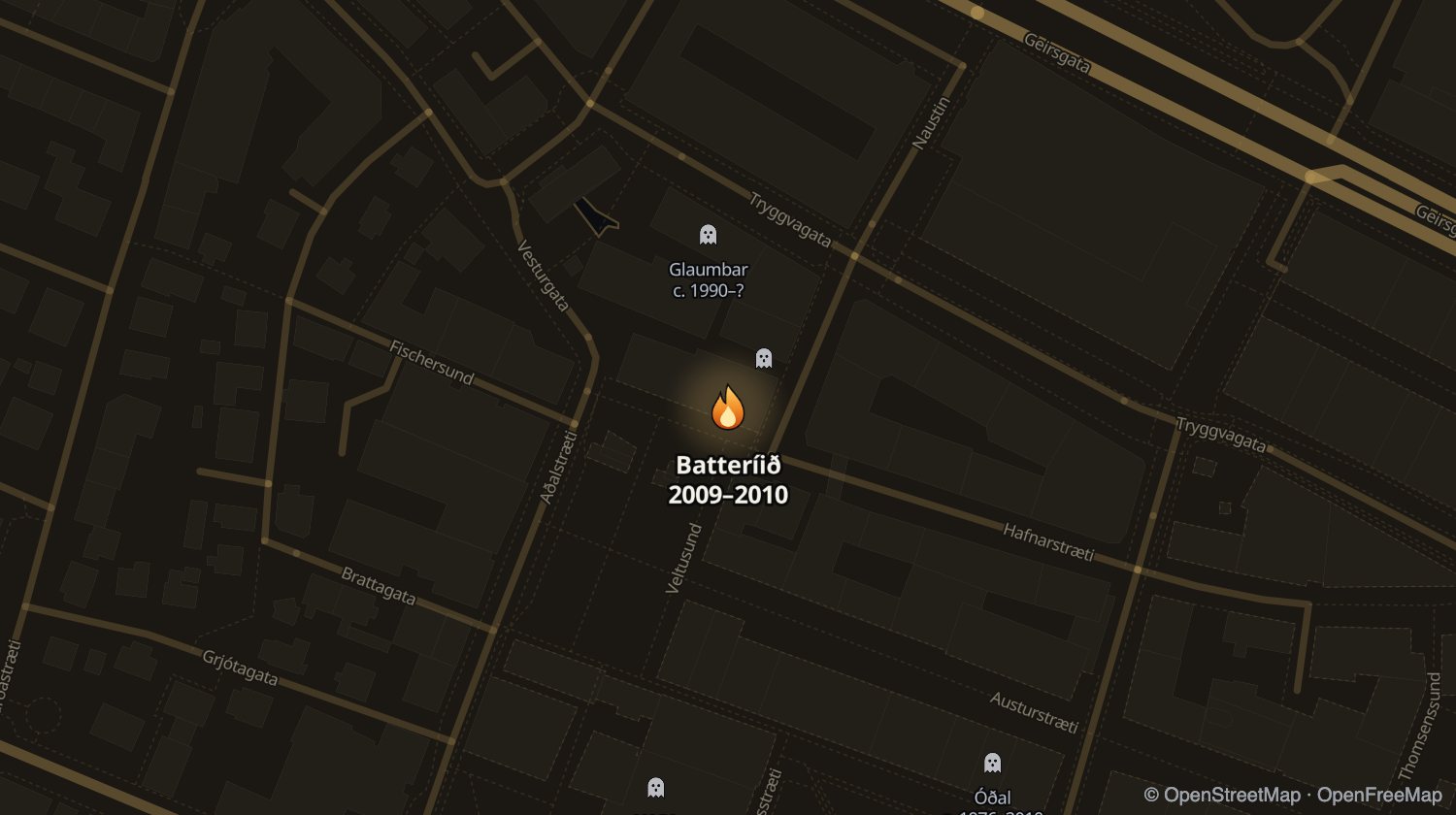
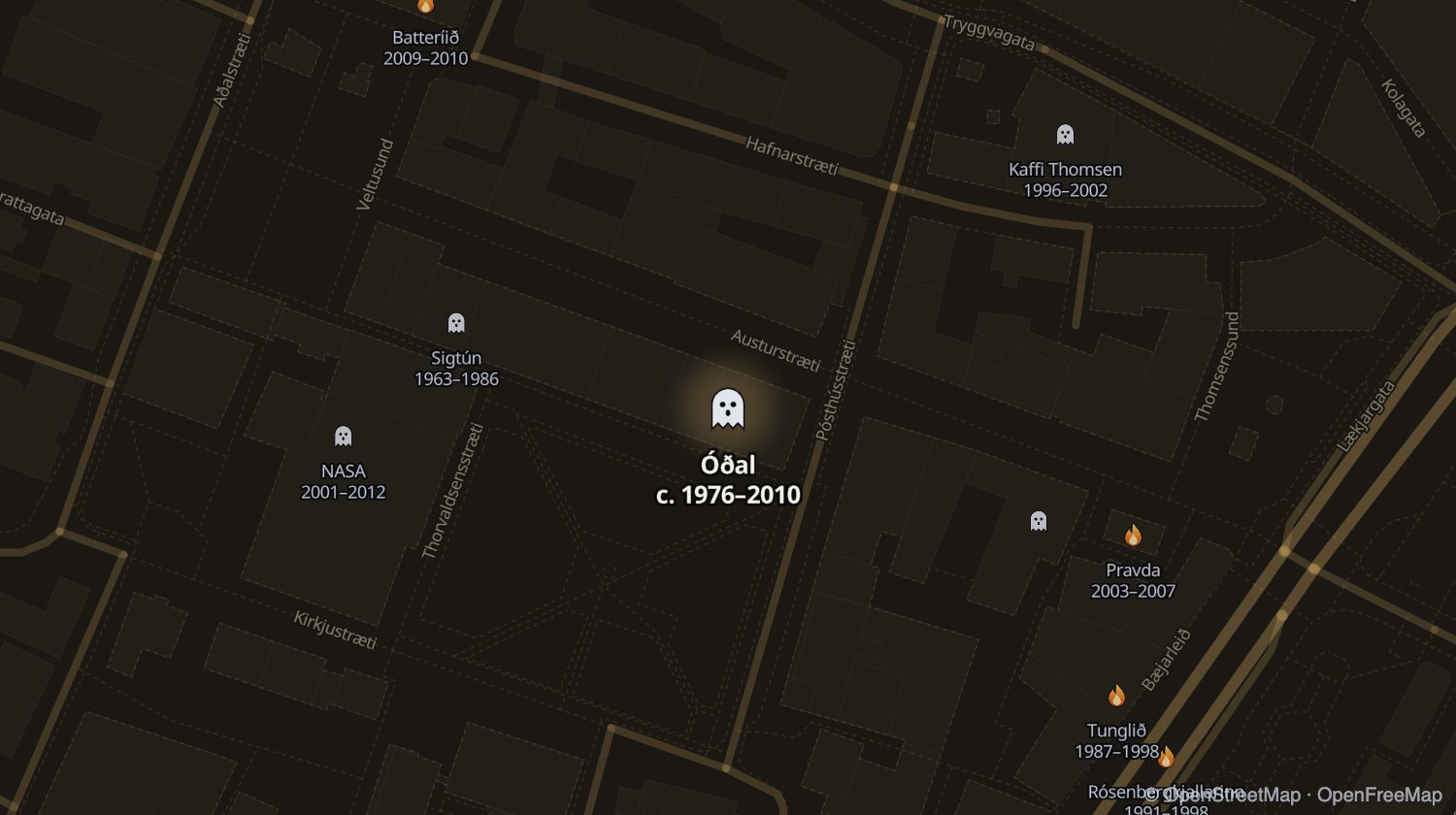
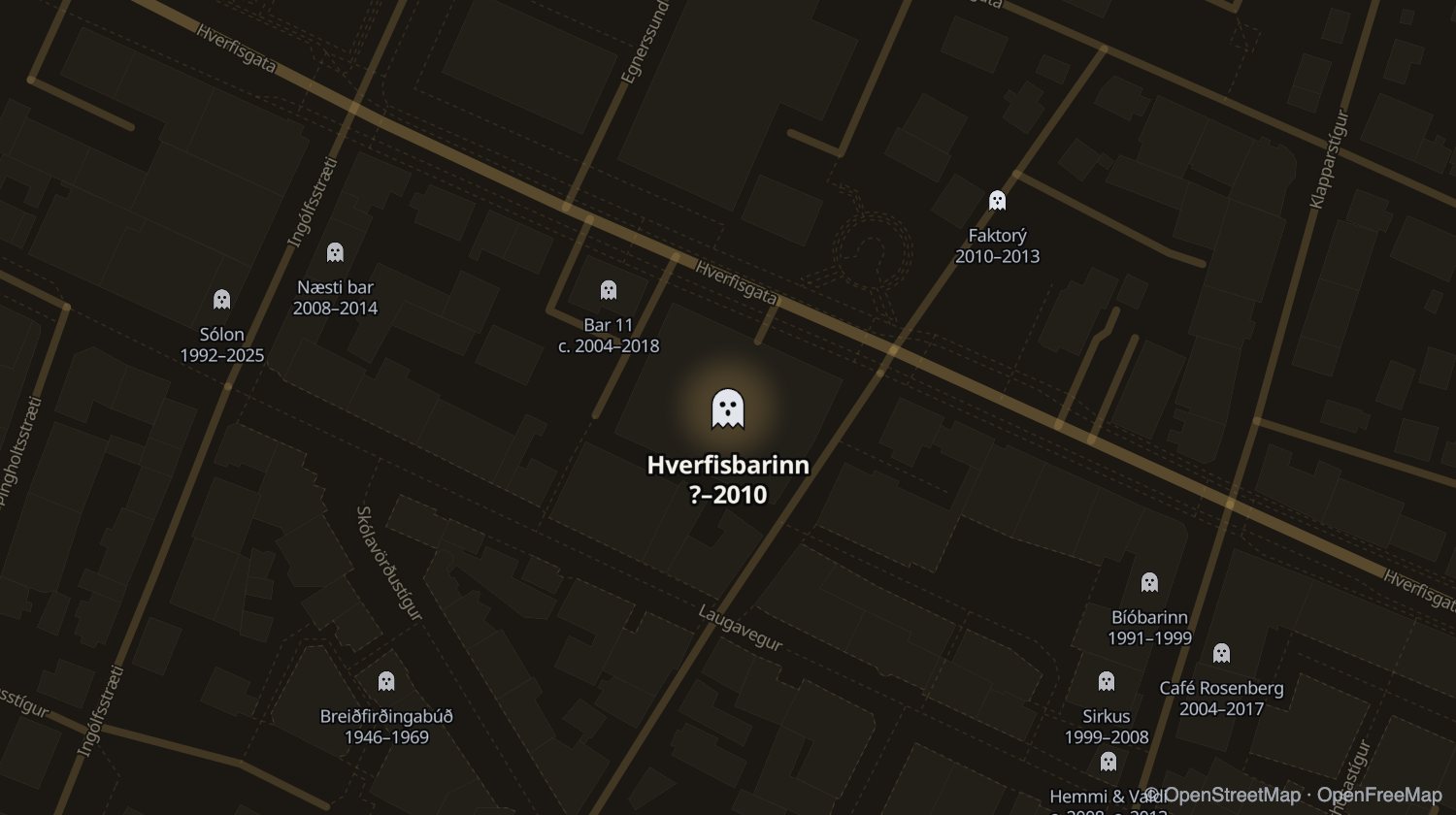 🗺 Open map
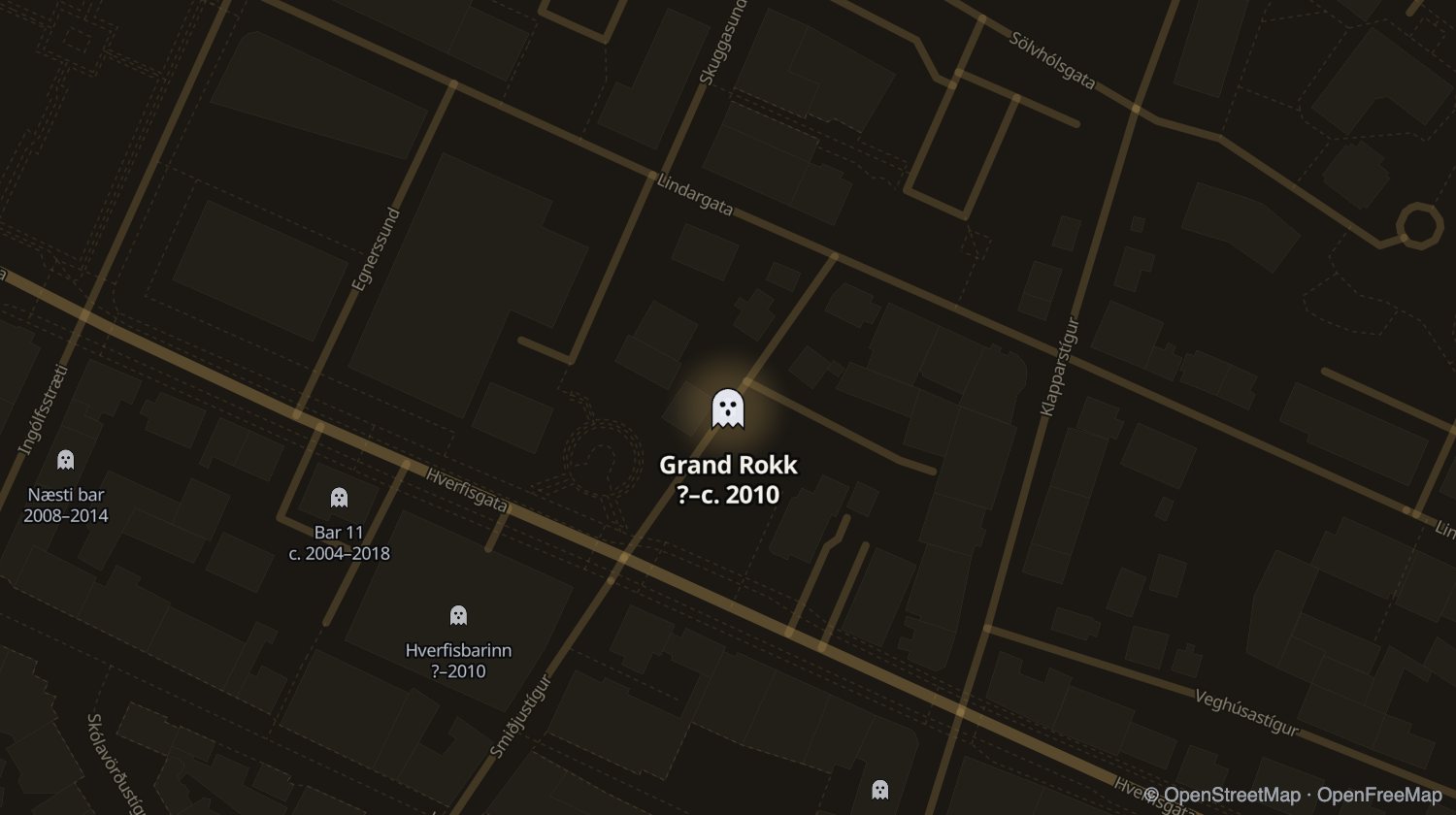
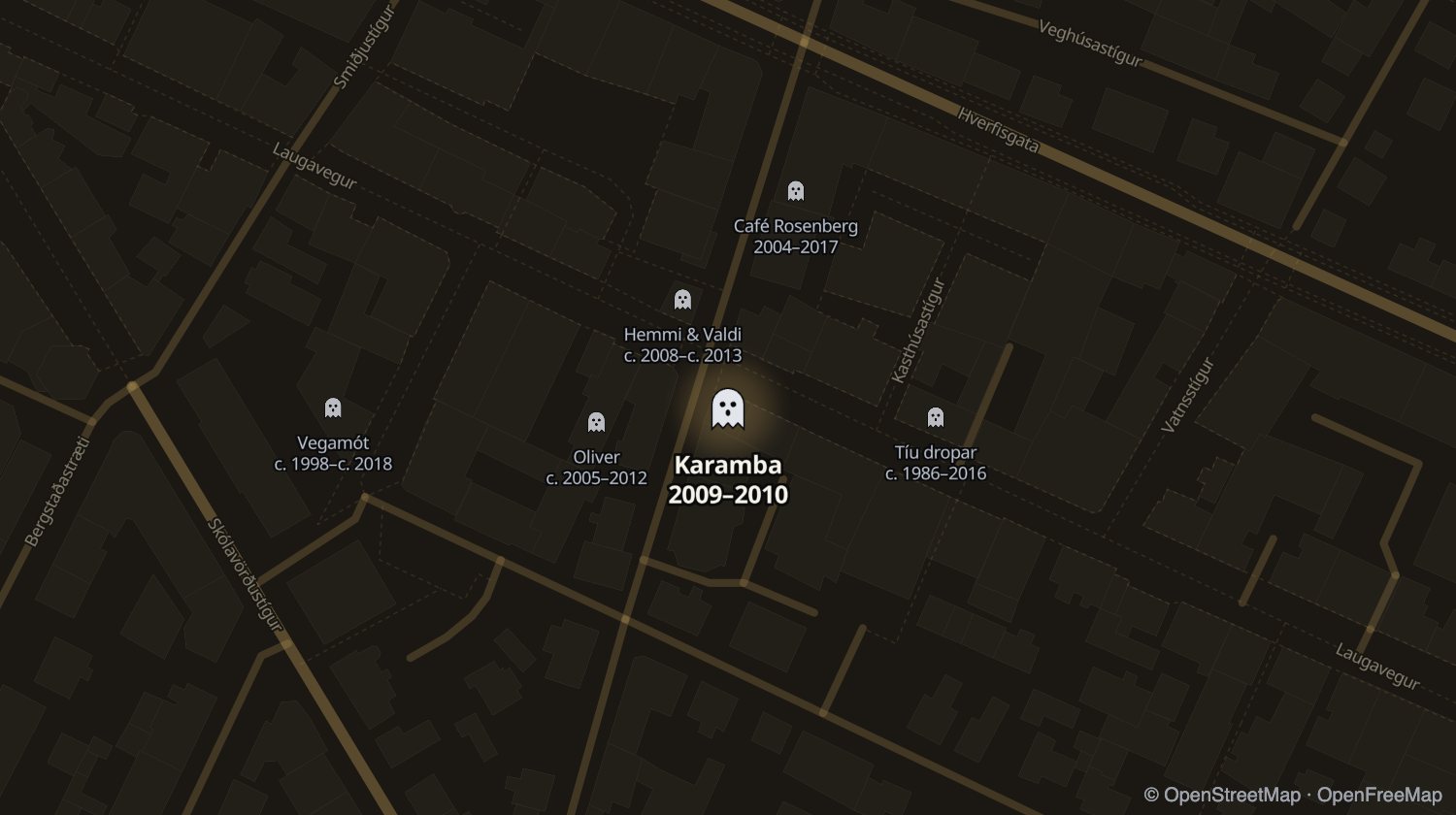 🗺 Open map
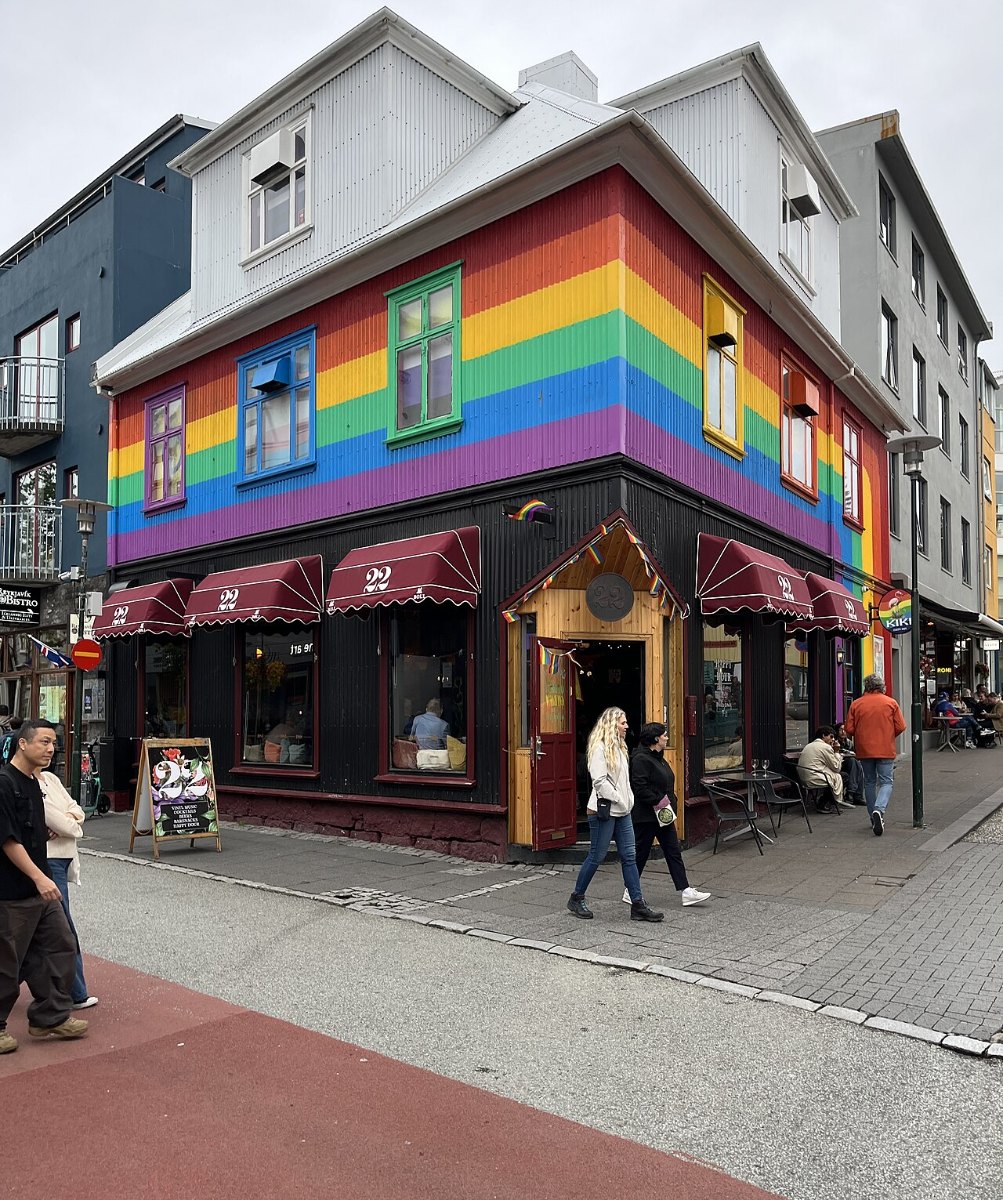
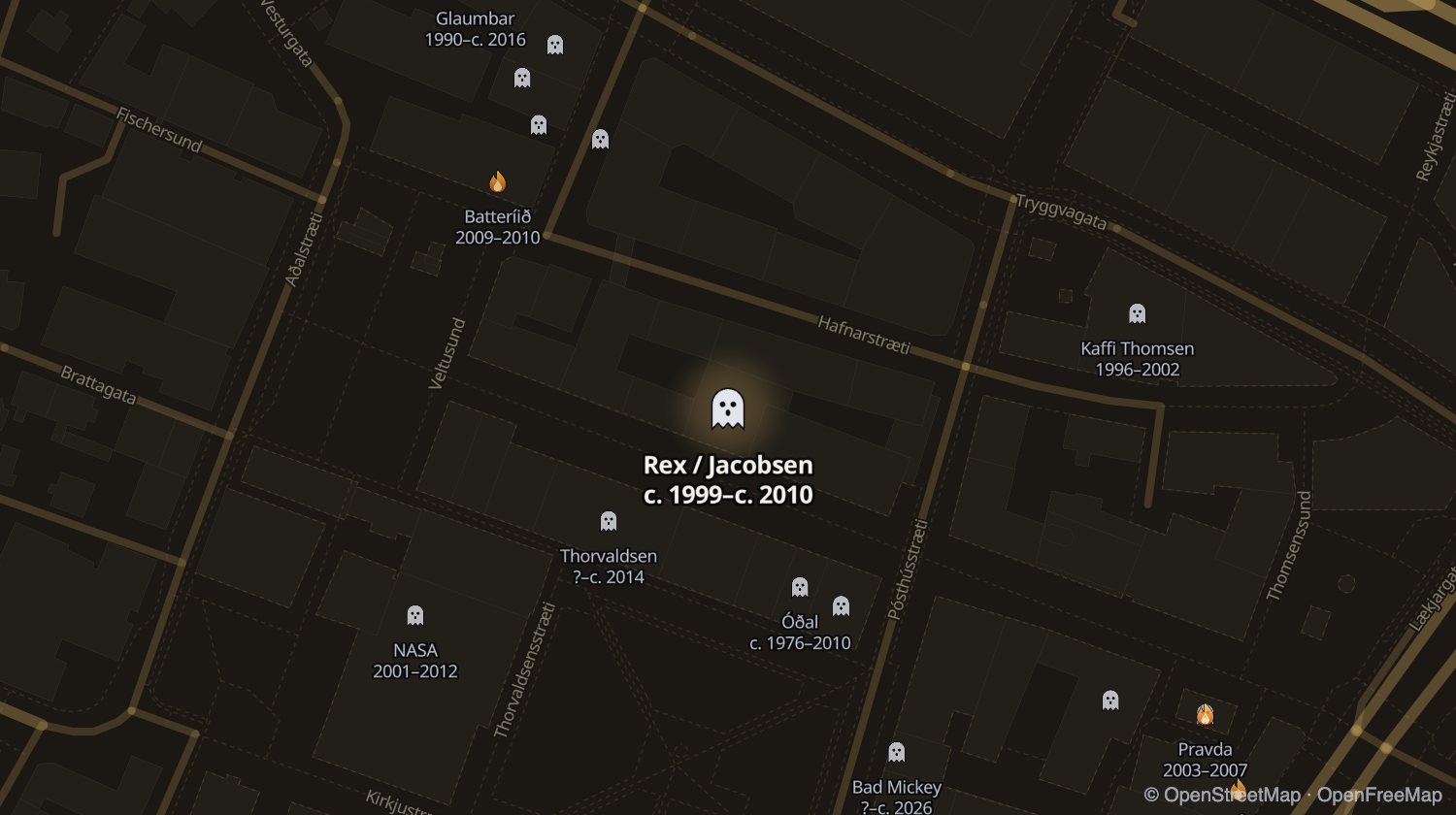 🗺 Open map
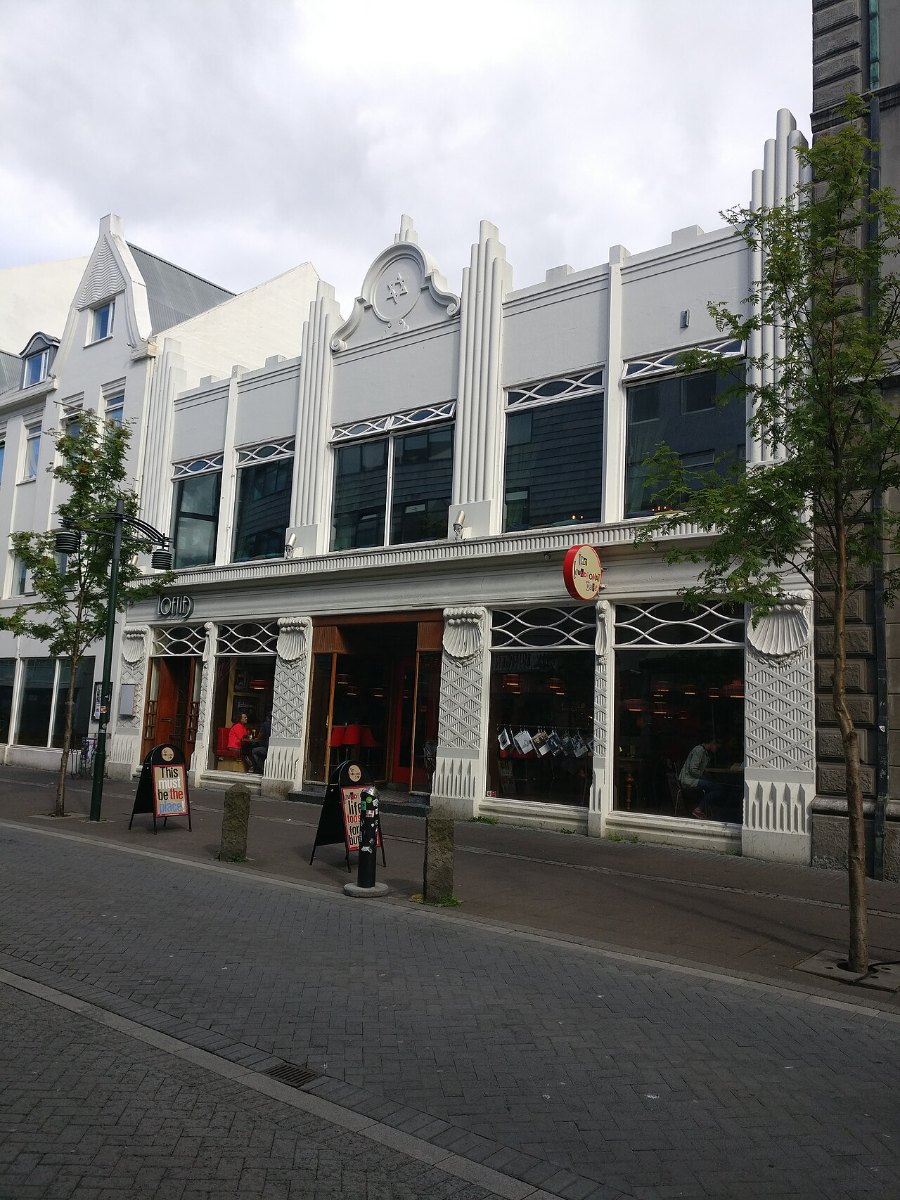
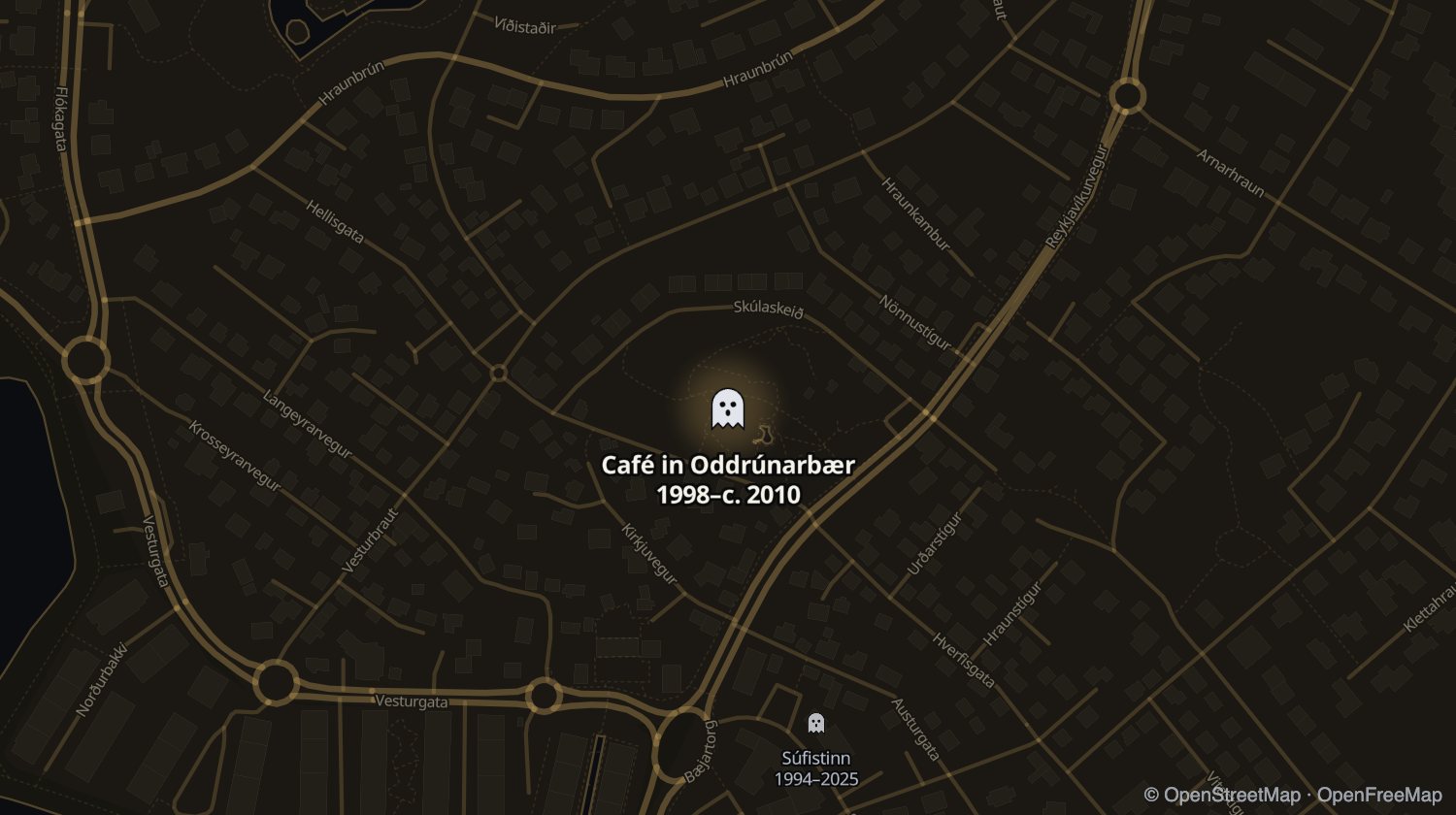
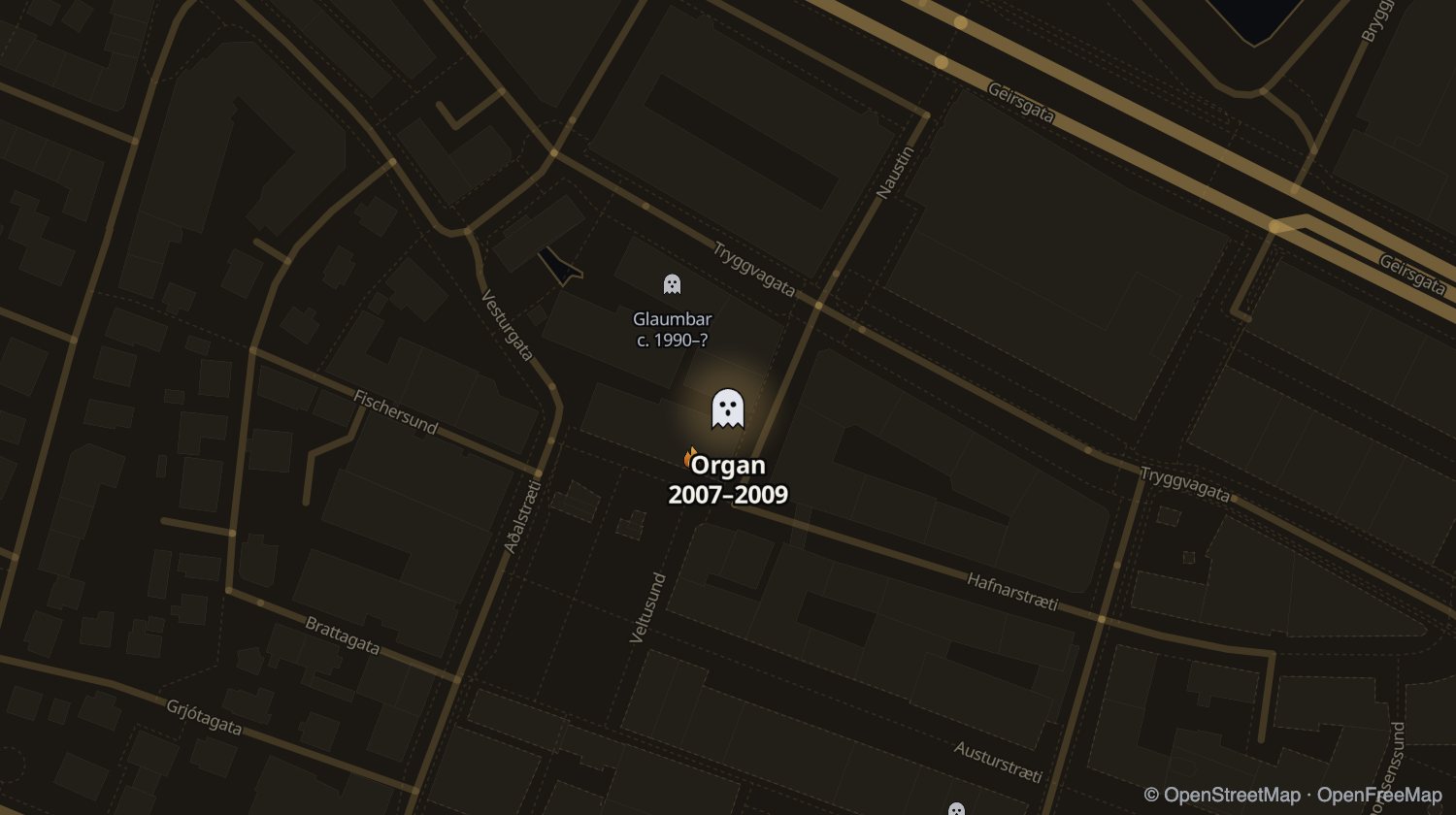
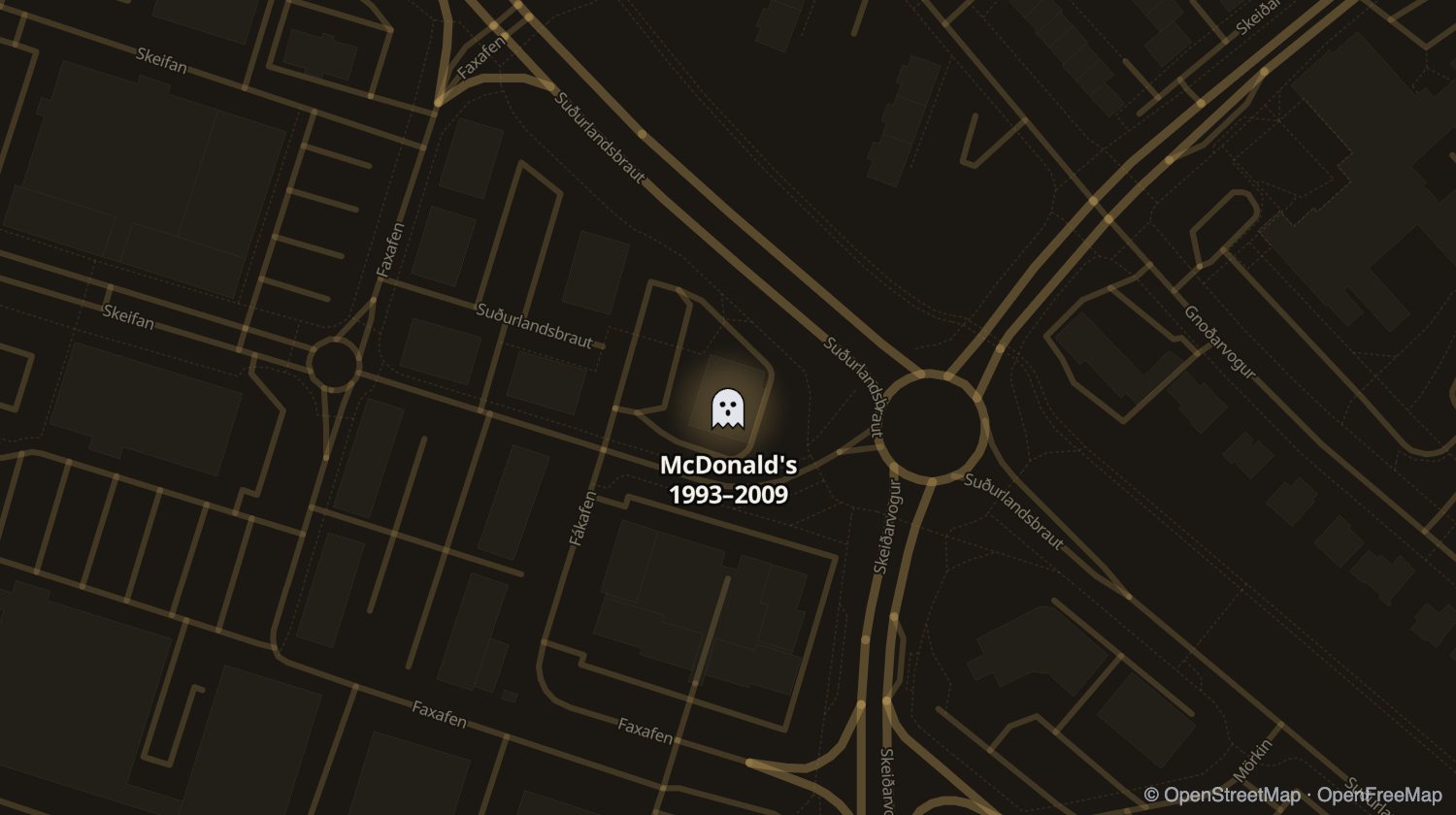 🗺 Open map
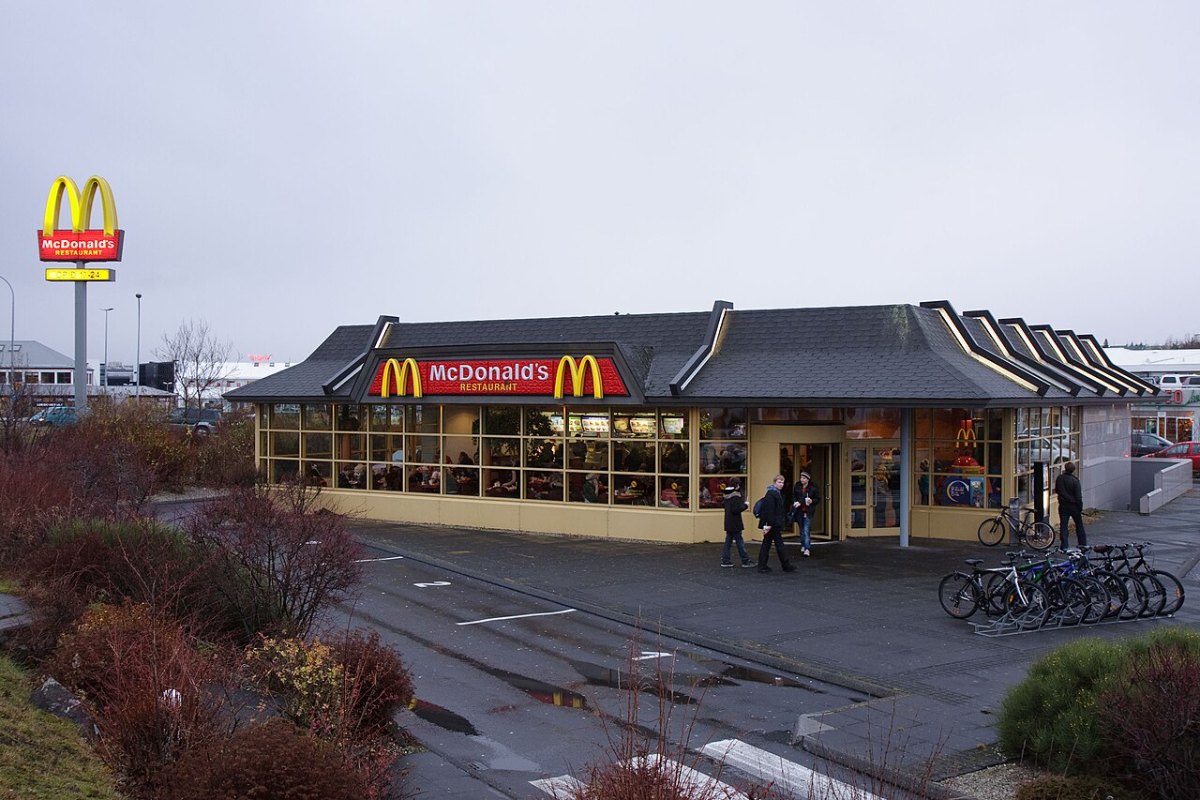
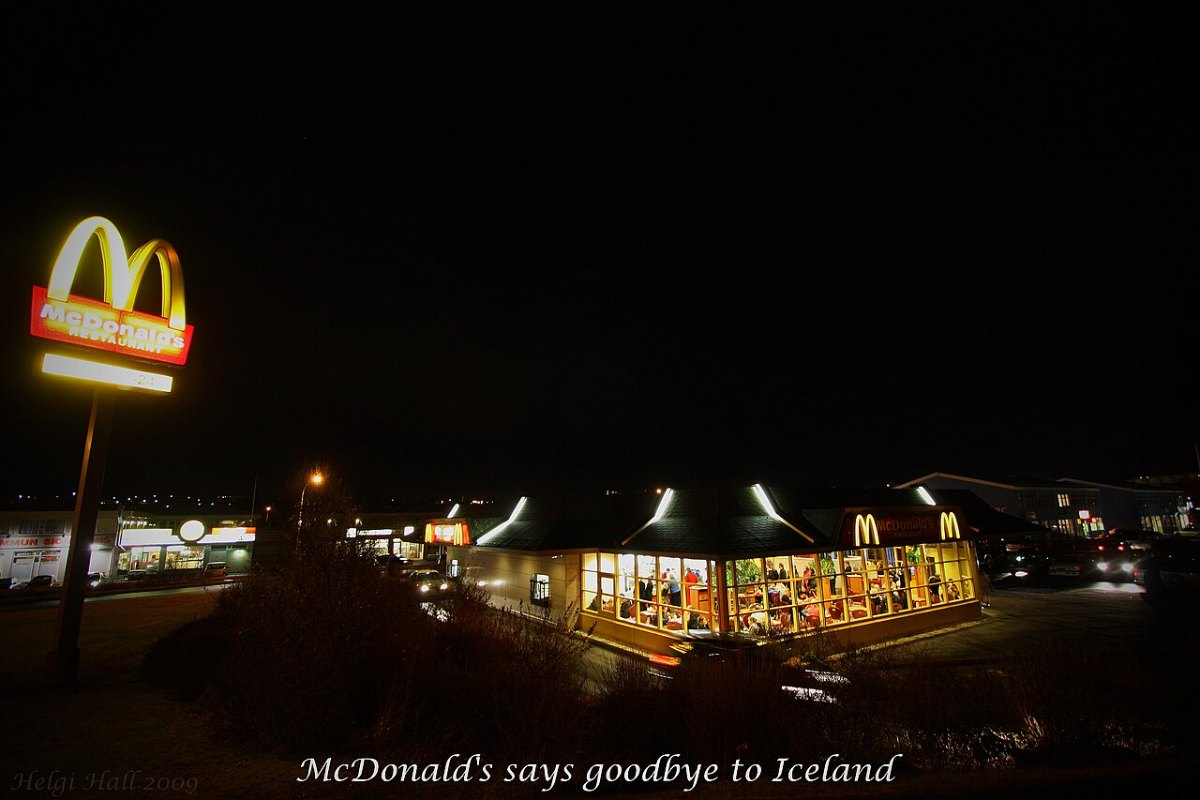
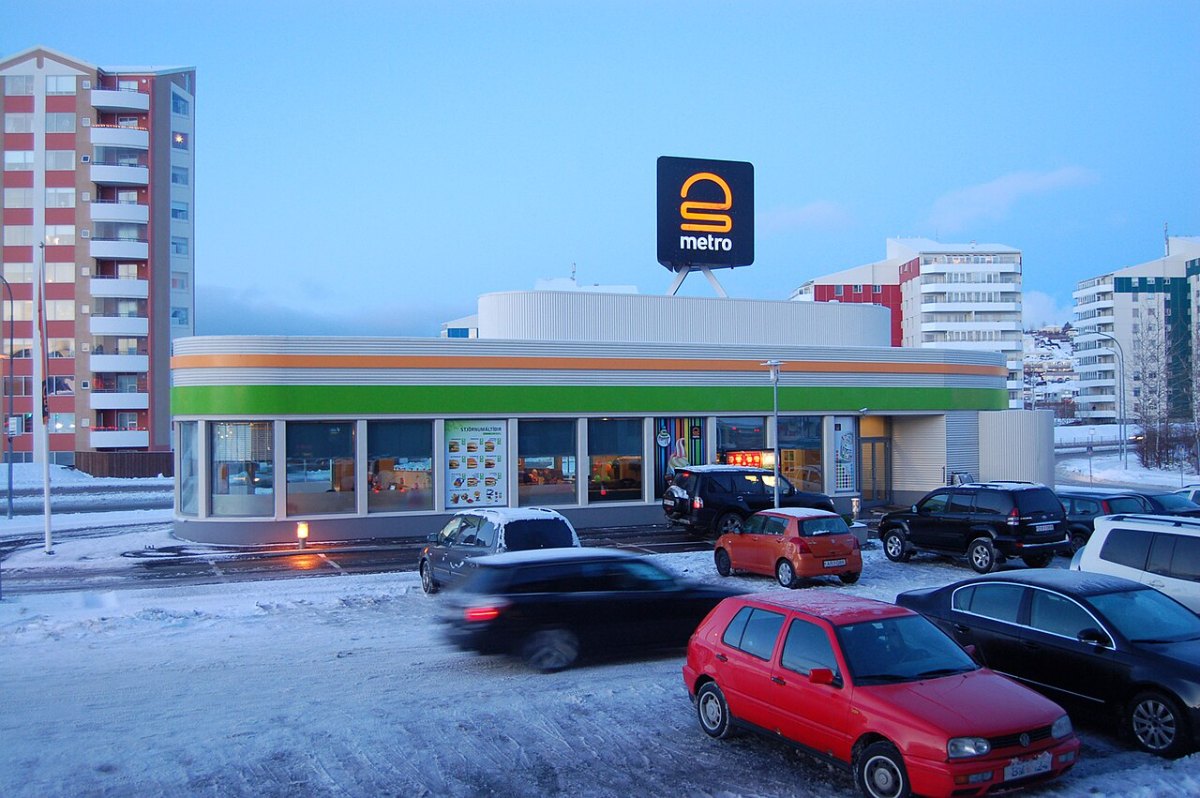
 🗺 Open map
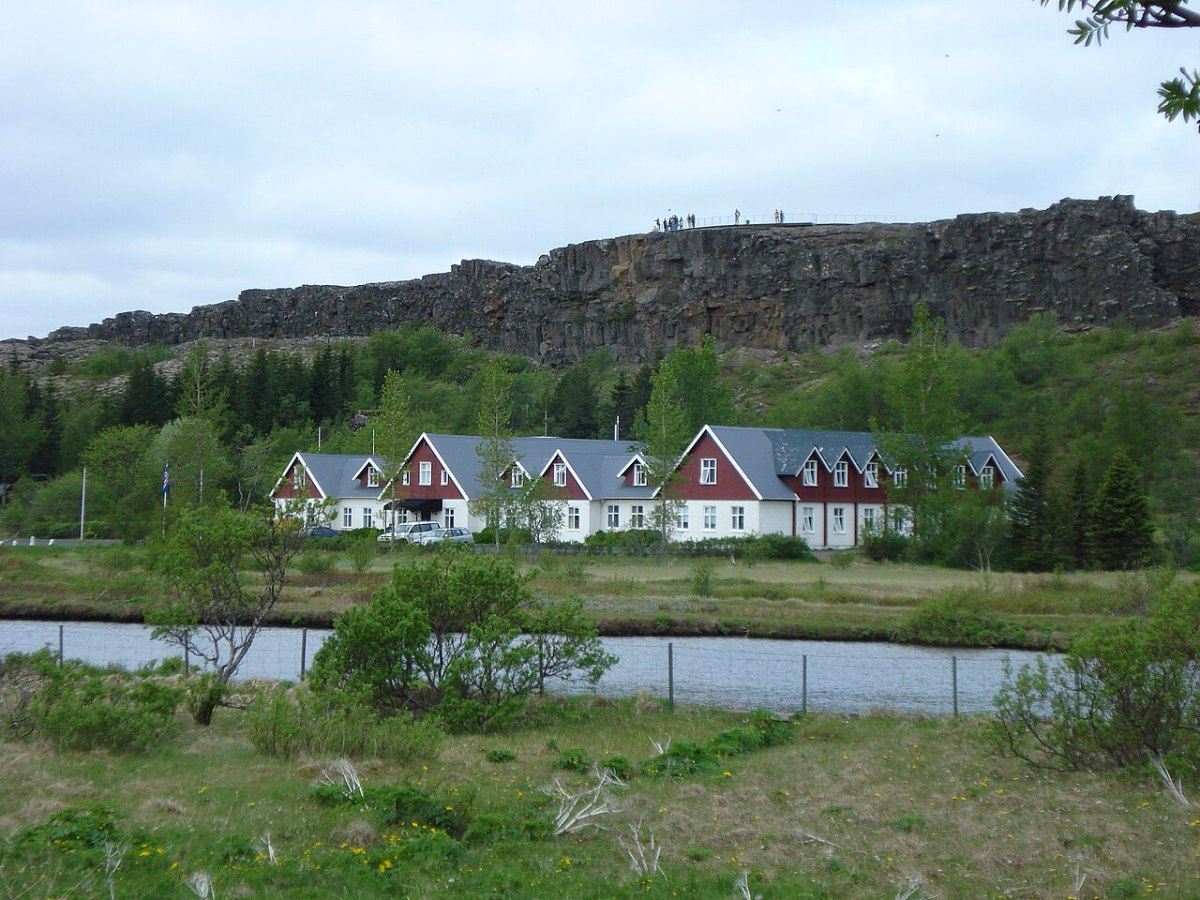
 🗺 Open map
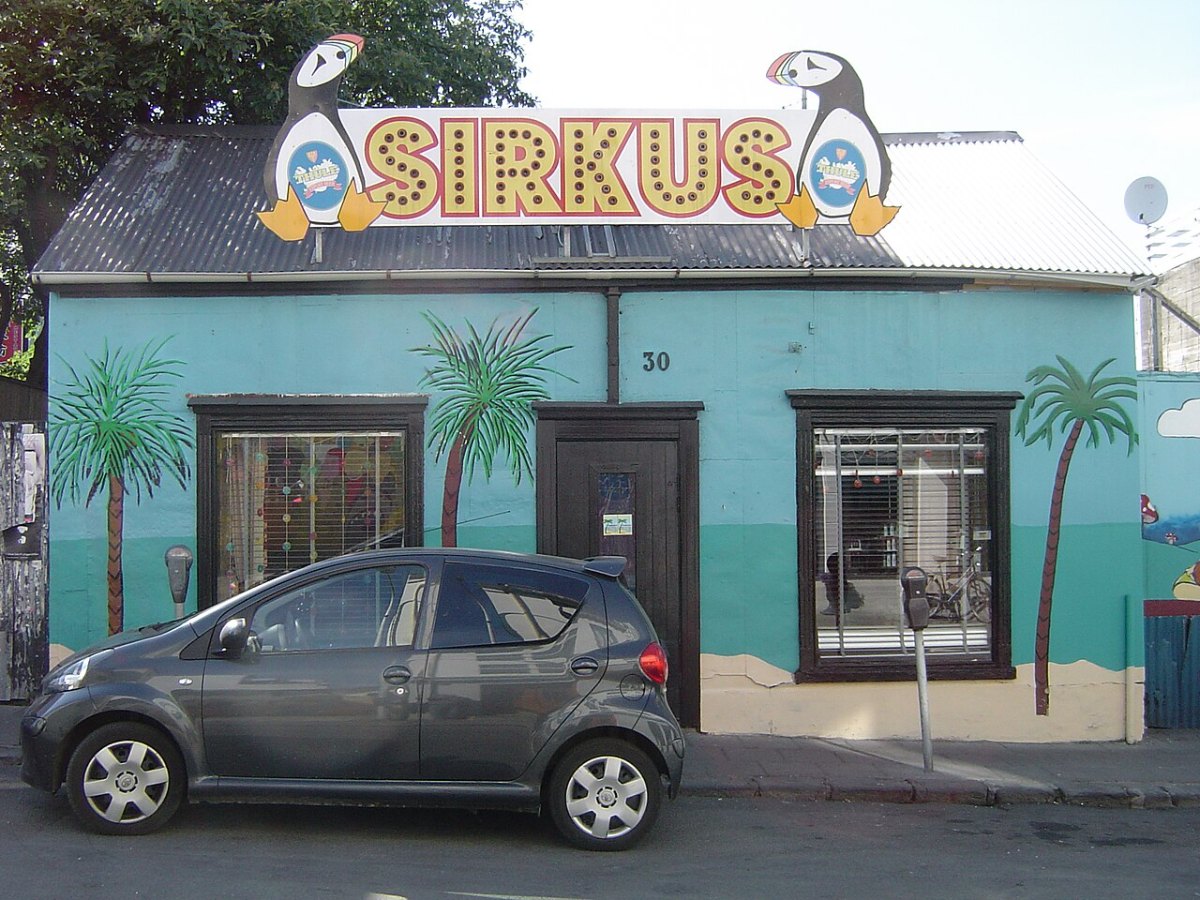
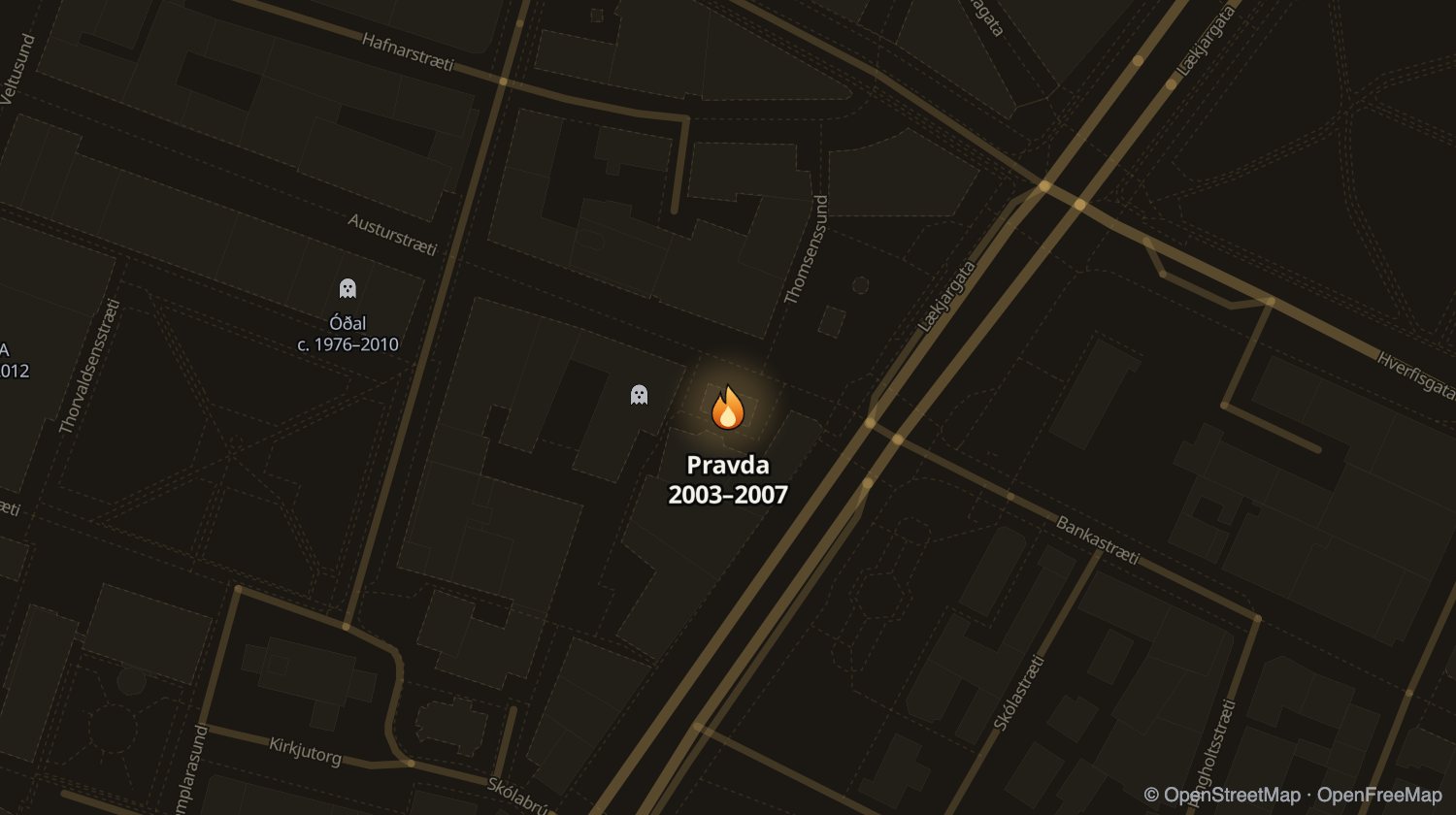 🗺 Open map
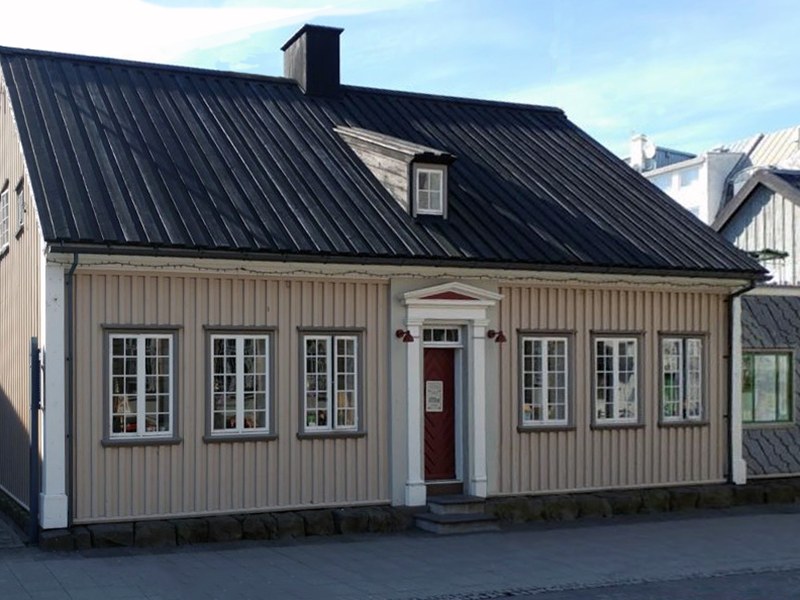
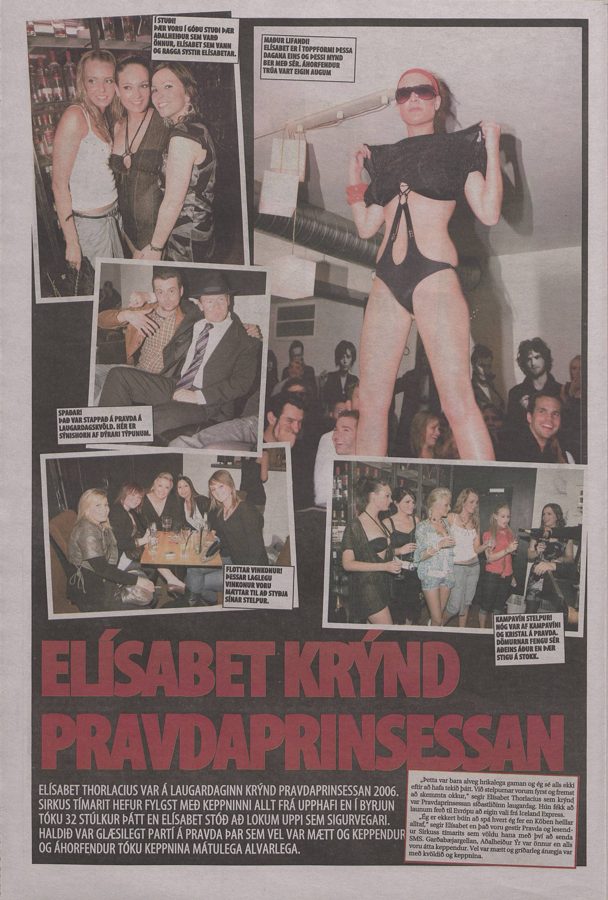
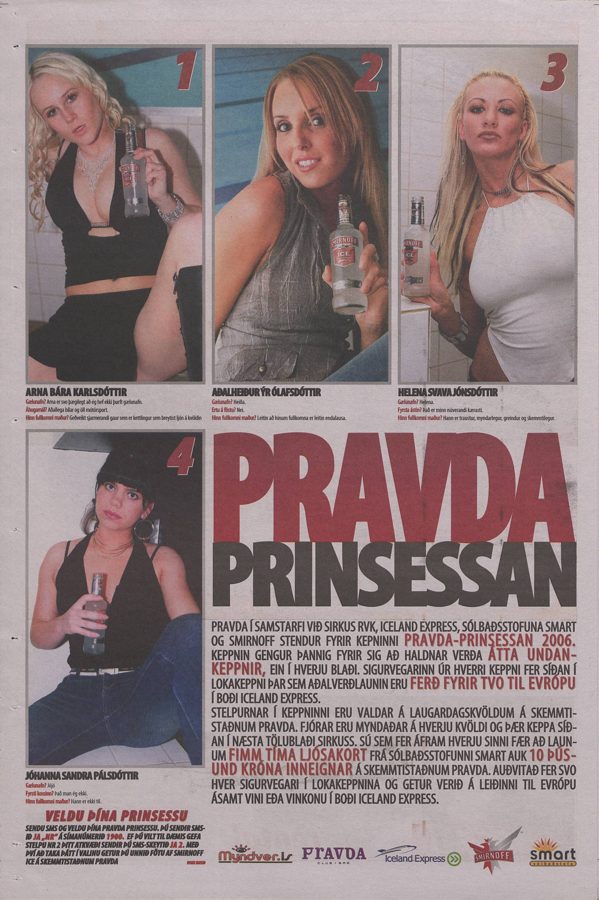
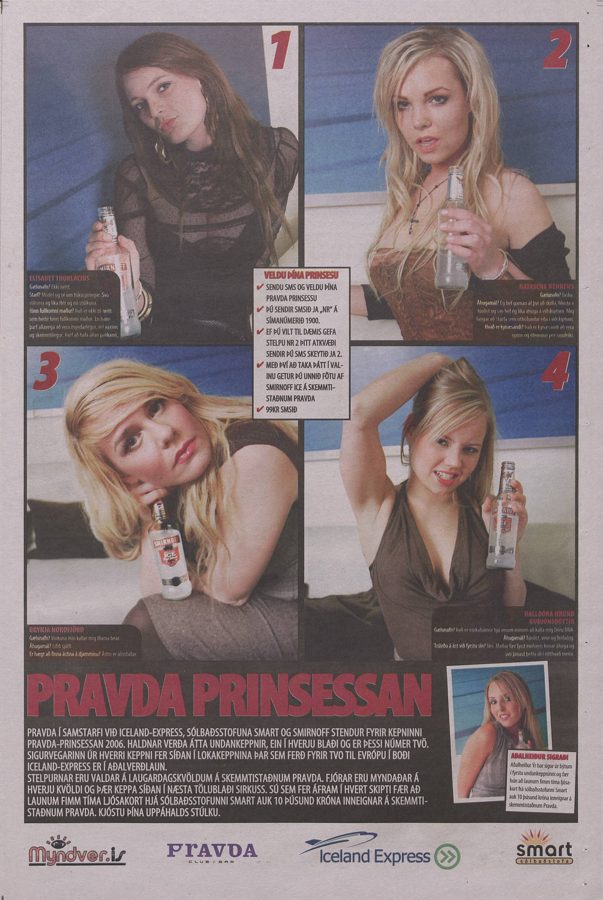
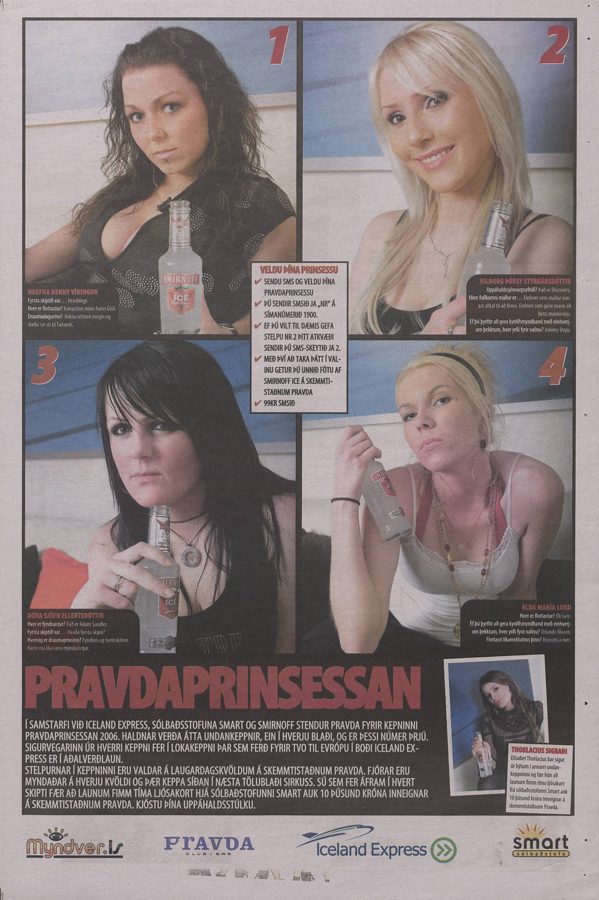
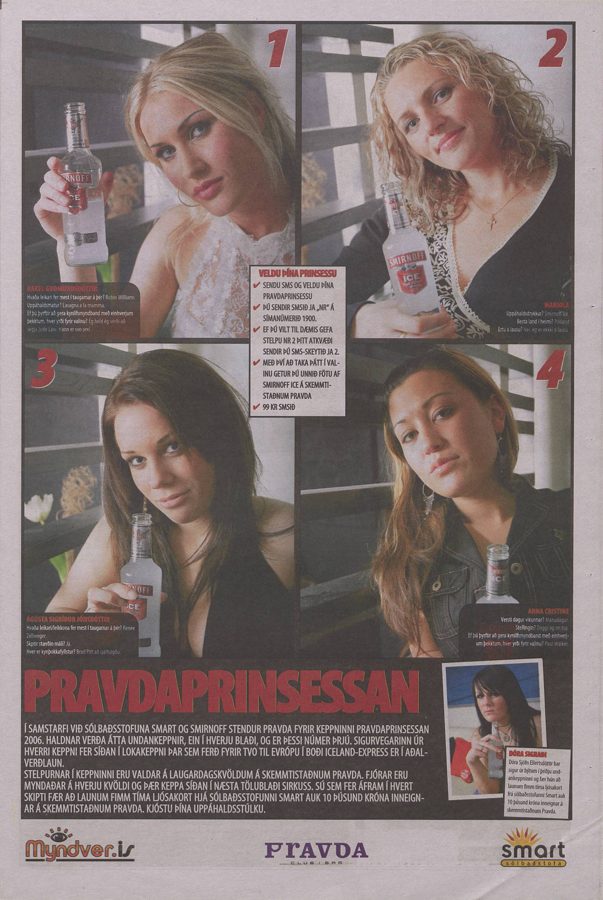
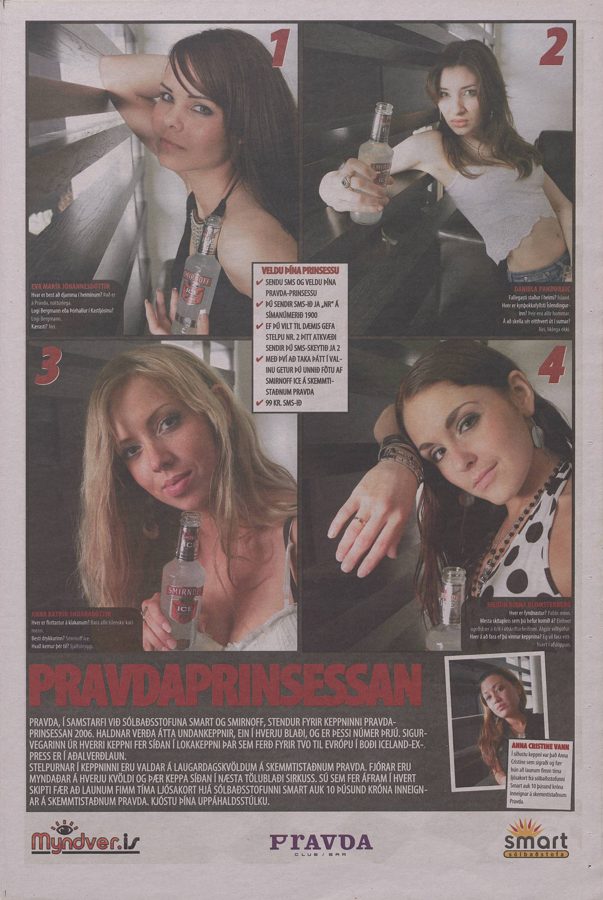 +6
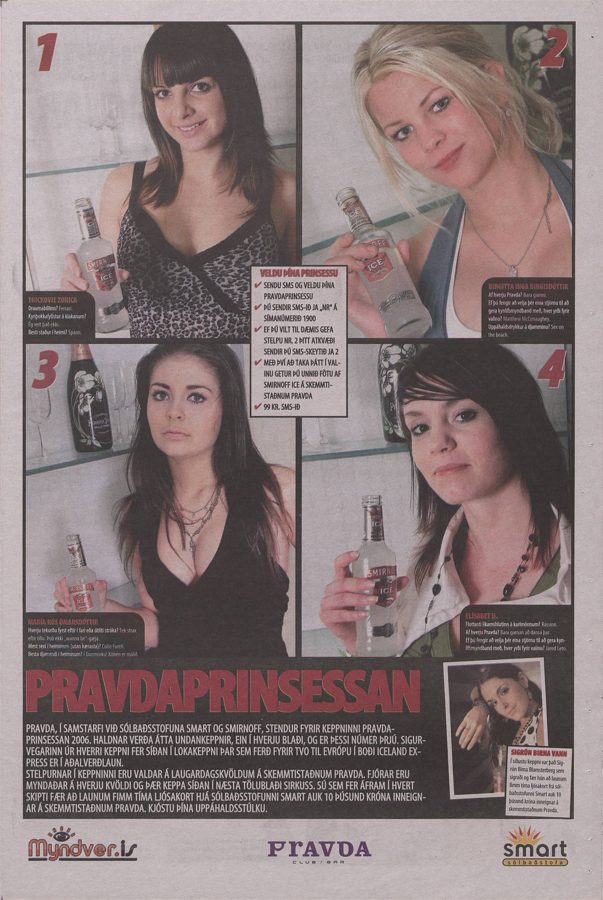
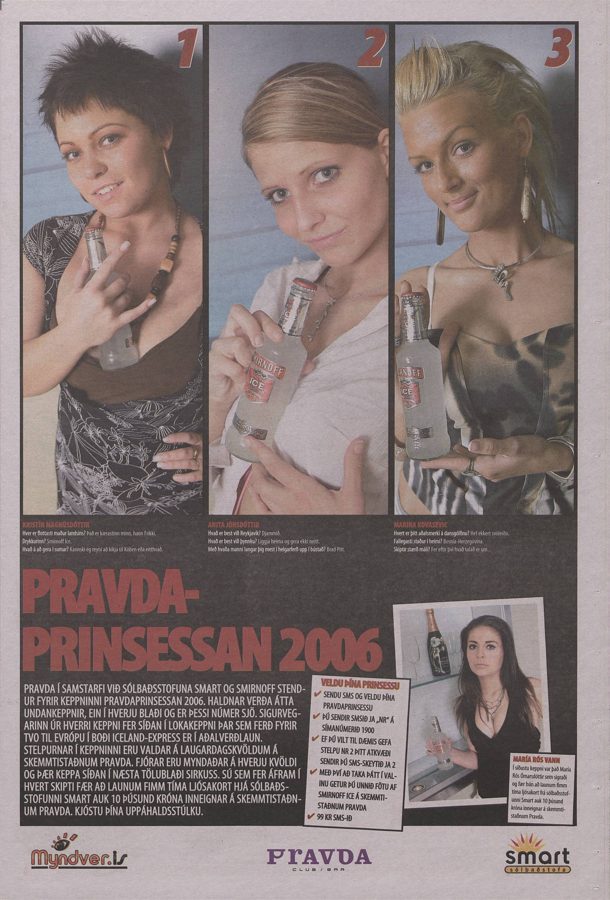
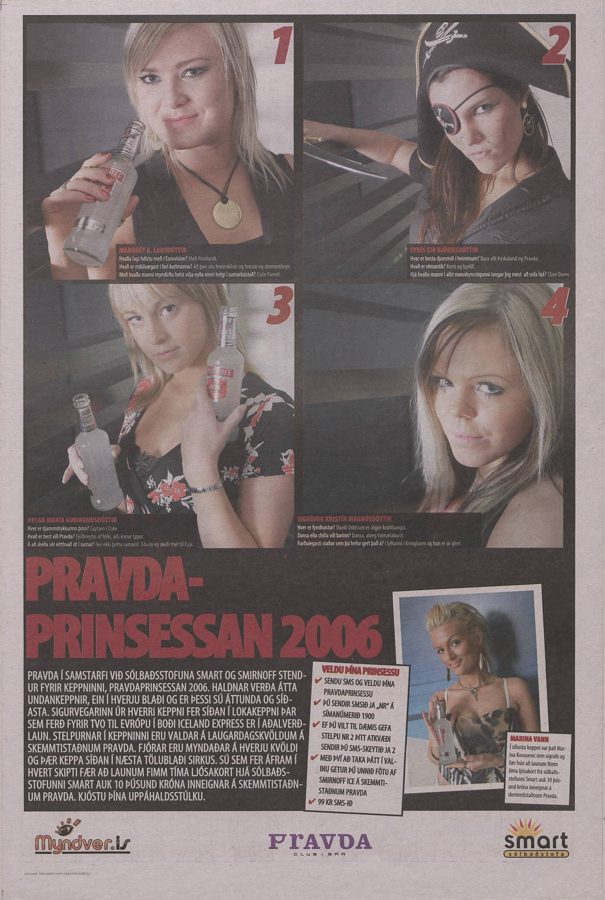
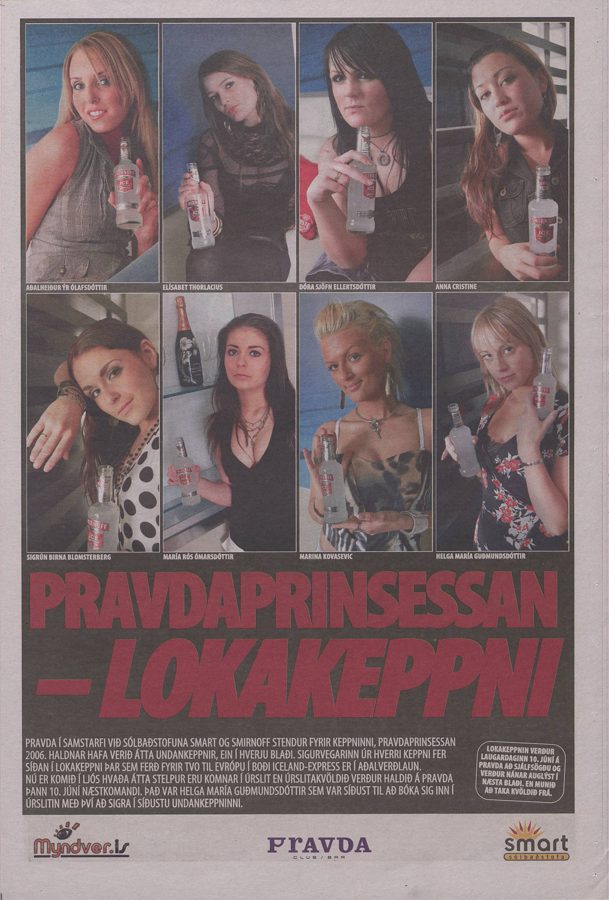
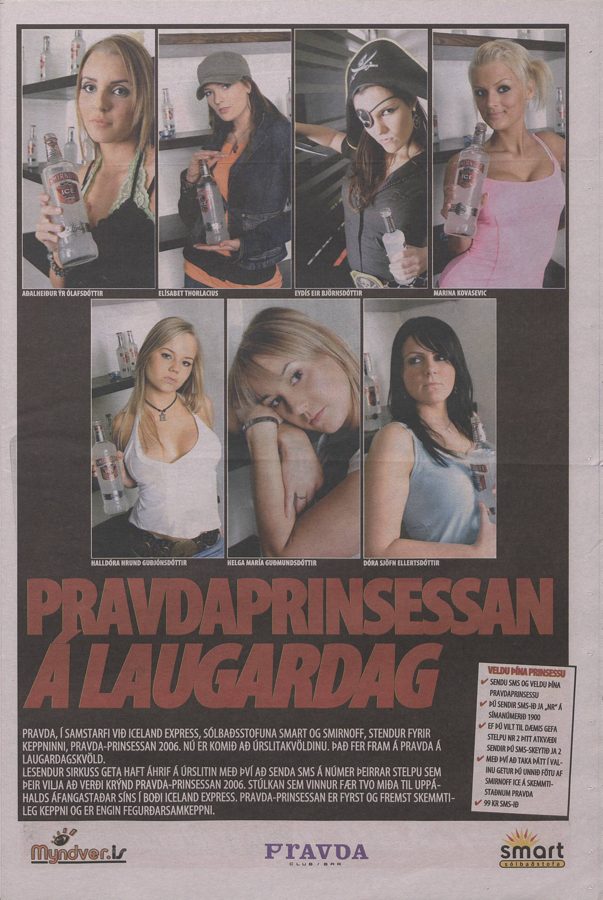
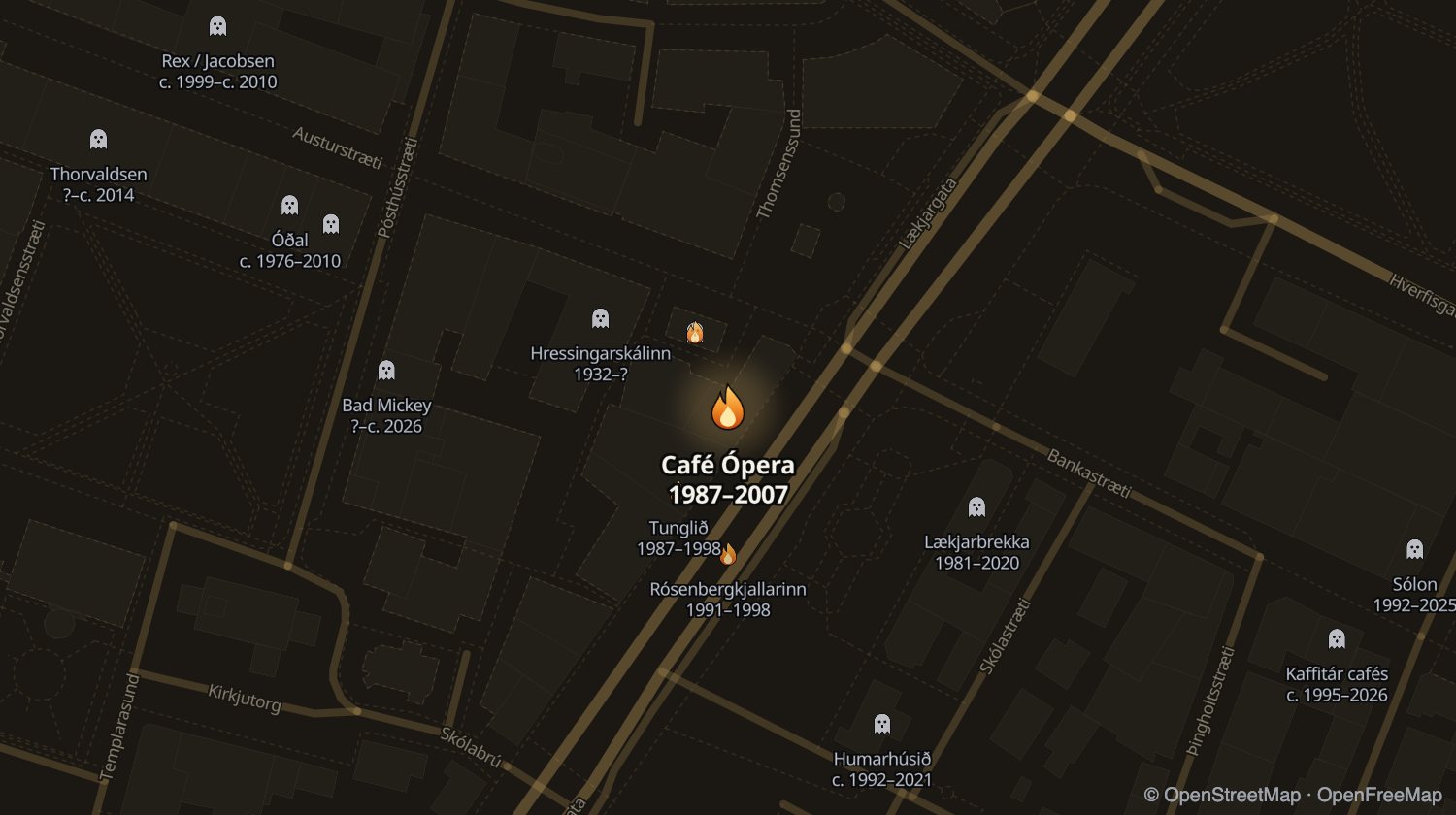 🗺 Open map
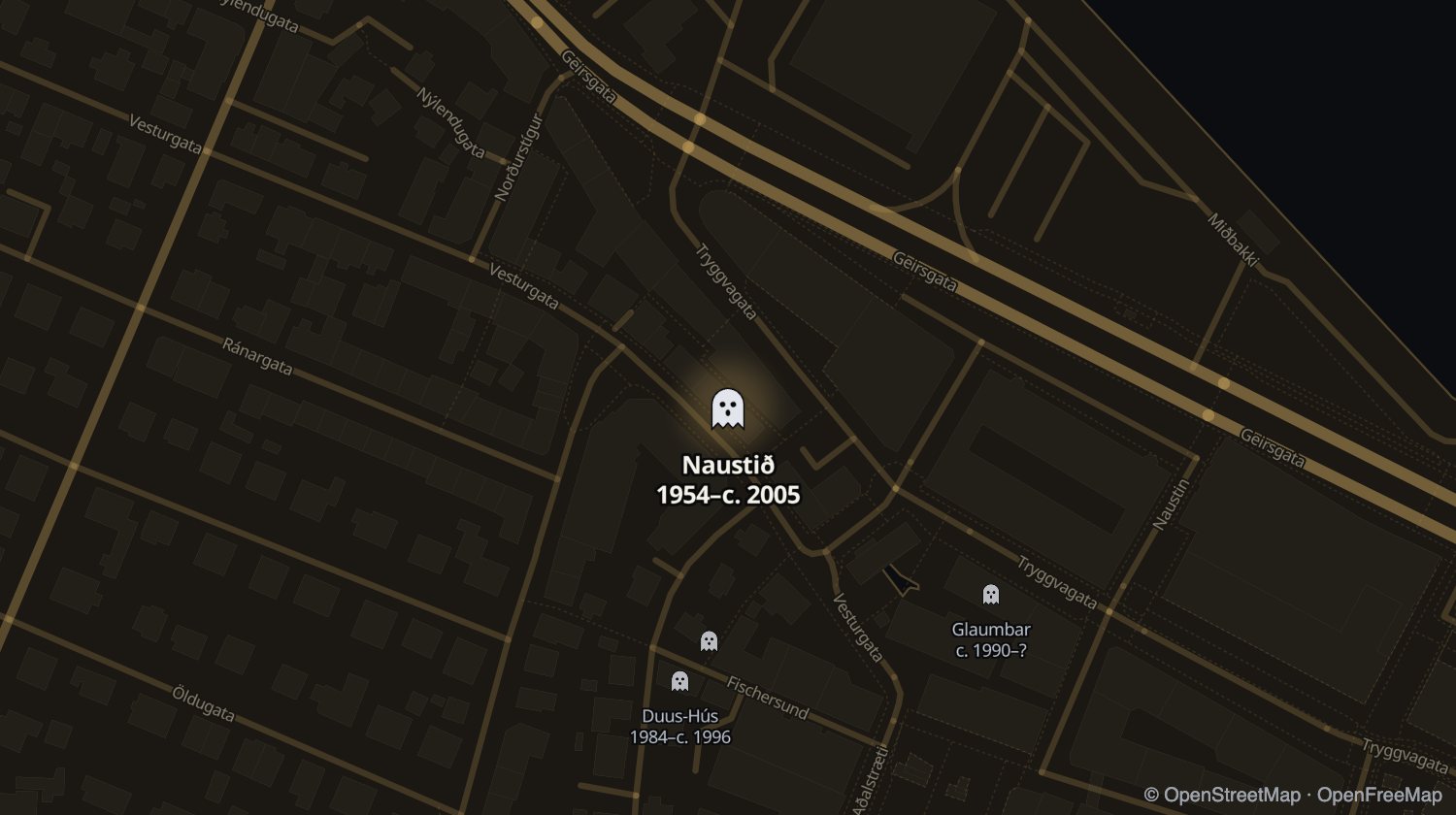
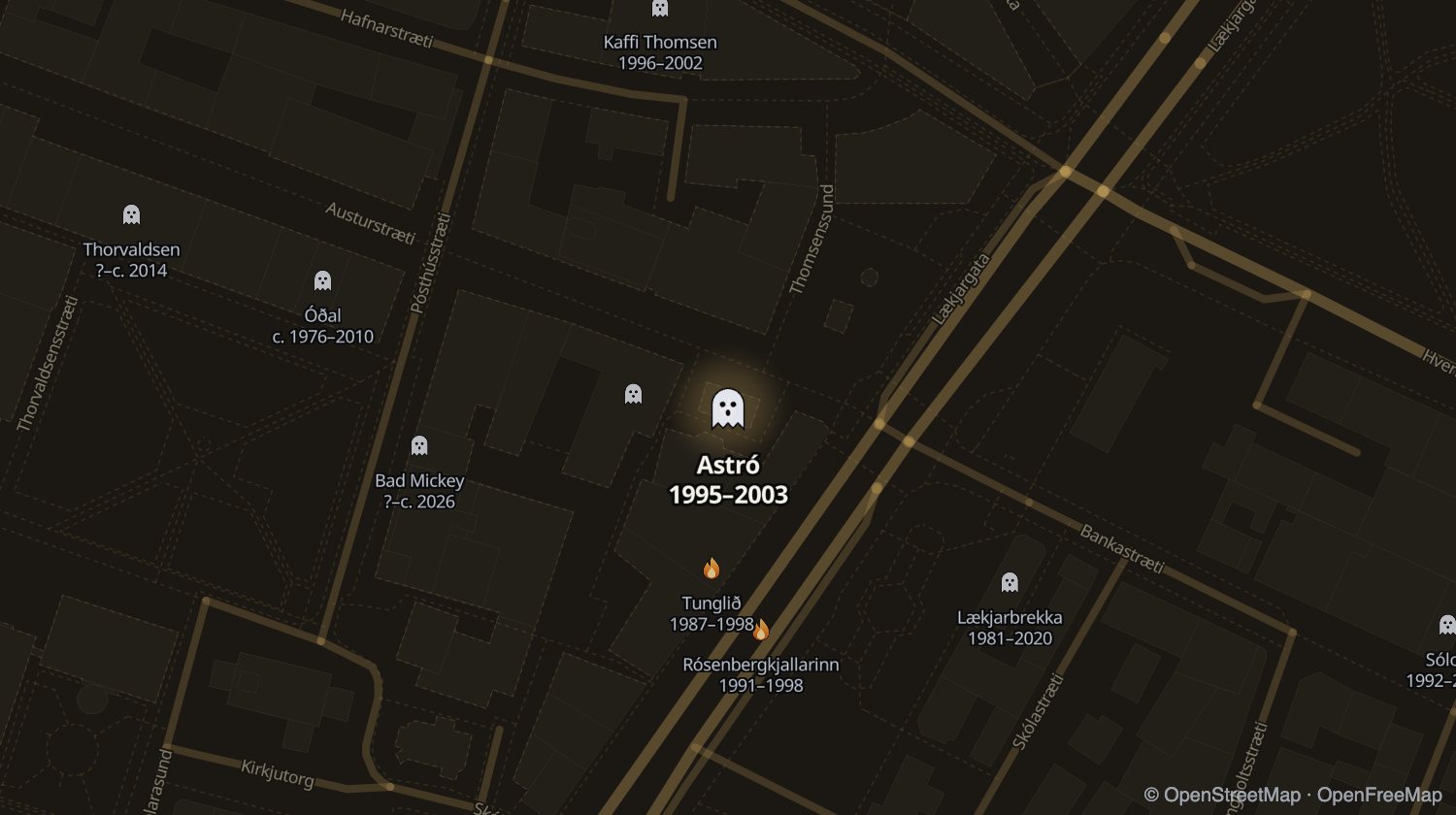 🗺 Open map
 🗺 Open map
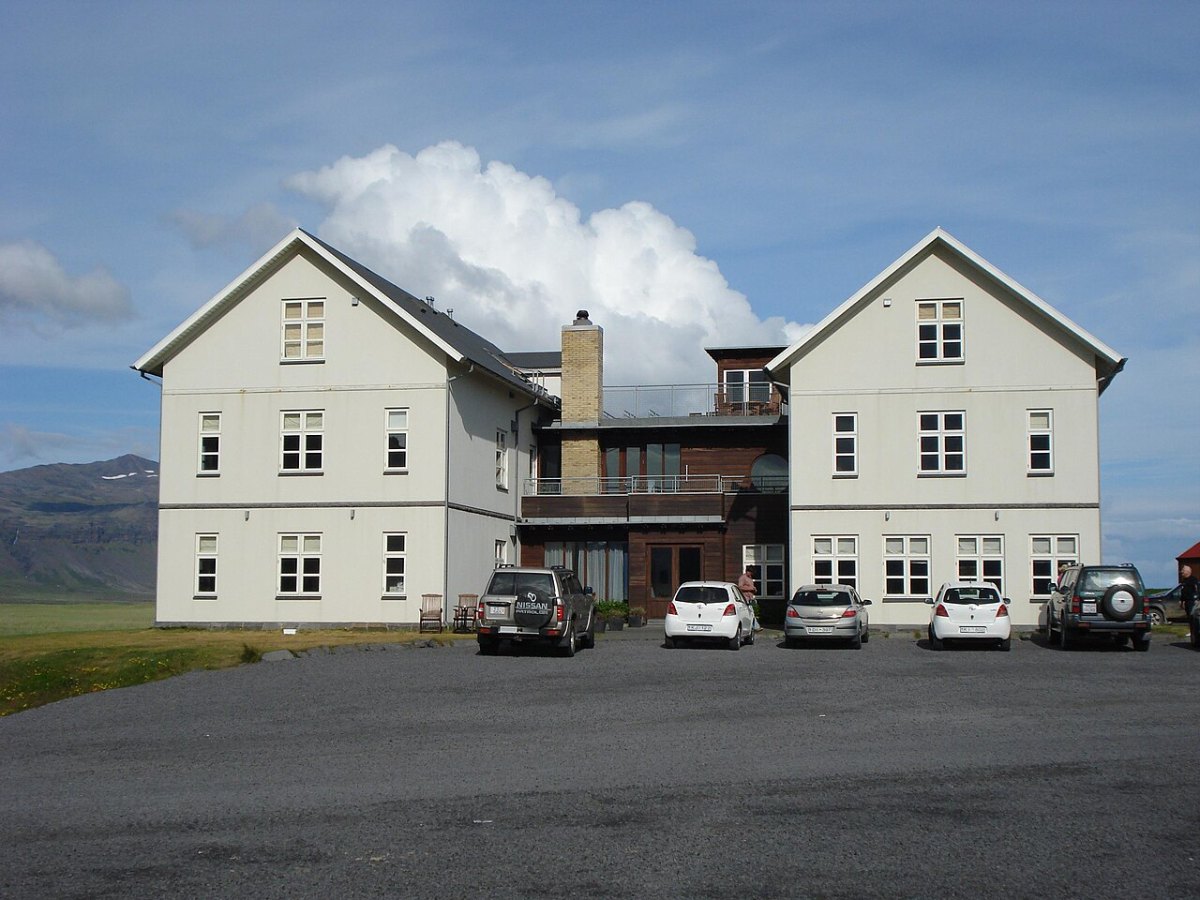
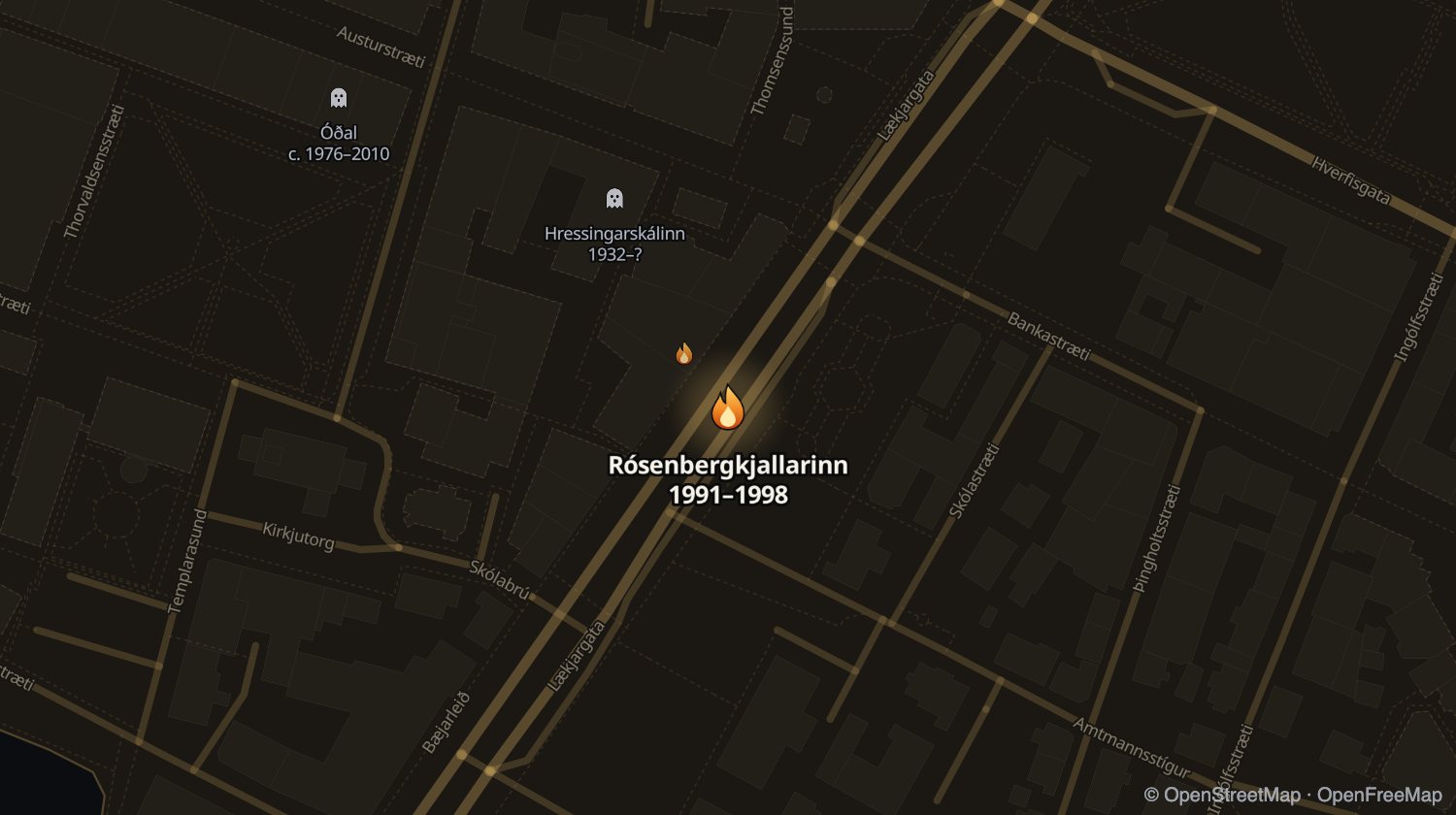 🗺 Open map
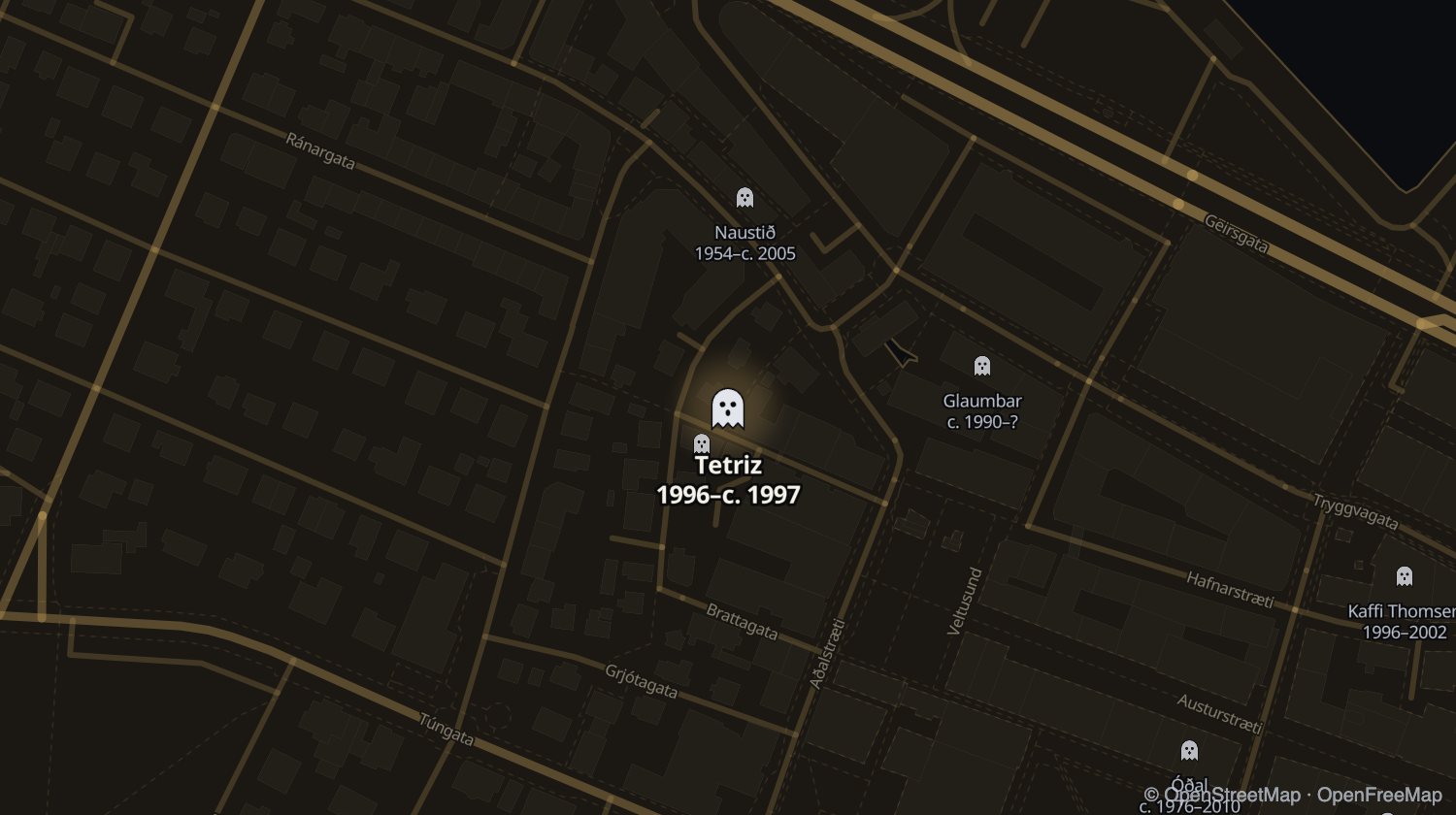
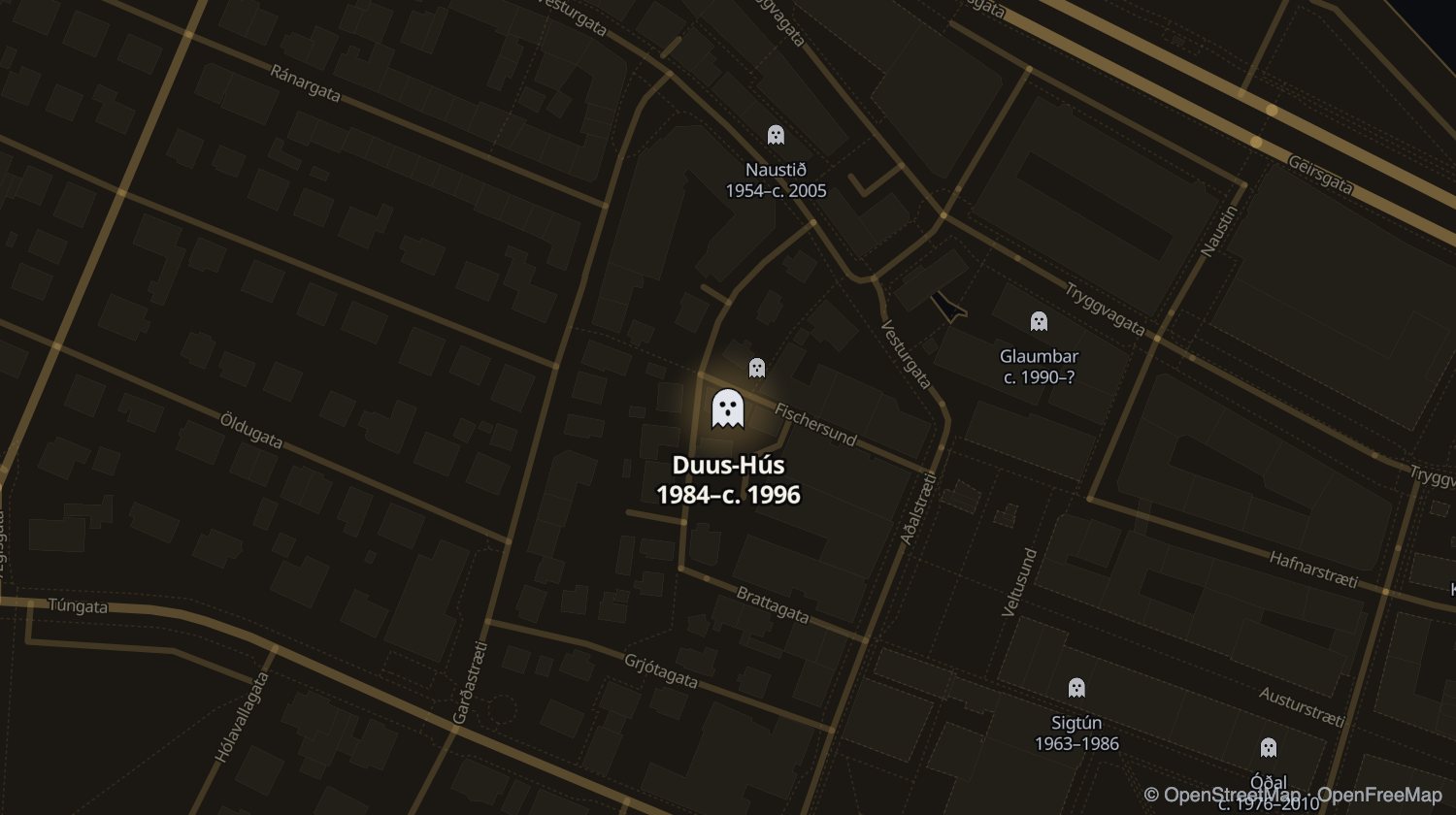
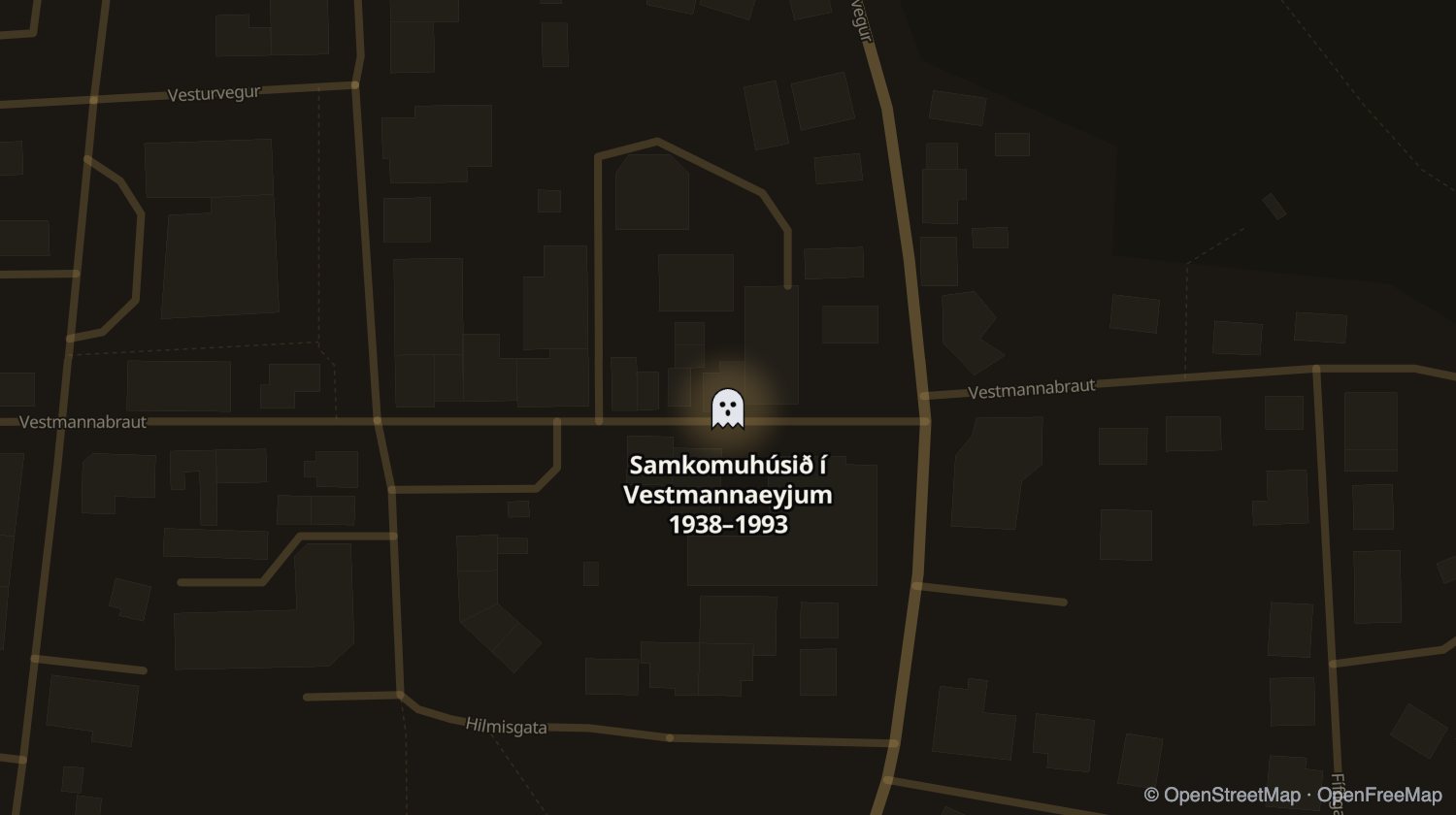
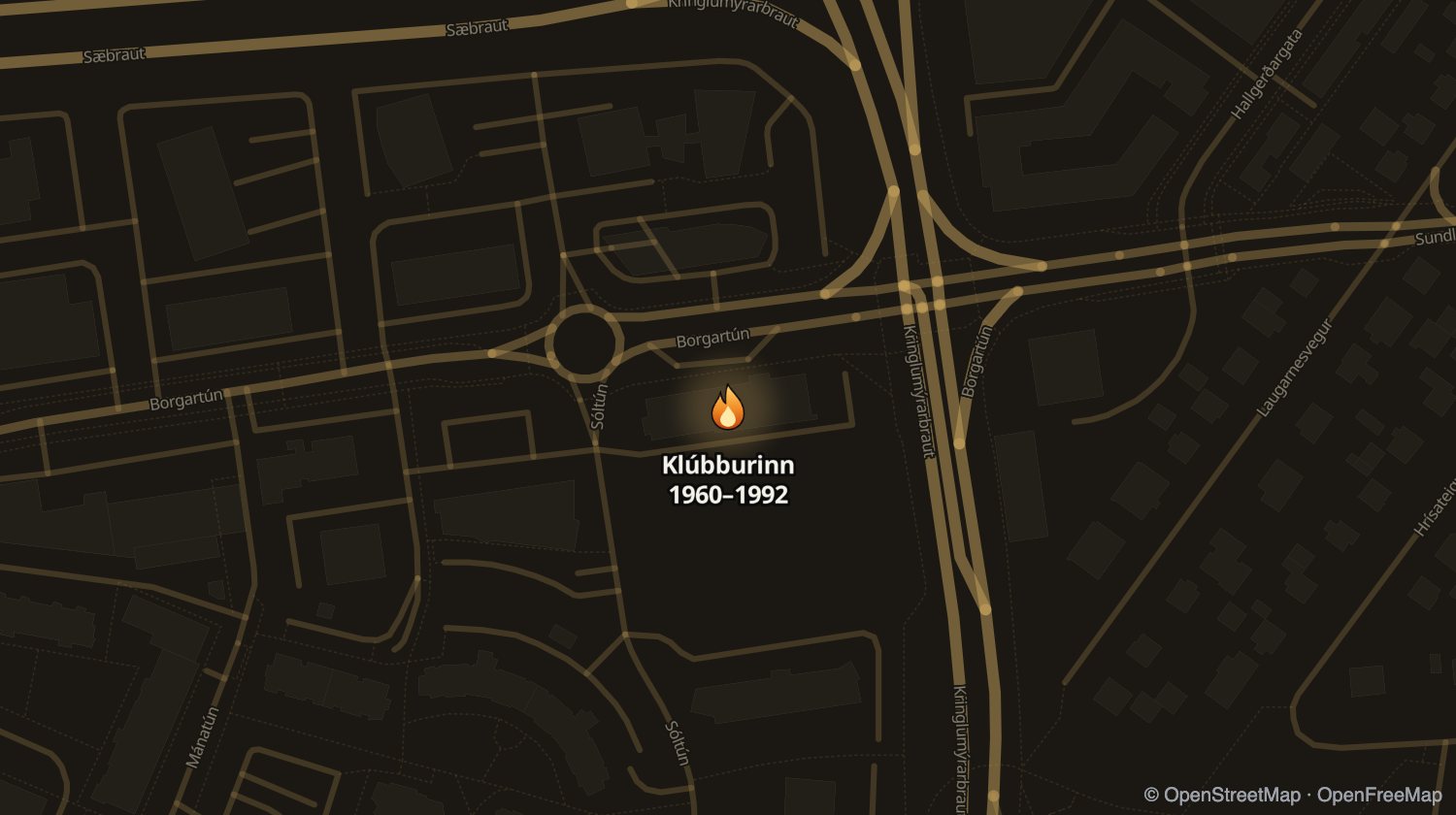
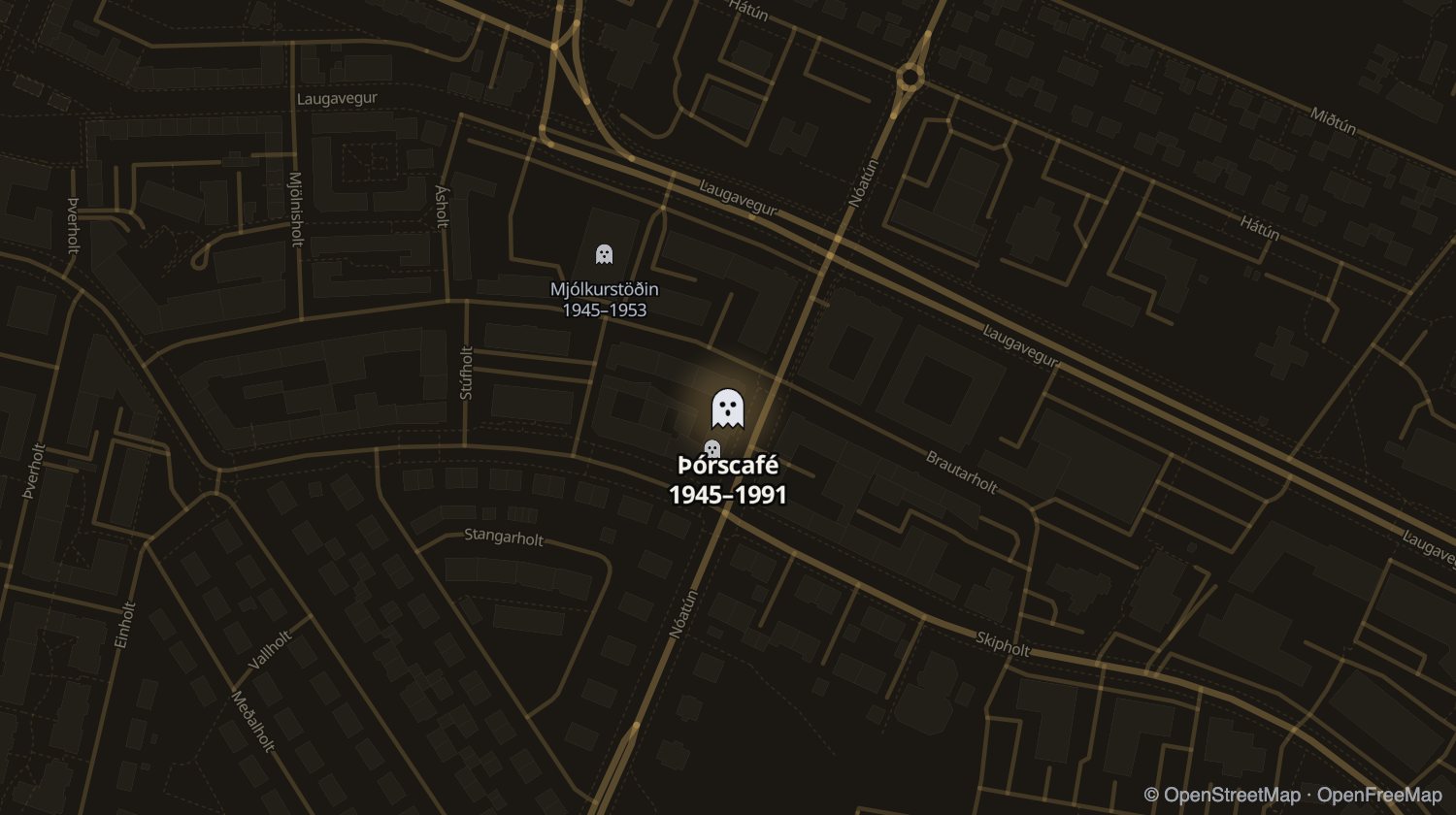
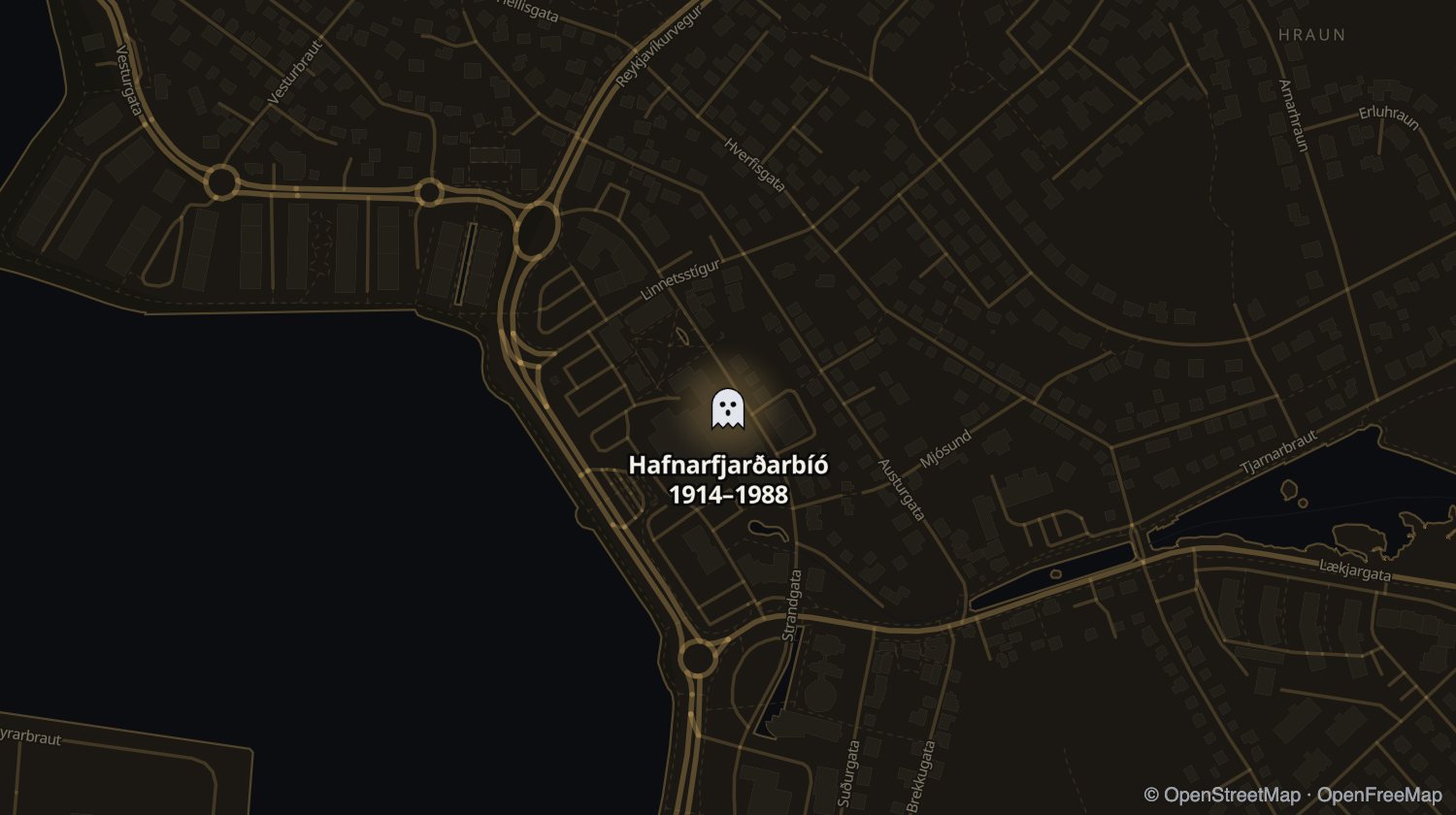
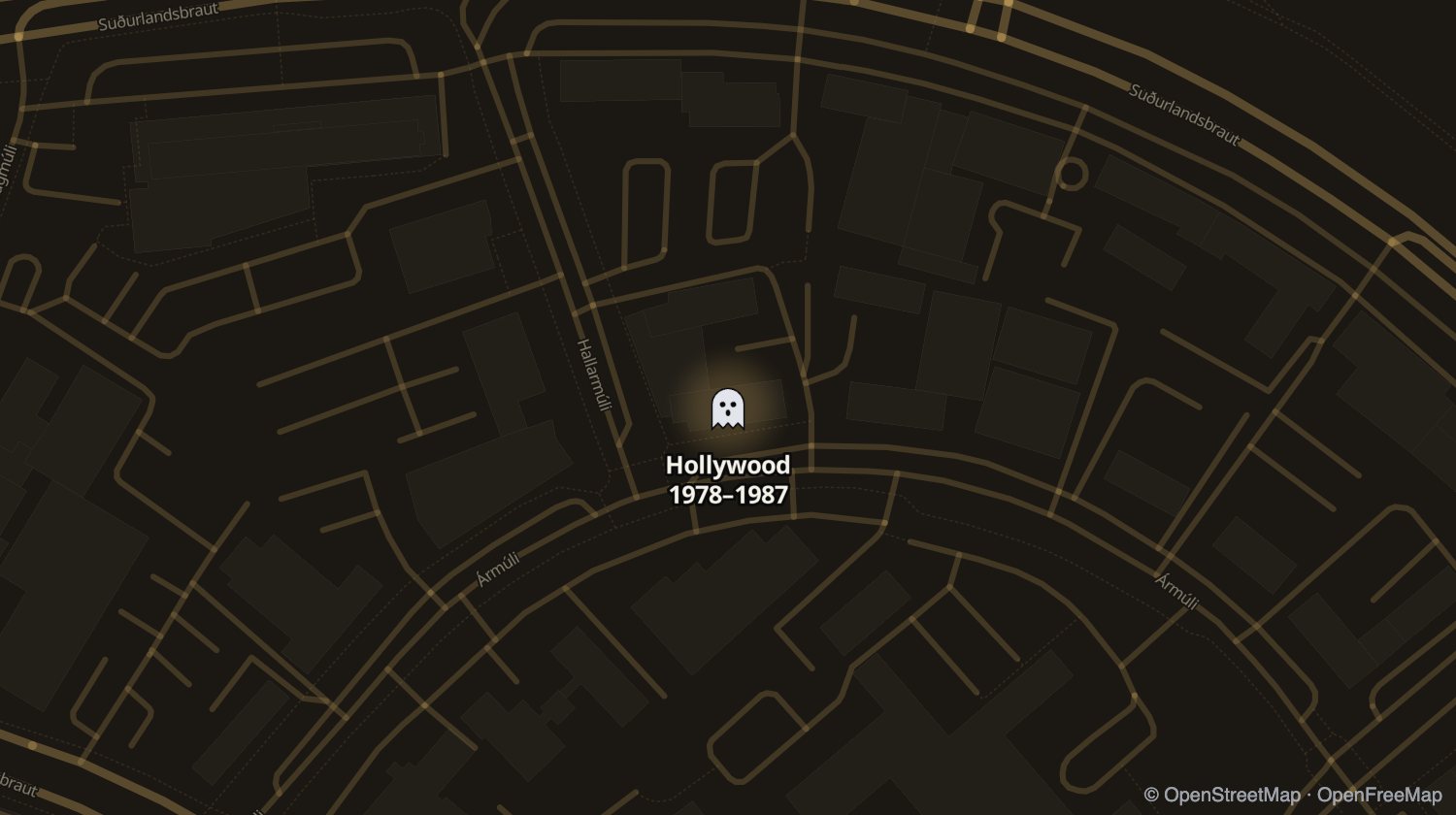
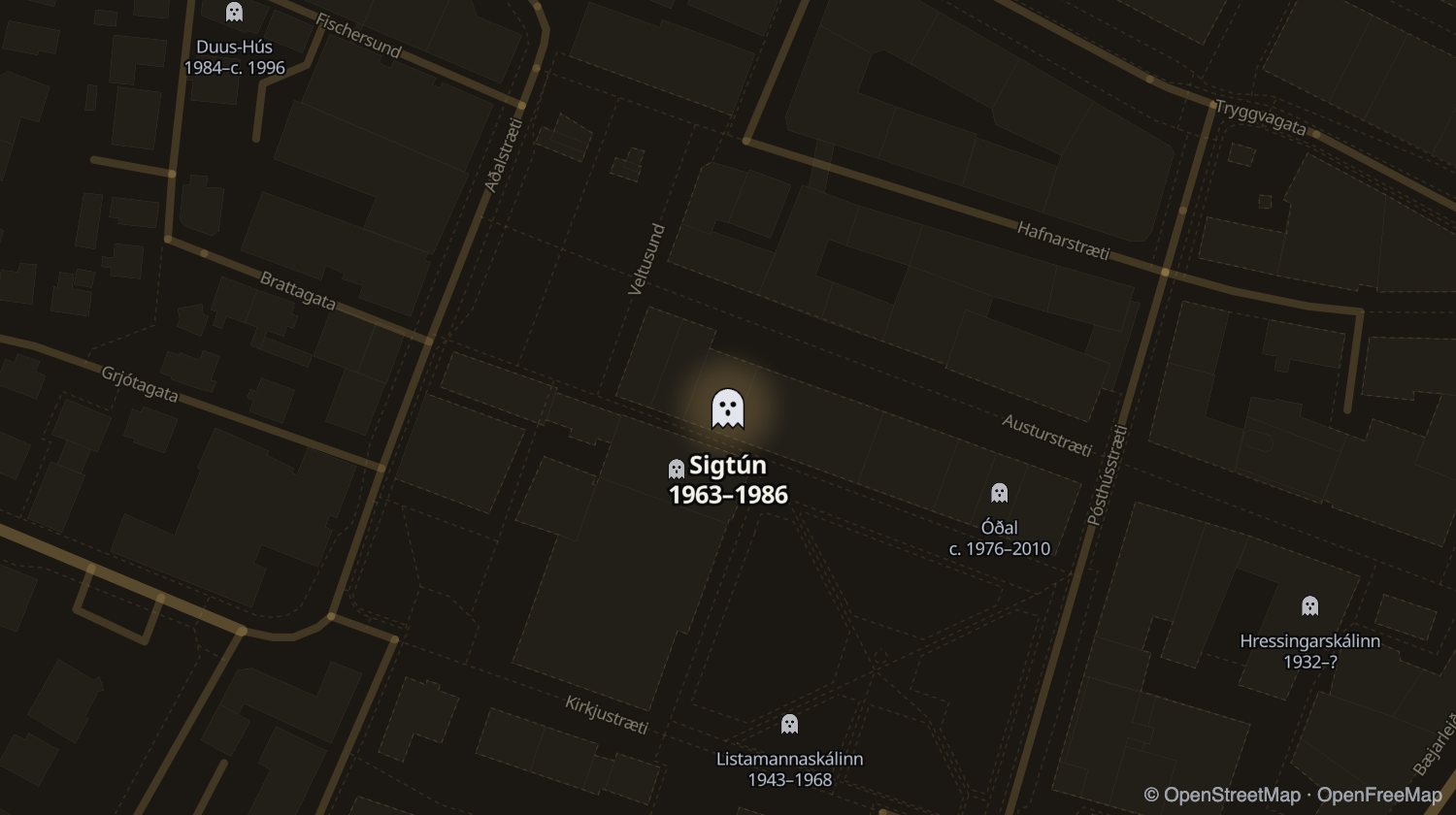
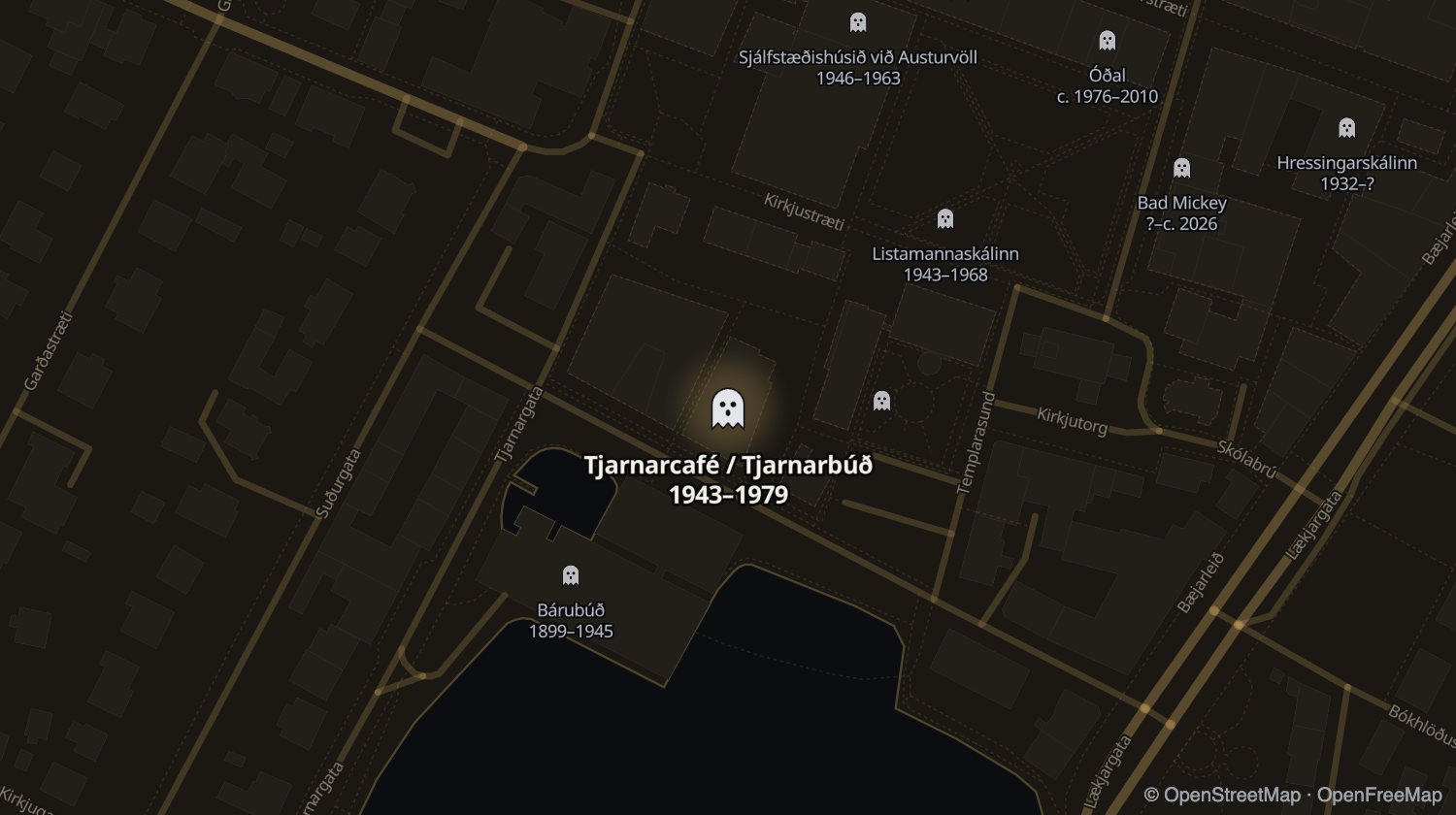
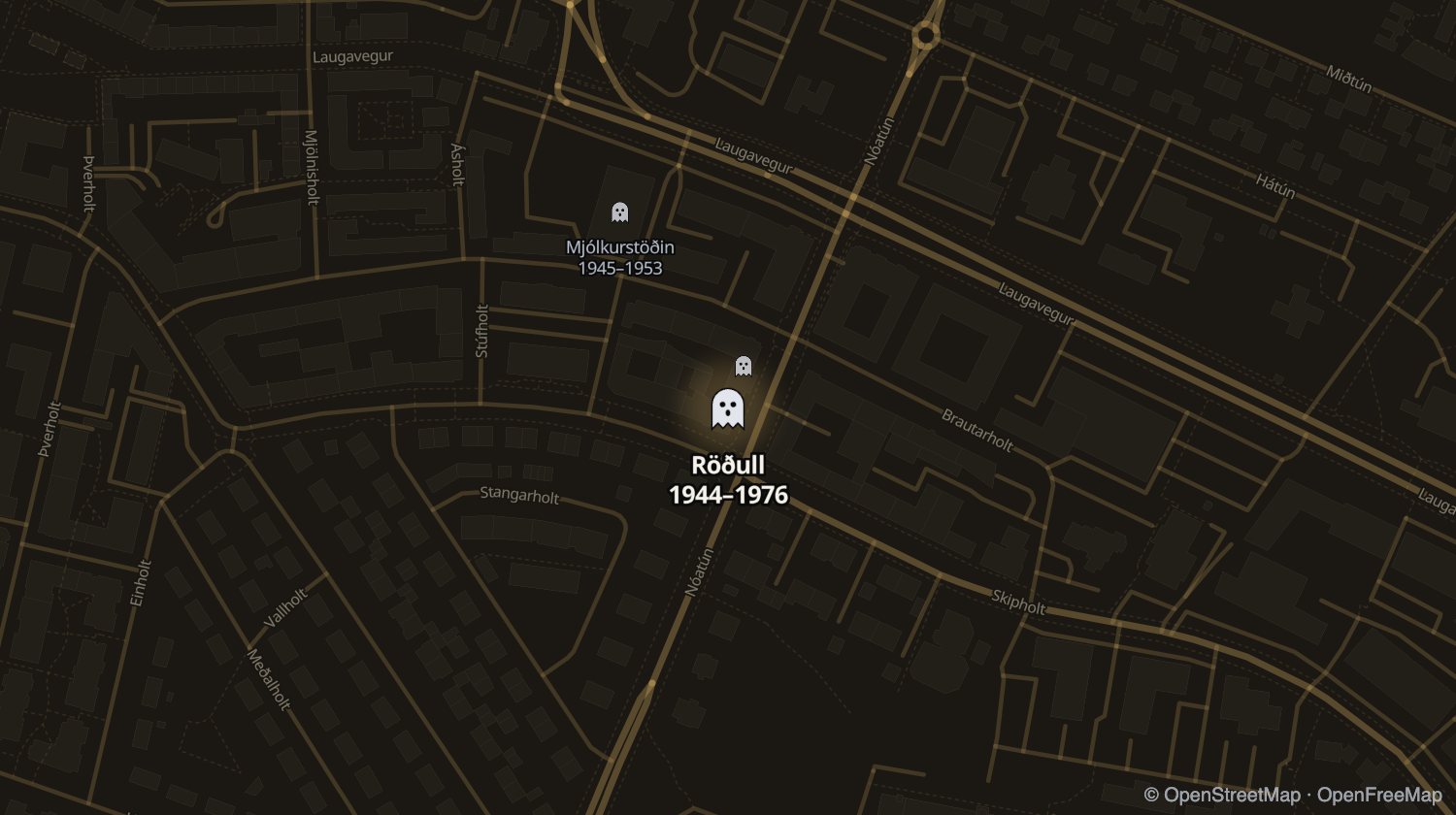
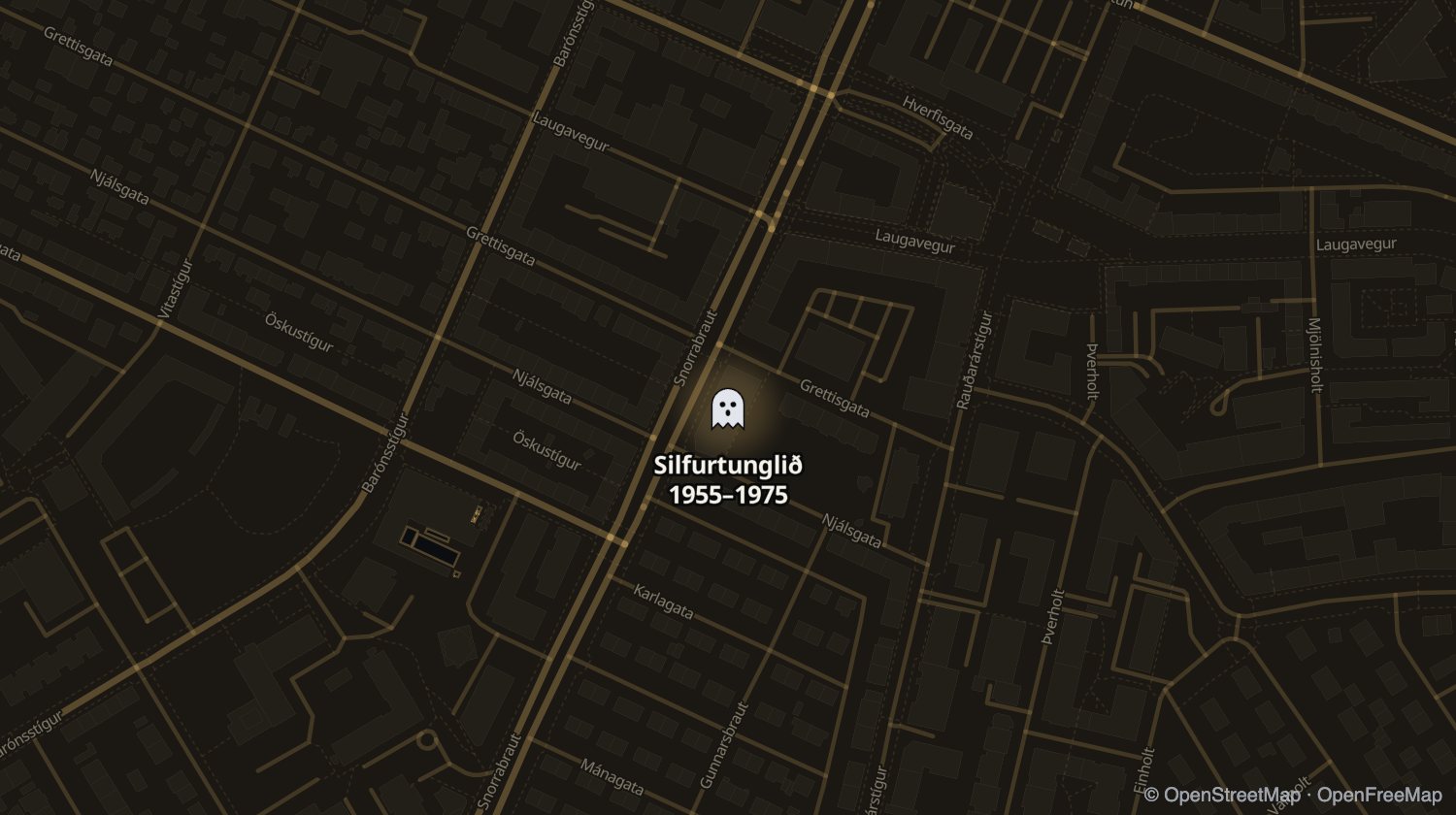
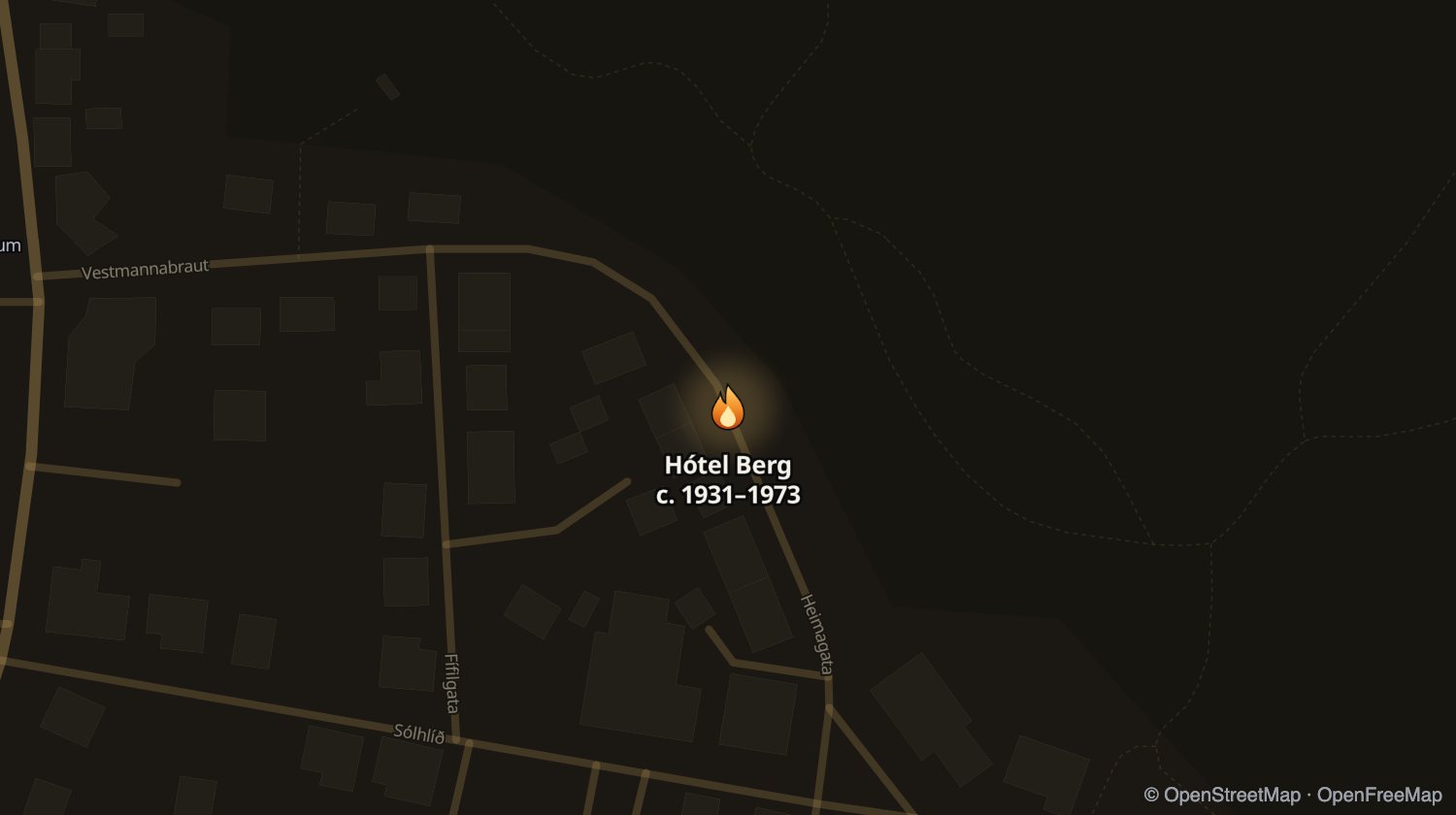
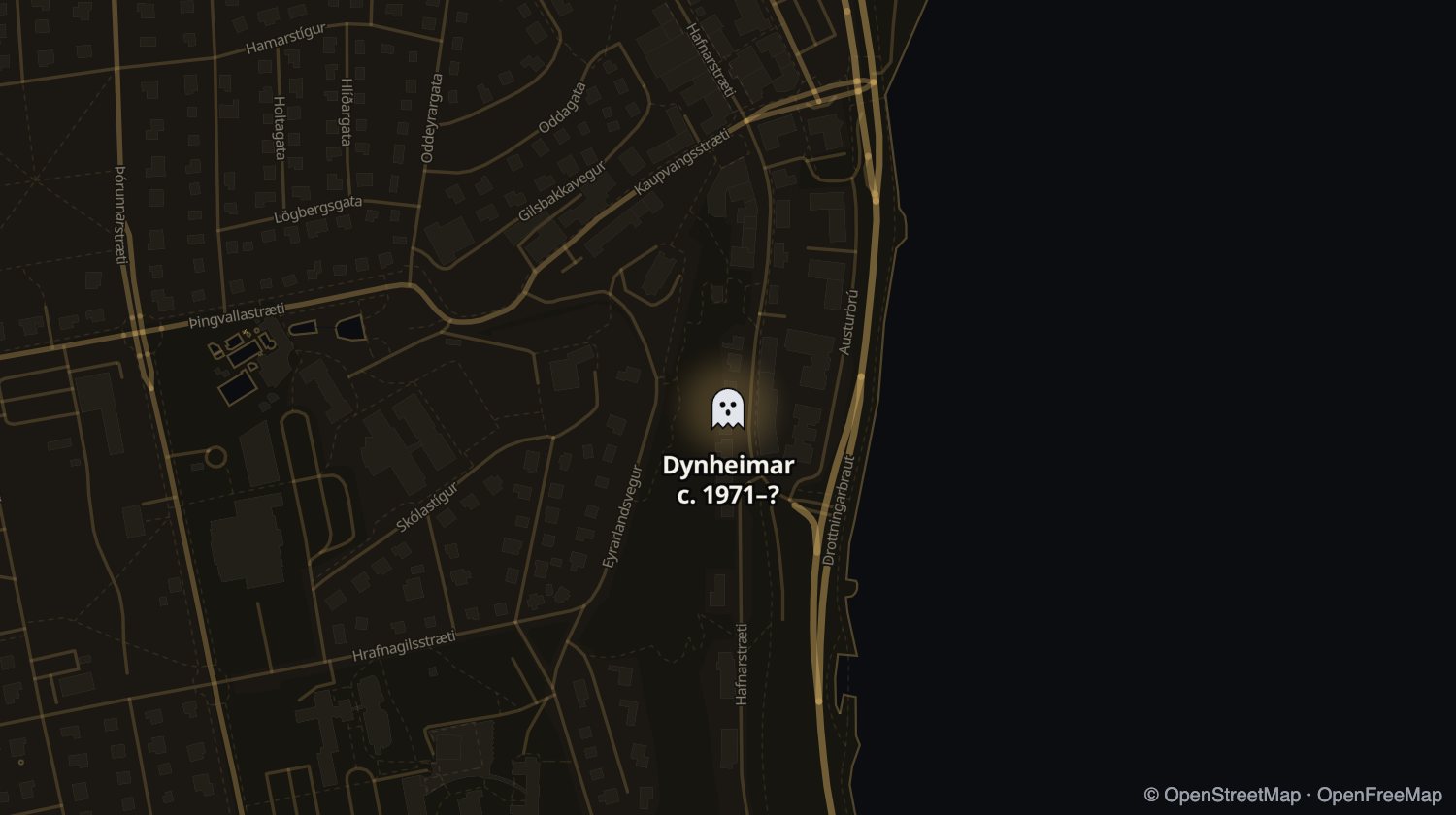
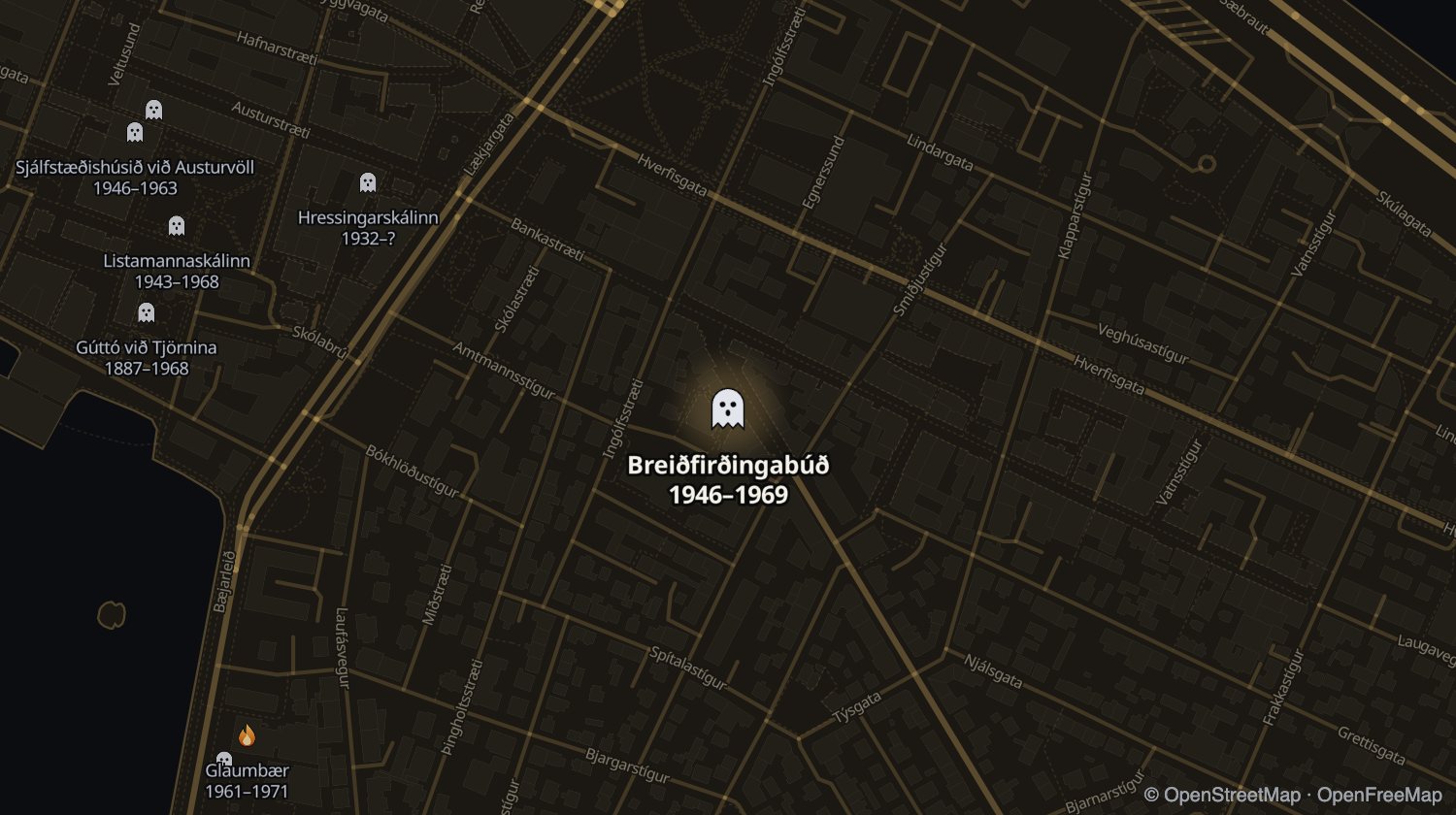
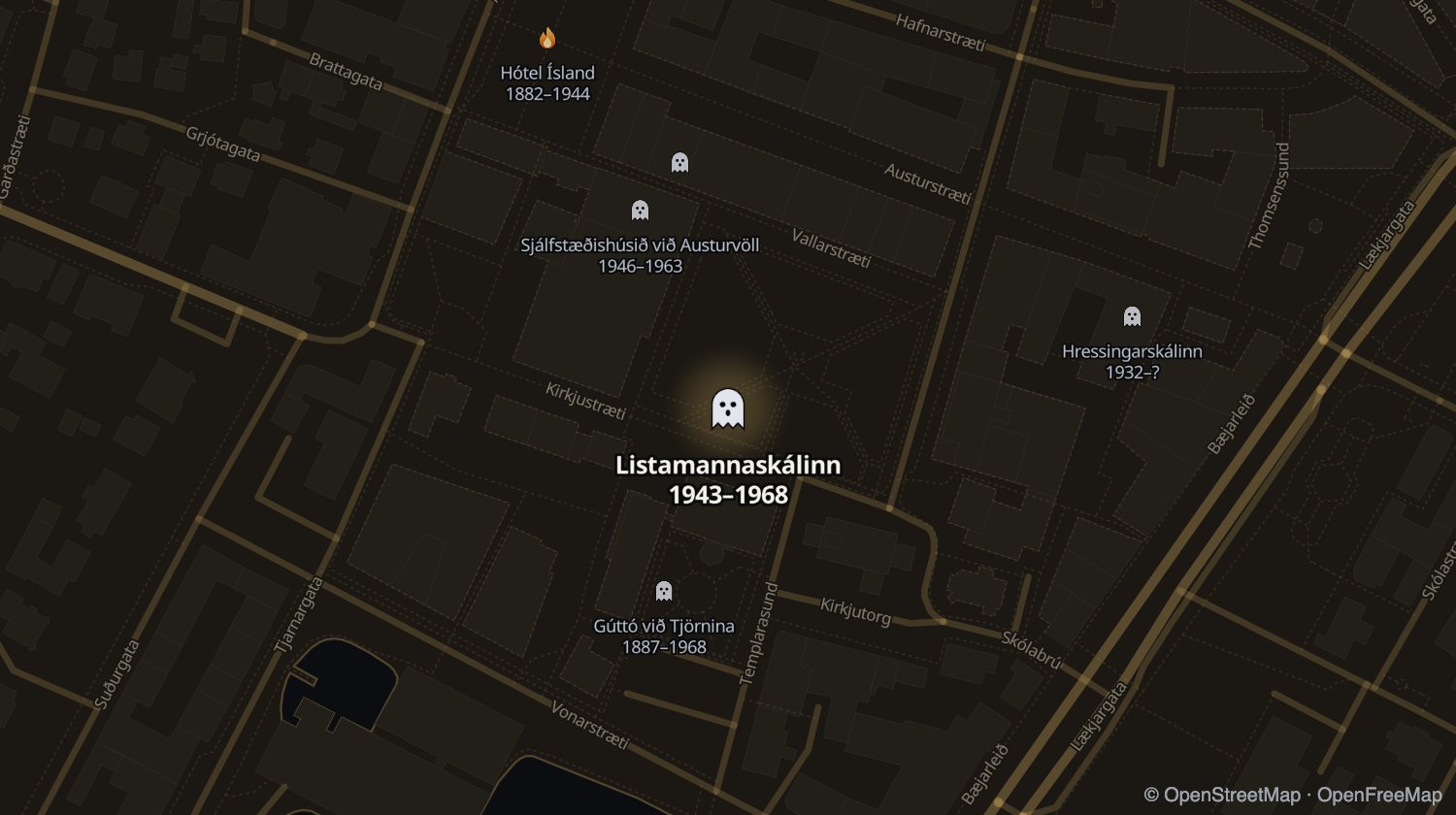
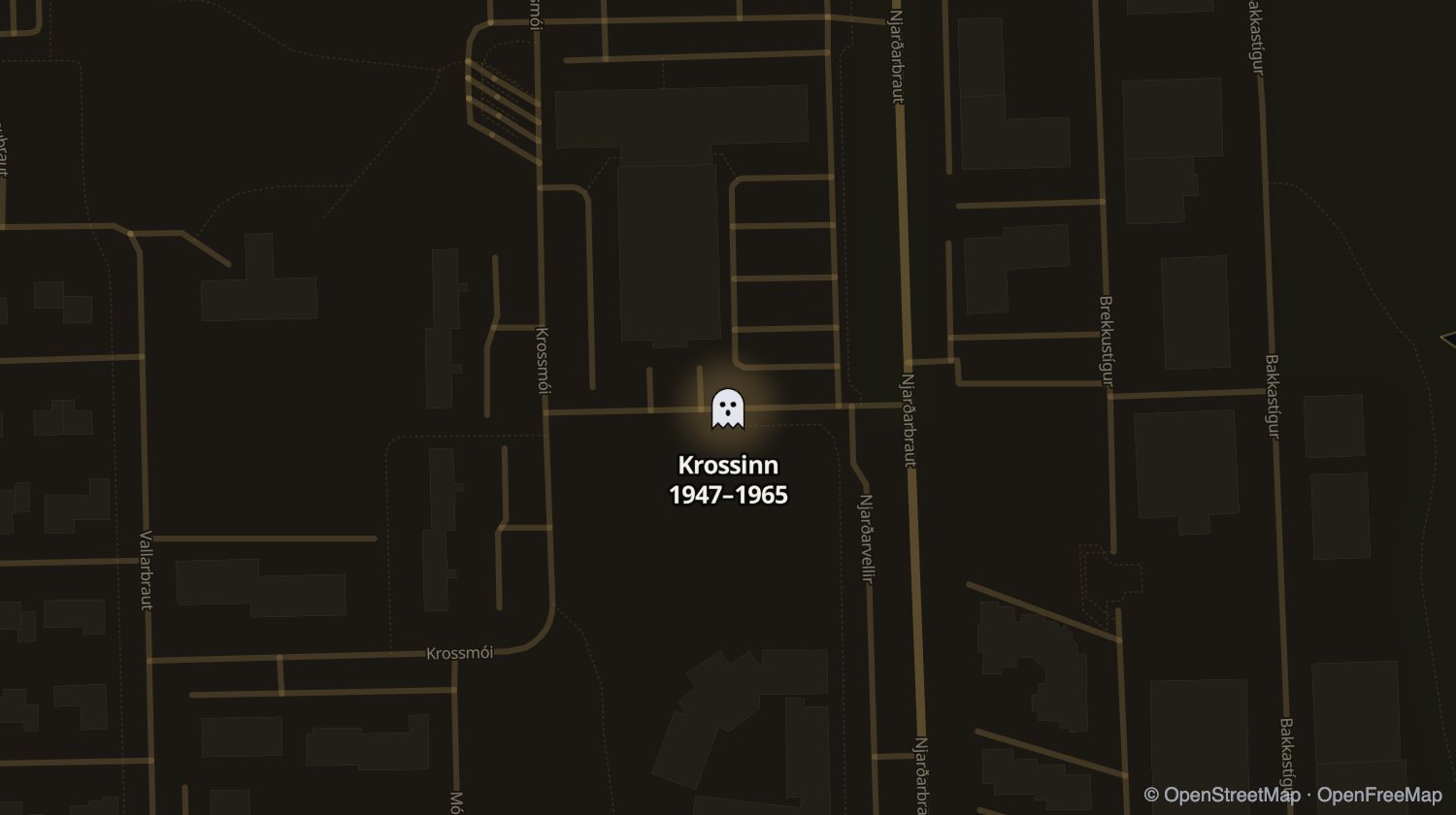
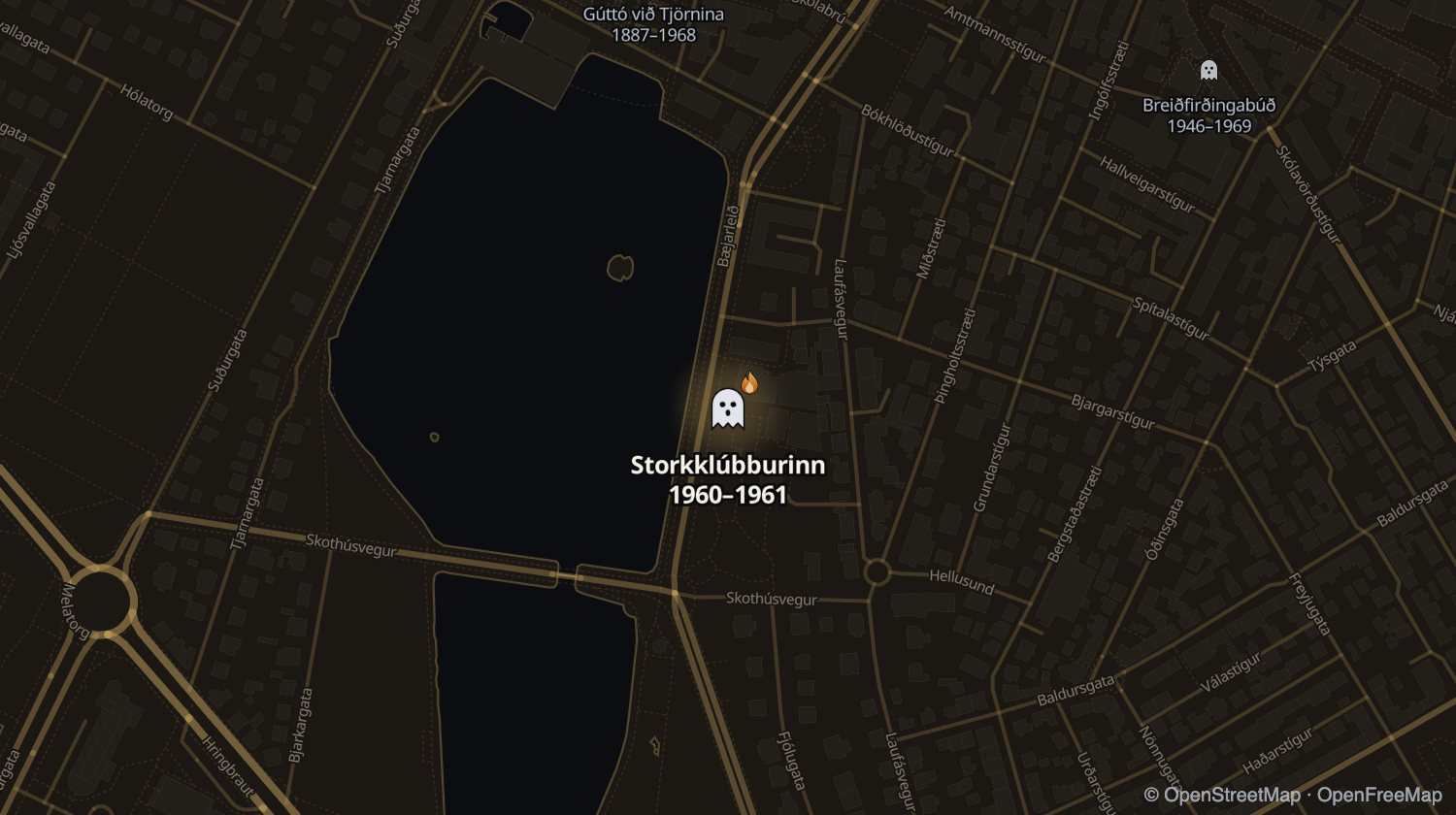
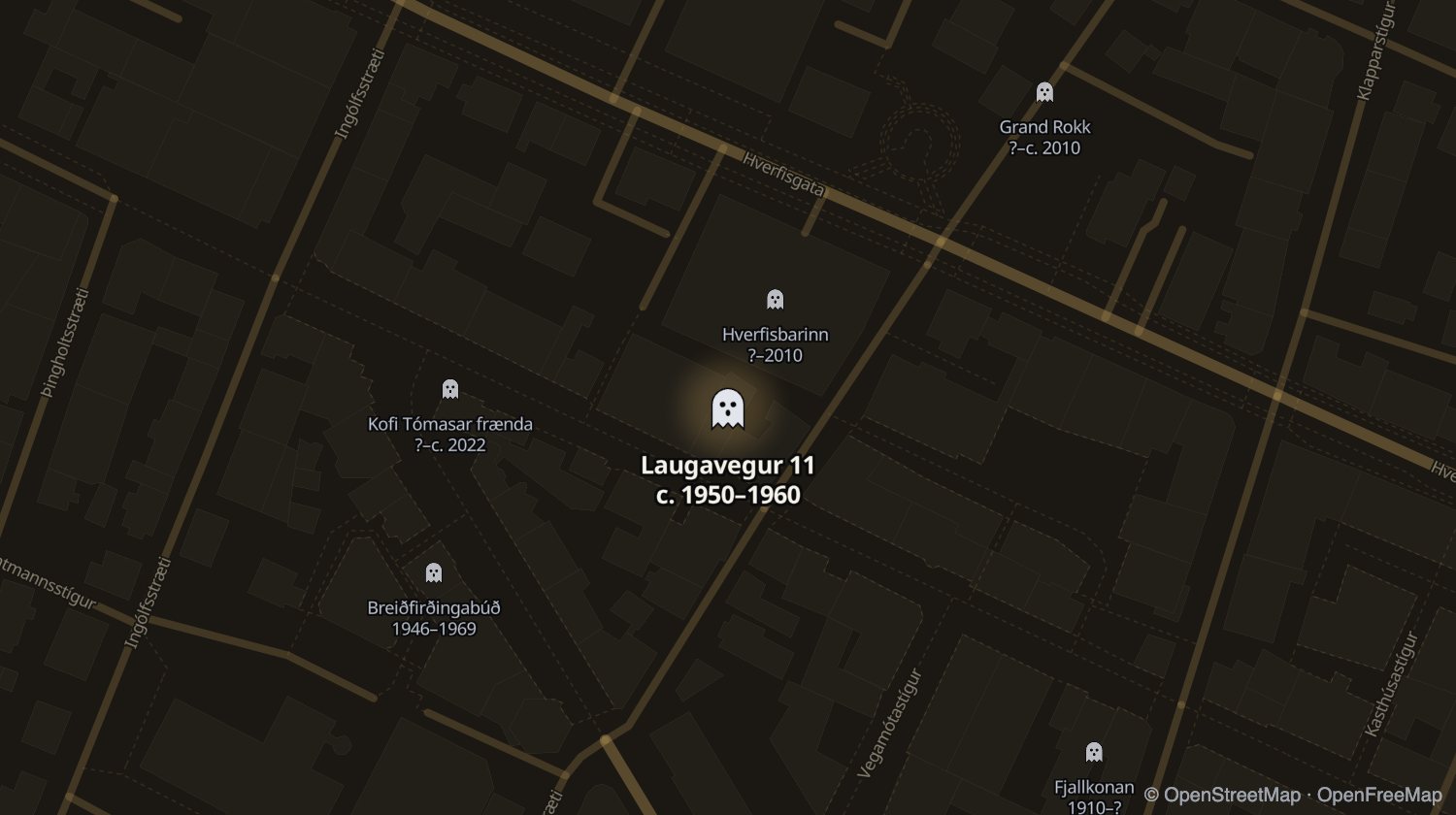 🗺 Open map
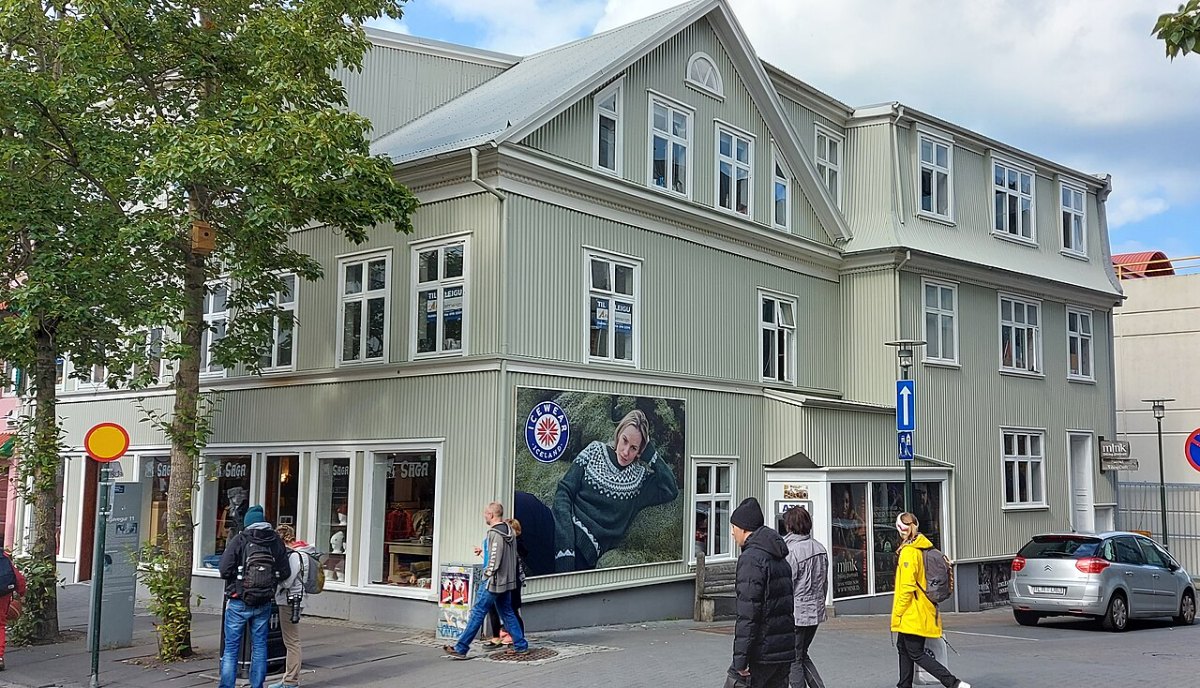
 🗺 Open map